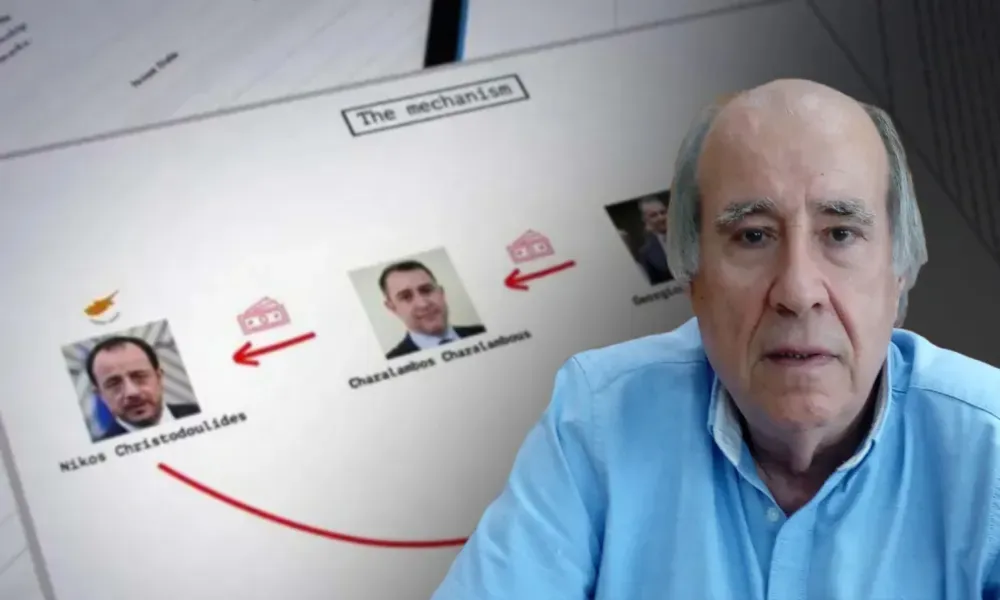

Independent criminal investigator Andreas Paschalides is set to face scrutiny from lawmakers on Thursday as Parliament's Institutions Committee examines the findings and handling of the Videogate investigation.
The committee convened an extraordinary session to receive briefing on the report into the controversial video published on social media platform X on 8 January 2026 and to discuss the institutional issues arising from the case.
MPs told Politis that Paschalides should not limit his responses to the position outlined by Attorney-General George Savvides, who informed parliament that the report would not be submitted to the committee and that investigators would not answer questions relating to the ongoing criminal process.
According to lawmakers, a number of issues unrelated to the criminal dimension of the case still require explanation.
Why release findings before legal review was completed?
MPs are expected to ask why Paschalides chose to publicly disclose elements of his findings before the Legal Service had completed its assessment of the report.
They note that previous reports by independent criminal investigators were not publicly discussed before undergoing official review.
Questions have also been raised about his decision to describe statements made in the eight-minute video as "nonsense" and "empty talk" in a public announcement issued on 20 July.
Why were prosecution recommendations omitted initially?
A second issue concerns the absence of any reference in Paschalides' first statement to recommendations for criminal prosecutions.
Critics argue that the wording of the initial announcement created the impression that no criminal wrongdoing had been identified among those involved.
MPs are expected to seek clarification on why recommendations contained in the report were not disclosed from the outset.
Why did a second statement include prosecution references?
Following political pressure and media reports concerning the contents of the report, Paschalides issued a second statement confirming that he had recommended criminal proceedings against both politically exposed and non-politically exposed individuals.
Lawmakers are expected to ask why that information was omitted from his original announcement and only disclosed after details of the report entered the public domain.
What evidence supports claims of hybrid warfare?
Another key issue is Paschalides' conclusion that the Videogate affair formed part of a hybrid warfare operation against the Republic of Cyprus by a hostile state.
MPs want to know how that conclusion was reached when investigators have not yet identified the client or clients who funded Black Cube, the private intelligence company linked to the operation.
The company itself has rejected allegations of hybrid warfare and maintains the case concerns corruption-related matters.
Is the video authentic or not?
Questions are also expected over Paschalides' finding that the eight-minute clip published online did not constitute an authentic representation of events.
Lawmakers point out that the complete, unedited 26-hour recording had previously been assessed by the Legal Service and deemed authentic.
They are expected to ask how the investigator reconciles those positions.
What protection was granted to Black Cube?
The final issue relates to an agreement granting protection to Black Cube and its operatives involved in gathering the audiovisual material.
MPs are expected to seek details of the arrangement and ask why such protection was provided before investigators had established who financed the operation and what motives lay behind it.