For Rita Severis, Nicosia was never simply a city divided into two sides. It was a place where East met West, where the call of the muezzin blended with church bells, and where different communities, traditions and ways of life complemented one another.
Speaking to Politis, the executive director of the Centre of Visual Arts and Research (CVAR) looks back on the Nicosia of her childhood, recalls the walled city she encountered again after the opening of the crossing points and reflects on the changes that have taken place since.
Her picture of the city is nuanced. On the one hand, the northern part of the walled city has retained much of its historic and architectural character. On the other, the movement of Turkish Cypriots to the suburbs, the settlement of newcomers from Turkey, commercial expansion and large-scale developments have gradually altered its social and cultural landscape.
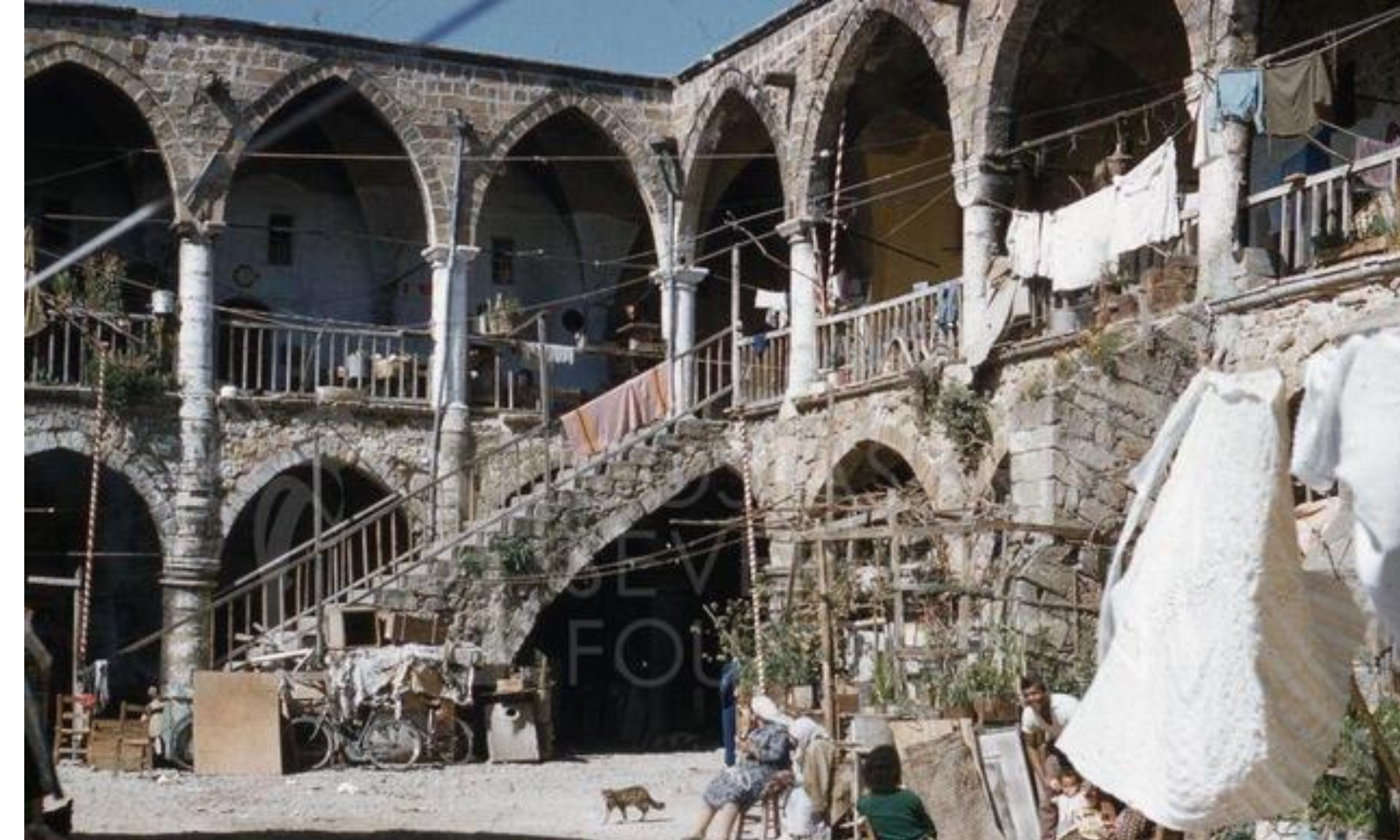
Büyük Han in Old Town Nicosia the period between 1950-1970. © Costas and Rita Severis Foundation.
The meeting point of East and West
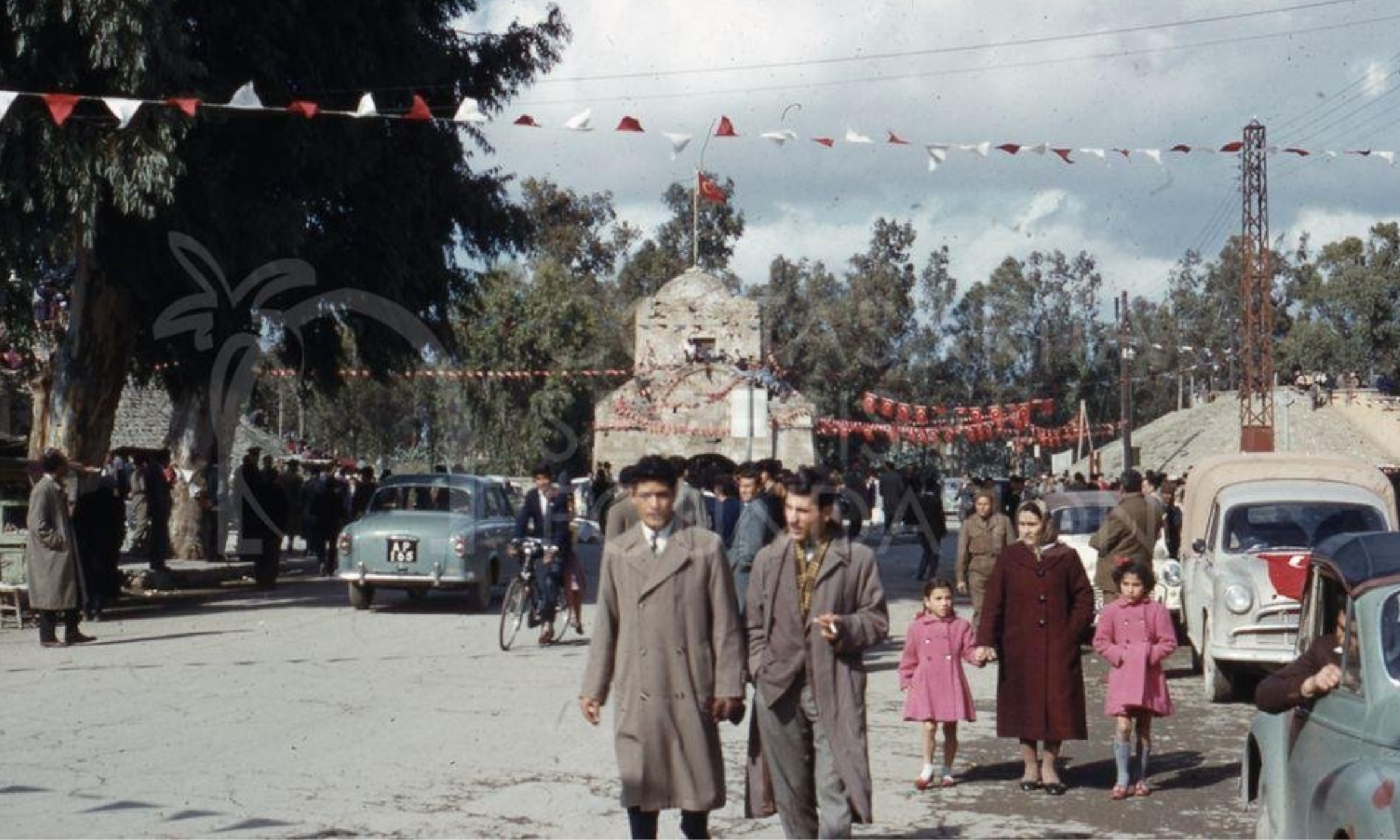
Before the Turkish invasion, the Turkish Cypriot quarter of Nicosia had a distinctly traditional and eastern character, according to Severis.
Street vendors sold sesame rings, salep and ayran. Coffee shops, hookahs, the sound of backgammon, bustling markets and traders' voices were all part of daily life. Turkish Cypriots, she recalls, were generally less affluent than Greek Cypriots and lived within a more confined geographical area, creating a dense and vibrant communal life.
"If you looked at Nicosia as a whole, it was the union of East and West," she says.
It was not, she insists, a clash between two worlds but a complementary relationship. Nowhere was this coexistence more evident than in the sounds of the city.
"It is always so beautiful to hear the muezzin and the church bells. That is Nicosia. You do not easily find that in other cities."
1974 to 2004
The invasion and subsequent division abruptly halted the capital's natural development.
According to Severis, the northern walled city remained largely unchanged for decades.
"Until the Annan Plan period, almost nothing had changed," she says.
The most significant shift was the arrival of settlers, many of whom moved into the old city, taking advantage of older houses and lower rents.
When she crossed into the north again after the checkpoints opened in 2003, the experience felt like travelling back in time.
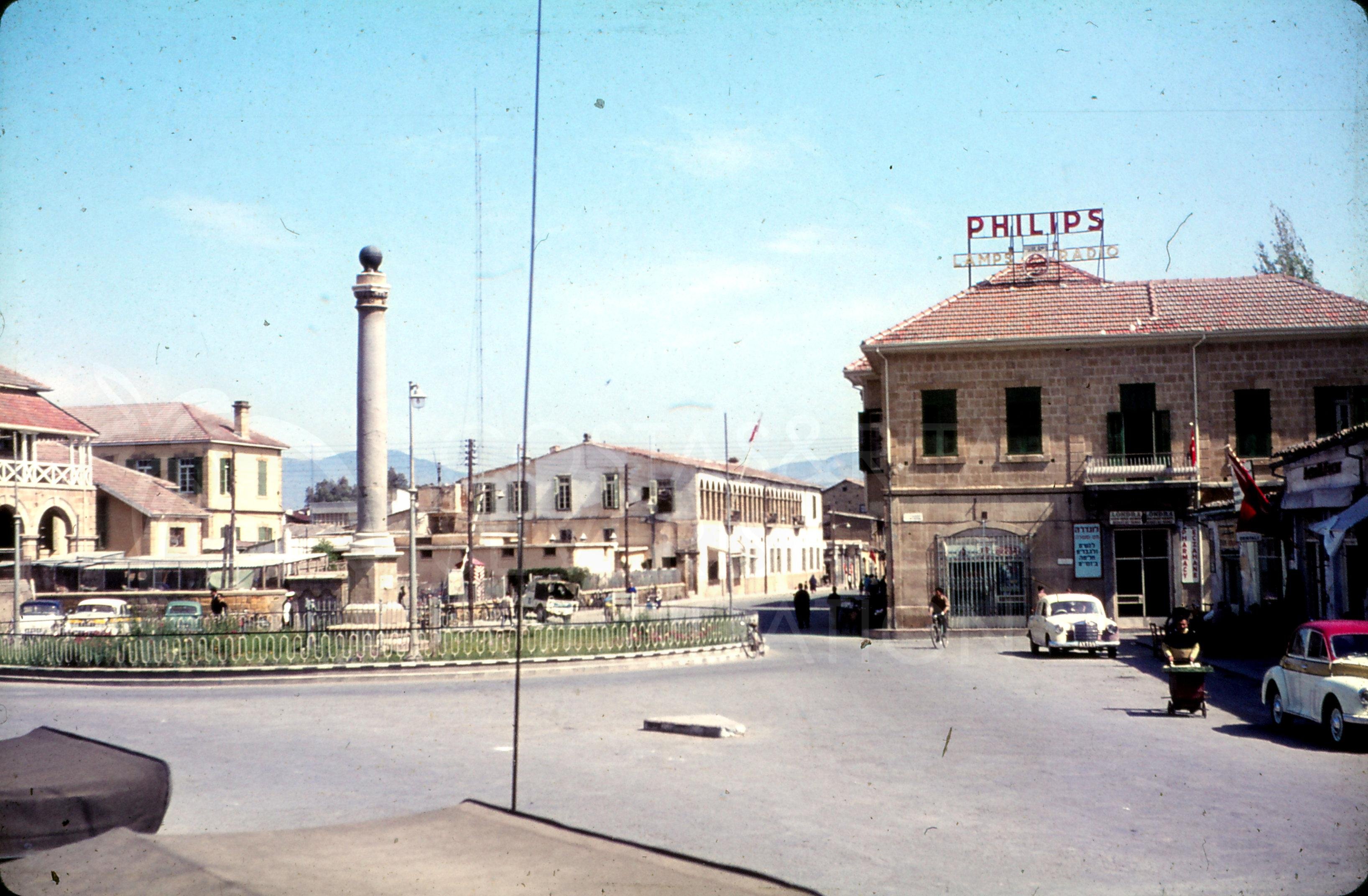
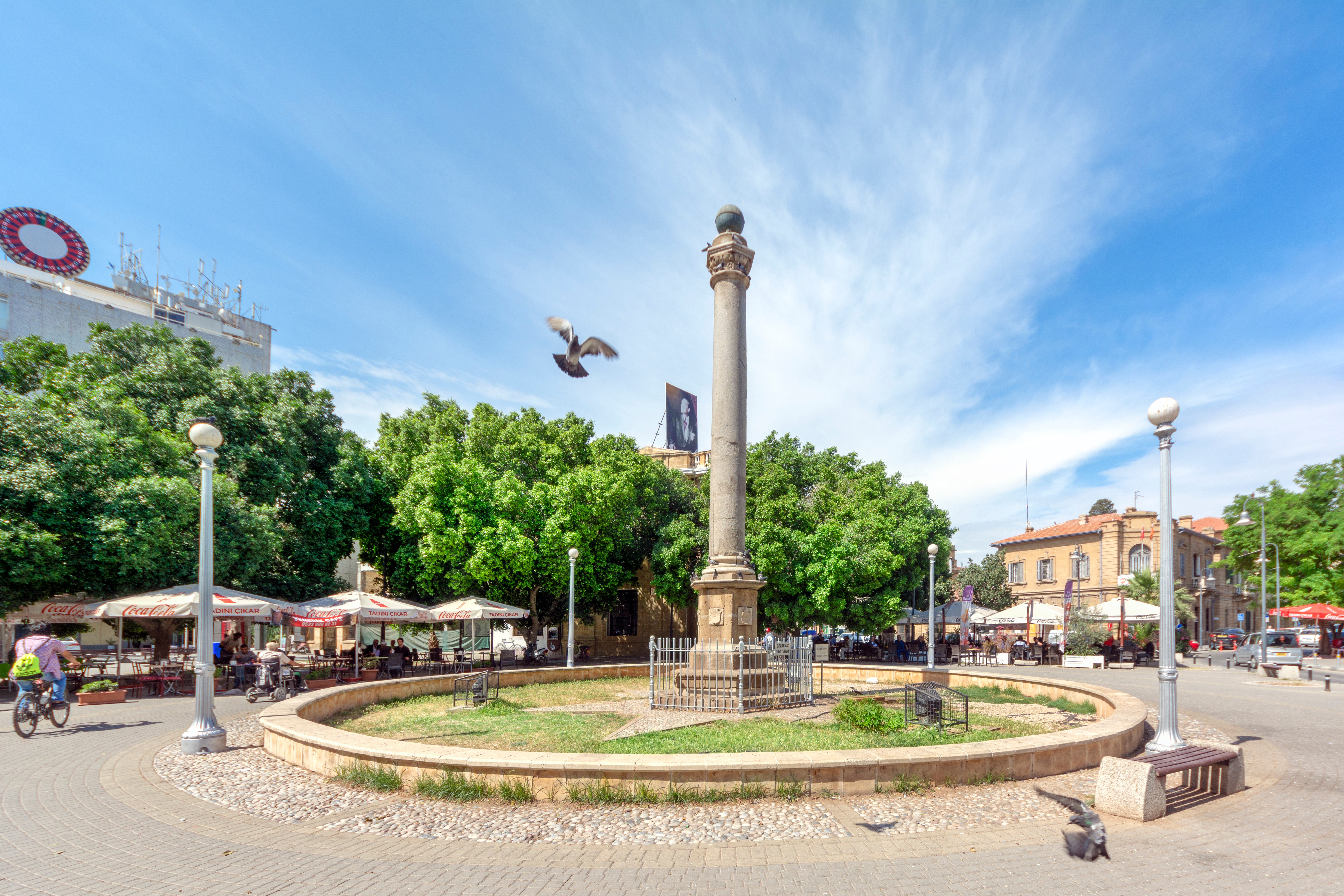
The streets, routes and buildings remained familiar. She could still remember where homes, pharmacies and shops had been and how she had moved through the city as a child.
"I felt as though I had gone back in time. I knew the city. Almost nothing had changed."
For Severis, the long political stalemate had a double effect. It prevented the demolition or drastic alteration of many historic buildings, but it also resulted in neglect, deterioration and limited maintenance.
A city rich in heritage
Despite the passage of time, Severis believes the northern old city has preserved an extraordinary concentration of monuments and historical landmarks.
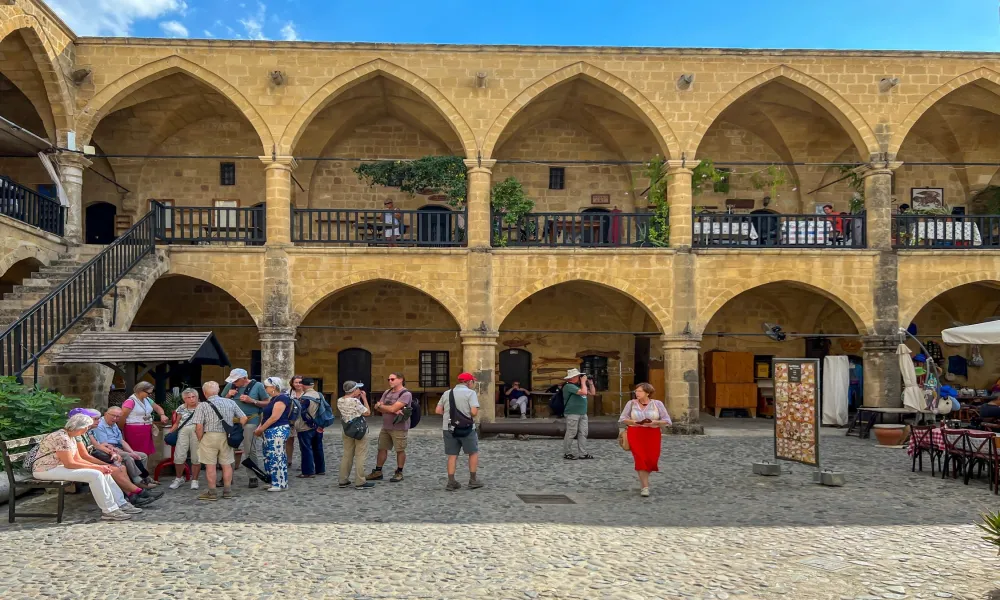
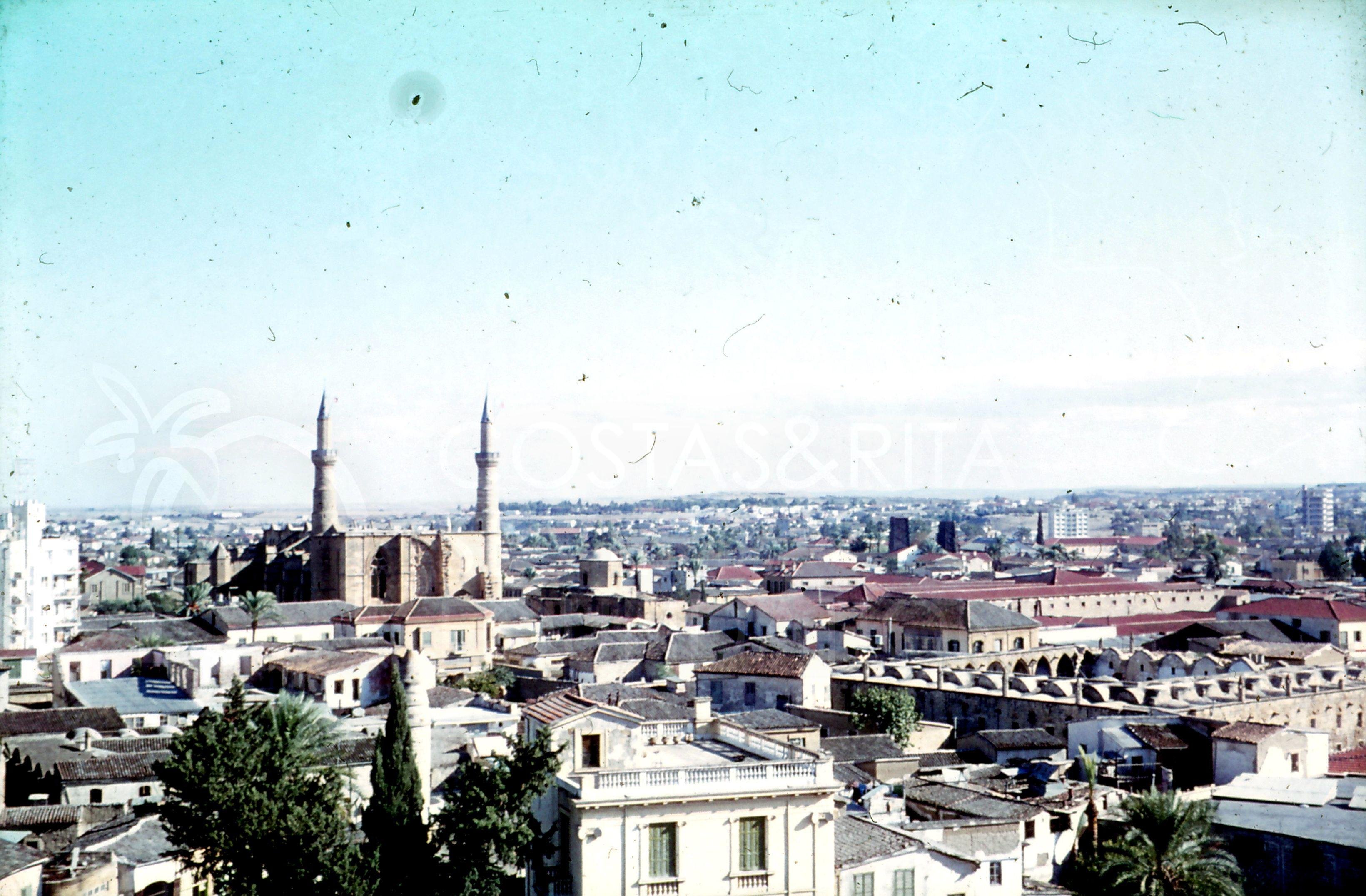
The former Cathedral of St Sophia, the Bedesten, St Catherine's Church, the old baths, the Büyük Han, caravanserais and traditional markets create a unique historic environment.
Combined with low-rise buildings, small shops and bazaars, they give the area what she describes as an eastern, picturesque and exotic identity.
"There is so much to see there. That is why tourism exists. The old city has an eastern, picturesque and exotic character."
She argues that the lack of intensive redevelopment within the walls has helped preserve much of the area's original character.
Severis also points to the Venetian moat, which she believes has been better preserved on the northern side than on the southern side. The lower skyline allows visitors to appreciate the monuments and form of the fortified city without them being overwhelmed by high-rise development.
Streets that preserved memory
One aspect that continues to impress her is the survival of commercial traditions stretching back to the nineteenth century.
Streets once known for textile trading still house fabric shops. Areas historically associated with goldsmiths and silversmiths continue to reflect those commercial identities.
The caravanserais remain landmarks and popular gathering points, while the traditional markets continue to echo earlier forms of economic and social life.
For Severis, this continuity demonstrates how a city can evolve without completely severing its ties to the past.
Turkish Cypriots move to the suburbs
The most significant social change, she says, has been the departure of many Turkish Cypriots from the historic centre.
Over the years, families relocated to newer residential districts and suburbs such as Gönyeli and Ortaköy. The older, less well-maintained homes within the walls, where rents were lower, increasingly became occupied by settlers.
According to Severis, this noticeably altered the social and cultural character of some neighbourhoods.
Turkish Cypriots, however, have not disappeared from the old city. Many continue to work there as shop owners, lawyers and professionals, particularly around the old courts and the Sarayönü area.
"They may no longer live there in large numbers, but they still move around and work there."
She also highlights what she sees as important cultural differences between Turkish Cypriots and settlers from Turkey.
"Turkish Cypriots are culturally much closer to us. We share many common characteristics that distinguish us from both Greece and Turkey."
Development beyond the walls
While the old city has remained relatively unchanged, the landscape outside the walls has transformed significantly, particularly after 2004.
Dereboyu Avenue, formerly Shakespeare Avenue, has evolved into one of northern Nicosia's main commercial districts, filled with cafés, restaurants, international brands and modern retail outlets.
Severis compares it to Makarios Avenue during its heyday as the principal commercial artery of the southern part of the city.
Meanwhile, urban expansion has stretched towards Gönyeli, the Kyrenia road and the Famagusta direction, accompanied by new roads, roundabouts and bypasses designed to ease traffic congestion.
She believes road development is one area in which the northern side has progressed faster than the south.
Fields replaced by monumental projects
One of the most dramatic transformations has occurred near the Ayios Dometios crossing point.
Areas that were once open fields have been replaced by large administrative and religious buildings, parking facilities and major road infrastructure.
Severis refers specifically to the new complex housing the so-called presidential palace and parliament, as well as the nearby mosque.
She believes the scale of these structures is disproportionate to the size of the country and reflects a new political and architectural reality.
A greener cityscape
Another contrast she notes is the use of greenery and flowers in public spaces.
Parks, landscaped medians and colourful flower beds have been developed along major roads and at entrances to areas such as Gönyeli.
By comparison, she feels that southern Nicosia does not make sufficient use of trees, flowers and native plants despite rising temperatures and the need for shade.
She recalls that Nicosia was once known as "the city of jasmine".
"Plant jasmine. Let visitors walk at night and be greeted by its scent. What could be more beautiful?"
Sharp criticism
Severis' praise for the preservation of the northern old city is accompanied by criticism of developments on the southern side.
She argues that tall buildings surrounding the walls are "suffocating" the old city and distorting its historic scale.
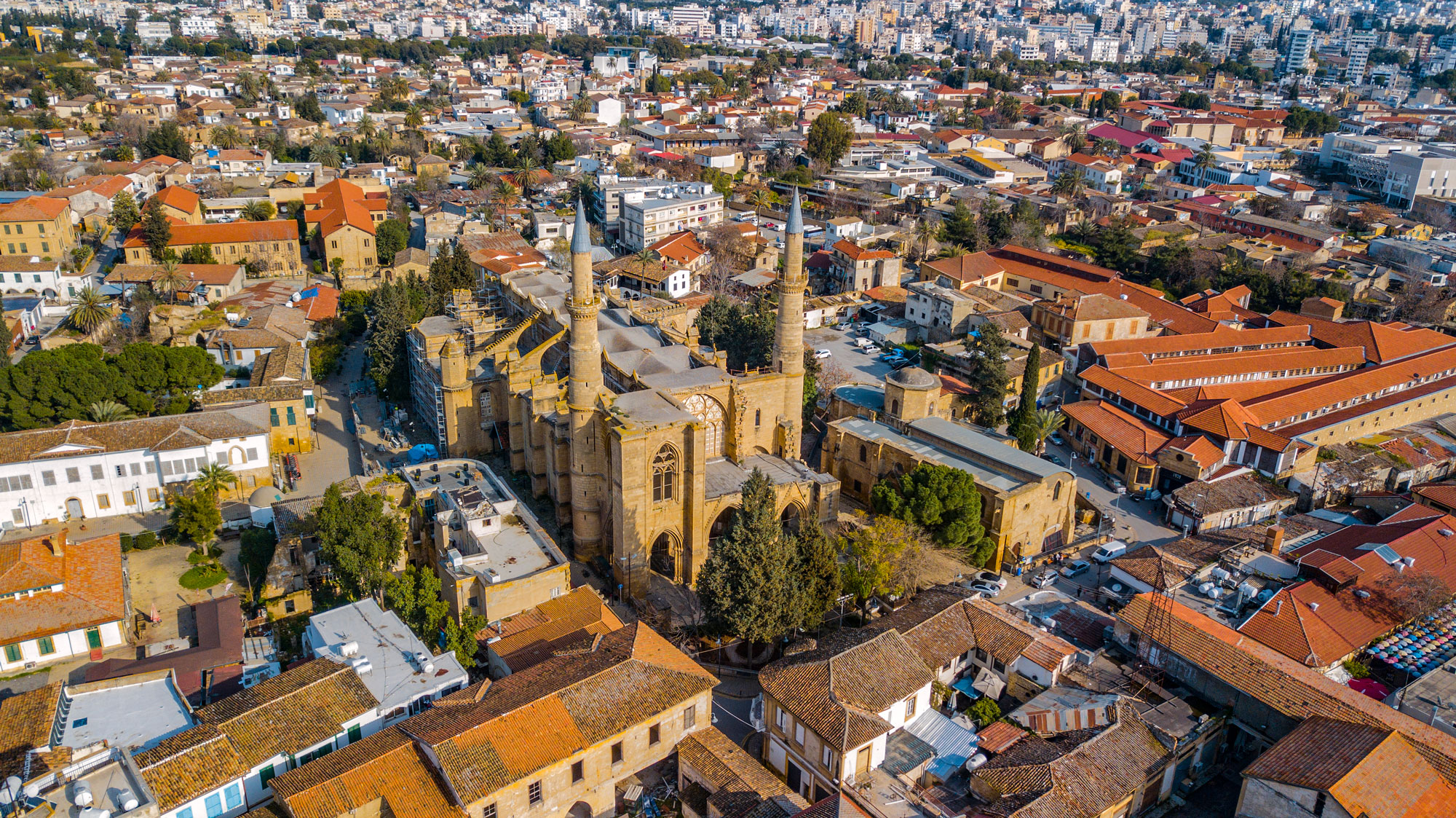
View of Nicosia from above, with Saint Sophia as it appears today.
She also criticises the proliferation of commercial signage on Ledra and Onasagorou streets, saying it obscures notable neoclassical and historic façades.
Particularly critical of Eleftheria Square, she says the issue is not the architectural concept itself but its location.
"The design may be very good, but it was placed in the wrong spot. You do not place something so modern over the walls, which are Nicosia's defining medieval feature."
The buffer zone
A central place in Severis' reflections is occupied by the buffer zone, which she sees as preserving the city of 1974 in its most dramatic form.
Parts of Ermou Street and the Ayios Kassianos area were once thriving commercial and residential districts. Shops, caravanserais and homes were suddenly abandoned and remain sealed behind barbed wire.
During guided walks she undertakes with special permission, Severis still comes across old signs and traces of long-forgotten businesses.
"You still find signs. You say, 'Here was that shop, here was a caravanserai.' You encounter the past. It is almost entirely destroyed, but traces remain."
For her, the buffer zone remains the strongest reminder of a life interrupted and of a city that was never designed to function as two separate capitals.
The unknown 'other' Nicosia
Nearly half a century after the invasion, Severis says her greatest concern is not only the fate of buildings and monuments, but younger generations' relationship with the city itself.
An entire generation of Cypriots has grown up without experiencing Nicosia as a unified space. They know the northern side through stories, slogans and historical references rather than through everyday experience.
"How can people love a place they never knew?" she asks. "How can they truly care about it?"