
Cyprus' Fire Service has convened a high-level coordination meeting for Tuesday to assess additional wildfire prevention measures as forecasters warn of soaring temperatures and heatwave conditions in the coming days.
Fire Service spokesperson Andreas Kettis said Fire Chief Nikos Longinos, in his capacity as the national wildfire coordinator, has called the meeting at the Fire Service Headquarters' Coordination Centre. Representatives from all relevant government departments and agencies are expected to attend.
"The aim is to decide on the emergency measures that need to be taken based on the meteorological data and forecasts indicating that the coming days will be particularly challenging due to high temperatures and the heatwave," Kettis told the Cyprus News Agency (CNA).
Authorities urge public to avoid careless behaviour
Kettis said prevention remains the most effective way of reducing the impact of major wildfires, adding that the Fire Service has invested heavily in preparedness.
So far in 2026, firefighters have responded to 1,350 fires, with more than 10% of those incidents carrying the potential to develop into major wildfires, he said.
He noted that a significant proportion of fires are caused by negligence and urged the public not to underestimate the risks associated with everyday activities such as discarding cigarette butts, carrying out controlled burns, using heat-generating tools in rural areas or improperly disposing of rubbish.
Under the current weather conditions, he warned, fires can ignite and spread rapidly.
Kettis also said some fires are deliberately started and called on members of the public to report suspicious activity to the authorities.
Expanded firefighting resources
The Fire Service said several new prevention and response measures have been introduced ahead of the peak fire season.
These include the deployment of bulldozers and water tankers funded by more than €1.2 million from the Ministry of the Interior and positioned at strategic locations in the Larnaca, Limassol and Paphos districts to help create firebreaks, improve access routes and supply water during firefighting operations.
Authorities have also activated the National Operations Coordination Centre, a €6.5 million facility equipped with advanced technology and funded through European programmes.
In addition, ten 56,000-litre water storage tanks donated by a private company are due to be installed at strategic inland locations to improve water availability for firefighting operations.
The Fire Service has also established dedicated wildfire prevention teams, expanded cooperation with local community leaders and increased surveillance through an extensive network of cameras providing live monitoring of rural areas.
Additional personnel have been recruited to strengthen rural fire stations, while the number of 24-hour rural stations has increased to seven.
Aerial support and regional cooperation
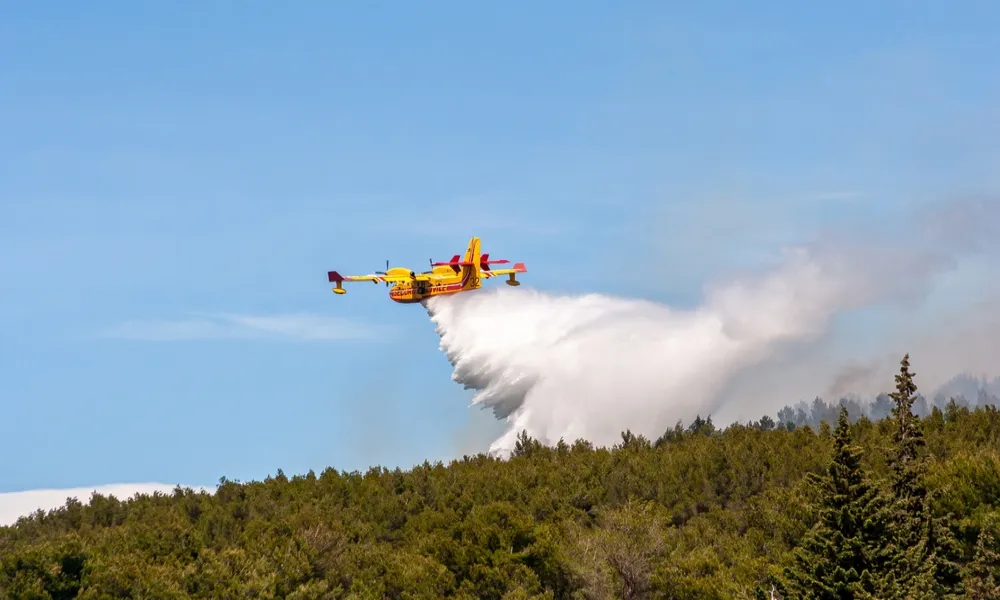
Kettis said Cyprus now has 13 primary aerial firefighting assets, supported by aircraft and helicopters operated by the police, National Guard and the British Bases.
The country also has mutual assistance arrangements with Greece and Israel, as well as access to additional resources through the European Union's rescEU civil protection mechanism if required.
Firefighting aircraft are conducting patrols during the highest-risk periods of the day based on weather forecasts, while ground patrols have also been intensified.
Wider government measures
Kettis said other government agencies have also strengthened wildfire prevention efforts.
The Ministry of the Interior has allocated €3.2 million to community service clusters to clear abandoned land, remove vegetation and carry out other fire prevention works. It has also increased grants for communities purchasing firefighting vehicles, with 54 applications approved since the revised funding scheme was introduced.
Since April, the use of tools capable of producing sparks in rural areas has been prohibited during periods of high fire danger.
Meanwhile, the Civil Defence organisation has updated its emergency evacuation plans, carried out evacuation exercises in communities across Cyprus and activated the CY-Alert public warning system.
The Game and Fauna Service and the Department of Forests have also intensified patrols, expanded public awareness campaigns and strengthened fire prevention infrastructure, including firebreaks, water reservoirs, observation towers and helicopter landing sites.
Authorities have urged the public to remain vigilant throughout the heatwave, stressing that preventing wildfires is a shared responsibility.
Source: CNA