


A statement from the Embassy of Israel in Cyprus issued this week has brought renewed attention to an increasingly charged debate on the island over Israeli property purchases, one that has now drawn in a Cypriot member of the European Parliament, a ghost village in the Limassol hills, and questions about where legitimate political concern ends and prejudice begins.
The embassy statement, addressed to the Cypriot public and attributed to Israel's ambassador, did not name any individual directly but called on political leaders and public figures to "reject inflammatory and divisive language." It described the Israeli community in Cyprus as one of parents whose children attend local schools, entrepreneurs creating jobs, and neighbours invested in the island's prosperity, and warned that rhetoric invoking "foreign economic power" to incite fear "enters dangerous territory" and fuels antisemitism.
The remark
The immediate trigger was a post published on Saturday on social media platform X by Fidias Panayiotou, one of Cyprus' MEP, in which he stated that "Israel is buying Cyprus" through expanding land purchases and real estate development. Panayiotou argued that the scale of Israeli investment had created a form of economic dependence that left the Cypriot state exposed. "The problem is that we are dependent on Israeli investment for our economy to go well," he said, adding that concentrated property purchases were generating "closed residential circles in specific areas." He also referred to investments from Russia, Ukraine, China, the United States and the United Kingdom, and said foreign ownership was not inherently problematic but required transparency and legislative oversight to prevent abuse.
Southern Cypriot EU MP Fidias Panayiotou:
— Clash Report (@clashreport) May 10, 2026
Israel is buying Cyprus.
It's as if those areas are no longer ours.
The character of our island is altered. pic.twitter.com/80p6u2oBzJ
The case of Trozena, an abandoned village in the Diarizos Valley that an investor holding Hungarian and Israeli citizenship has been quietly acquiring and developing since 2021, recently became the focus of public controversy.
Trozena
Politis reported on Sunday, following an on-the-ground visit to the village and an interview with the investor, Uriel Kertesz, that he has purchased approximately 70% of the buildings in the former settlement along with substantial surrounding agricultural land. The development is registered under a Cyprus-incorporated company, THV Home Resort (Trozena) Ltd, and plans filed with authorities outline 60 rental units to be created through restoration or new construction, a campsite, a winery, a restaurant and a café. Kertesz, a retired civil engineer, said he intends to create a "retreat," a quiet place where people can step back from daily pressures, and that he has no preference as to the nationality of future guests or residents.
Social media posts in recent weeks had claimed that access to the village had been blocked and that its historic church of St George was to be demolished. Both claims were firmly denied by Yiannakis Giannaki, the community leader of Arsos, Trozena and Gerovasa, who said no security guards are present and that anyone asked to leave a part of the site was likely redirected from an active construction area for their own safety. A church service had been held just days before, he said, and the church has been maintained at the company's expense, with modern facilities also installed by the investor. Giannaki challenged anyone with evidence of access restrictions to file a complaint so authorities could act.
Residents of the nearby village of Arsos, where Kertesz is a familiar presence, spoke positively of him, noting that local young people have found employment through the project and that the village's vineyards, long neglected, are now being tended. One resident, recounting his own decision to sell property in Trozena to the investor two years ago, said the land had been "written off" and that the family had agreed unanimously to sell. He was offered significantly above the assessed value, he said. Kertesz acknowledged to Politis that he had paid progressively more as the project took shape, adding: "At first we bought cheaply, then a little more expensively, now some are asking for much more, let them keep it for themselves."
Kertesz said he was unconcerned by the Cypriot reactions to the story but that coverage in the Turkish media had given him pause. "In Turkey we all know the media are state-controlled; why are they so interested in Trozena?" he said.
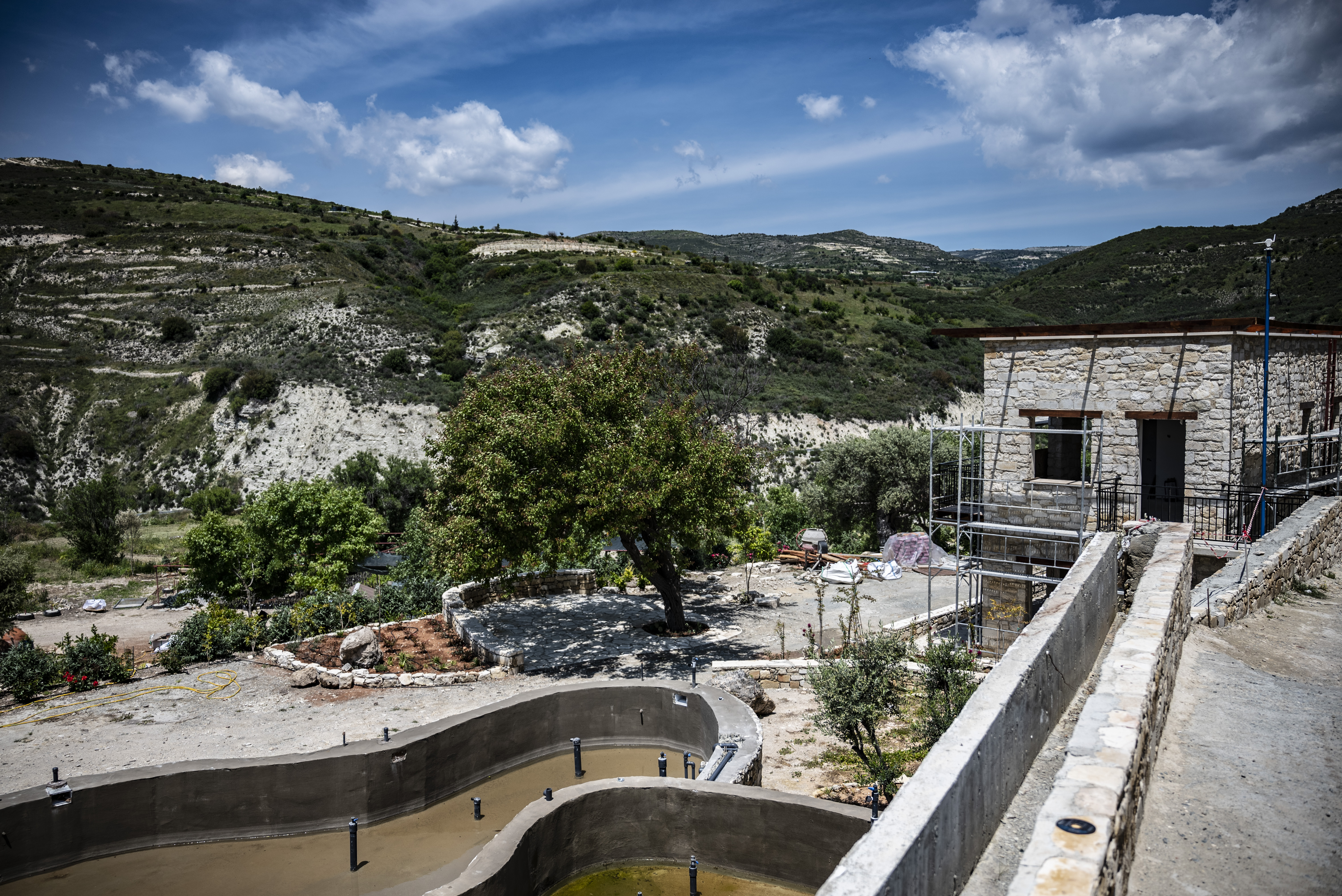
Photo: Yiannis Pazouros
Prior history
This is not the first time Israeli property acquisitions in Cyprus have generated a diplomatic incident. Last year, Akel secretary-general Stefanos Stefanou sparked a significant row after stating on state radio that Israeli investors were buying up large swaths of land and developing what he described as closed communities, prompting Israel's then-ambassador in Nicosia, Oren Anolik, to condemn the remarks as antisemitic. Akel rejected that characterisation, saying its criticism targeted government policy, not Jewish identity. The Combat Antisemitism Movement cited Stefanou's remarks and Anolik's rebuttal as an example of "classic antisemitic tropes" entering mainstream European discourse. Akel said it "opposes all forms of misanthropy" and that the charge of antisemitism was being used to shut down legitimate debate about land regulation.
Israeli nationals have acquired nearly 4,000 properties across Cyprus since 2021, a volume that has contributed to rising property prices and growing concern among parts of the Cypriot public about access and affordability.
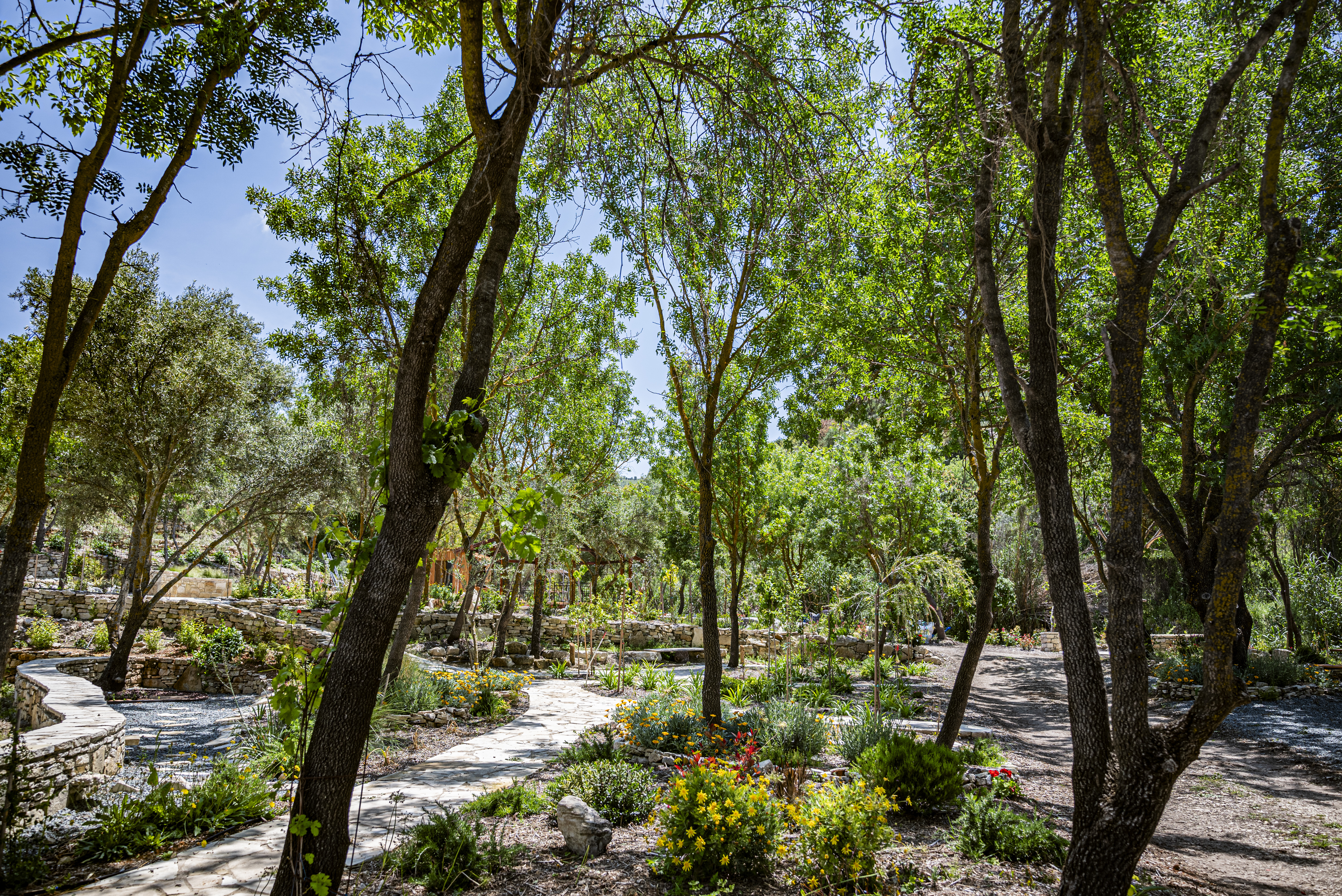
Photo: Yiannis Pazouros
Environmental questions
Beyond the political controversy, the Politis report raised a distinct concern that has received less attention: whether the works under way at Trozena comply with the legal requirements of the site. The village sits within a Natura 2000 protected zone, and its buildings include structures listed as part of the cultural heritage, requiring separate permit procedures. According to information gathered by Politis, none of the principal permits required under Cypriot law, including planning permission, a building permit, an environmental impact assessment or an appropriate assessment, have yet been issued by the competent authorities. The Limassol district administration has not issued planning or building permits. More unusually, an environmental impact study that has reportedly been submitted and discussed by the relevant evaluation committee has not been published on the Department of the Environment's website, as is standard practice. Works including structural restoration, earthmoving and the clearance of buildings described by the new owners as structurally dangerous are visible at the site.
Kertesz told Politis that his team had been in contact with all relevant authorities for at least three years and had yet to receive the necessary approvals to proceed at full scale. "For now we are here, cleaning the area, opening some roads and paths, whatever we do we ask first," he said.