
Halloumi exports have not been affected by the foot-and-mouth disease outbreak, despite a drop of around 10% in sheep and goat milk production compared with the same period last year, Agriculture Ministry permanent secretary Andreas Gregoriou has said.
Speaking to Politis radio 107.6 and 97.6 and the programme Proini Epitheorisi, Gregoriou said the compensation framework for affected farmers had been set through the procedure provided for in law and in cooperation with the National Advisory Committee, which includes representatives of farming organisations, cattle farmers and sheep and goat farmers.
He said market data, invoices and other information on the value of animals were taken into account in shaping the compensation scheme.
“Under the mechanism provided for in the emergency plan for managing this disease, farmers whose animals were culled must receive fair compensation based on the market value of the animals,” he said.
Compensation framework
Gregoriou said different levels of compensation had been set according to the age and productive stage of the animals.
For sheep and goats, compensation ranges from €47 to €420, while for cattle it ranges from €150 to €2,500. He clarified that the highest amount concerns a cow “at the stage of highest productivity”.
Before animals were culled, checks were carried out by a three-member committee involving the Veterinary Services and the Department of Agriculture, to record the characteristics, age and physical condition of each animal.
“Based on these data, compensation will be paid to the farmer whose animals were culled,” he said.
On pigs, Gregoriou said he did not have full information on the amounts under discussion.
Payments expected next week
According to Gregoriou, payments for the loss of livestock are expected to begin next week, following approval of the relevant decision by the Council of Ministers.
He said the necessary data were already being prepared, in cooperation with farmers, so that the required checks can be completed.
Around €1 million has already been paid in the first phase of compensation, covering the loss and destruction of milk, as well as the destruction of animal feed on farms where culling took place, he added.
Farming organisations agreed to the framework
Asked about the position of farming organisations, Gregoriou said their proposals had been taken into account and assessed.
“At the last meeting, in the presence of the minister, yes, they agreed to this framework,” he said.
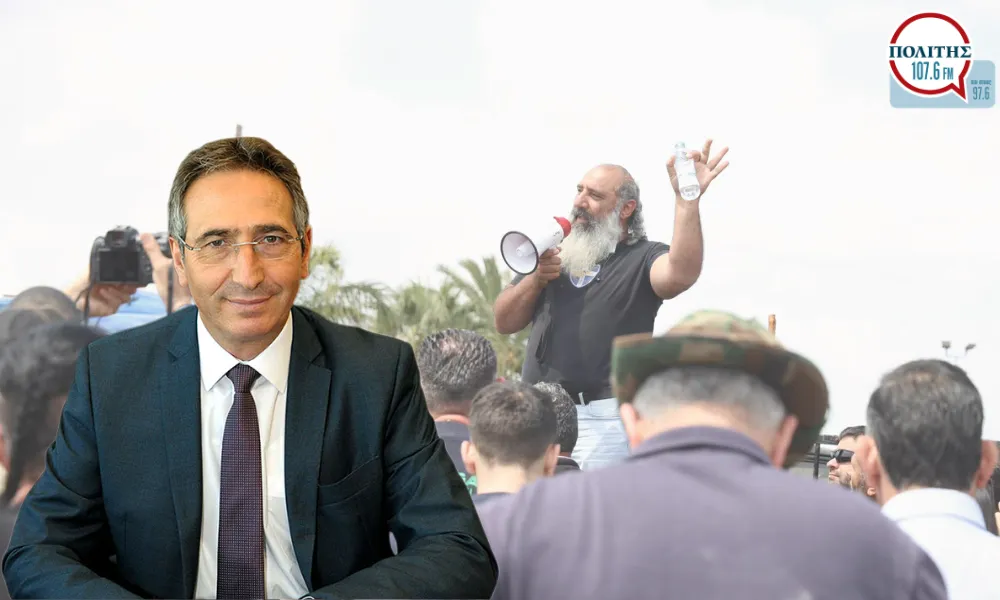
Referring to the group known as the Voice of Livestock Farmers, Gregoriou said it was not a recognised farming organisation, but a group of people with whom there had been several contacts.
“I have seen them in recent days and had telephone communication with them,” he said, adding that demands such as stopping the culling or changing compensation levels concern “a purely veterinary, scientific and epidemiological issue”.
He said the ministry believes the measures being taken address the concerns raised and are moving in the right direction.
Further support for farmers
Gregoriou said farmers who resume operations will receive additional support for loss of income over a 12-month period.
The calculation, he said, will be made separately for each case, based on tax returns, livestock numbers and milk deliveries from the previous year.
Everyone will receive compensation for the loss of livestock, he said, adding that any issues involving possible irregularities will be examined by the competent authorities under the law.
He also said a special scientific committee is preparing a study for a dedicated plan to rebuild livestock numbers.
Sheep and goat milk down by 10%
On the impact on halloumi PDO production, Gregoriou said there has been a reduction of around 10% in the sheep and goat population and in sheep and goat milk production compared with the same period last year.
At the same time, he said there has been no reduction in cow’s milk production, while the decline in the cattle population is below 3%.
On halloumi PDO, Gregoriou said the aim is to protect the product and its exports.
“Only in Cyprus can a product called halloumi be produced,” he said, adding that halloumi production is worth around €1 million a day.
Exports are continuing normally and “were not affected at all by the virus”, he said.
Biosecurity measures key
Asked whether the situation is under control, Gregoriou said efforts are continuing to limit the spread of the virus.
“Success will depend on whether biosecurity measures are applied by everyone,” he said.