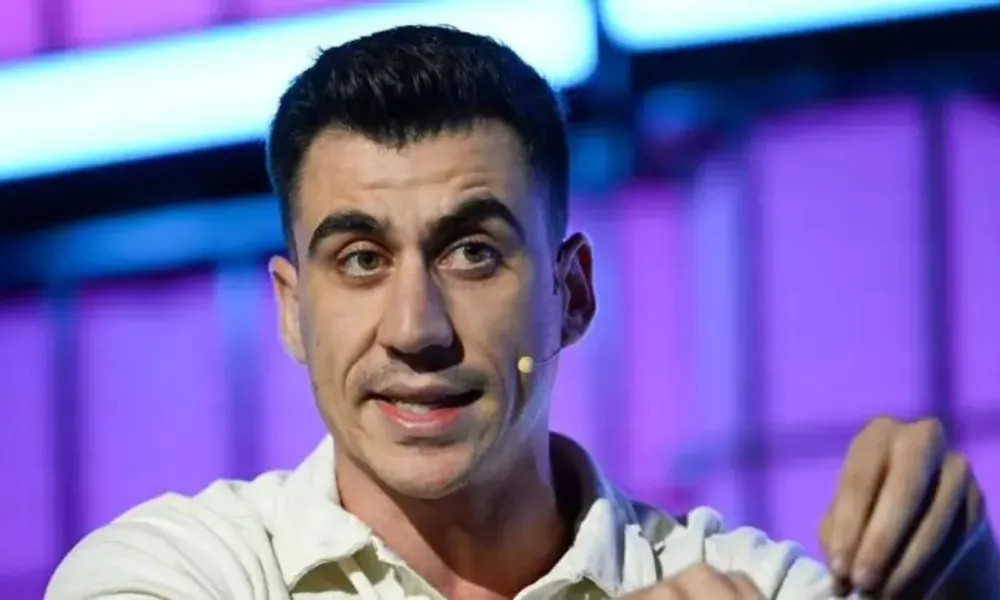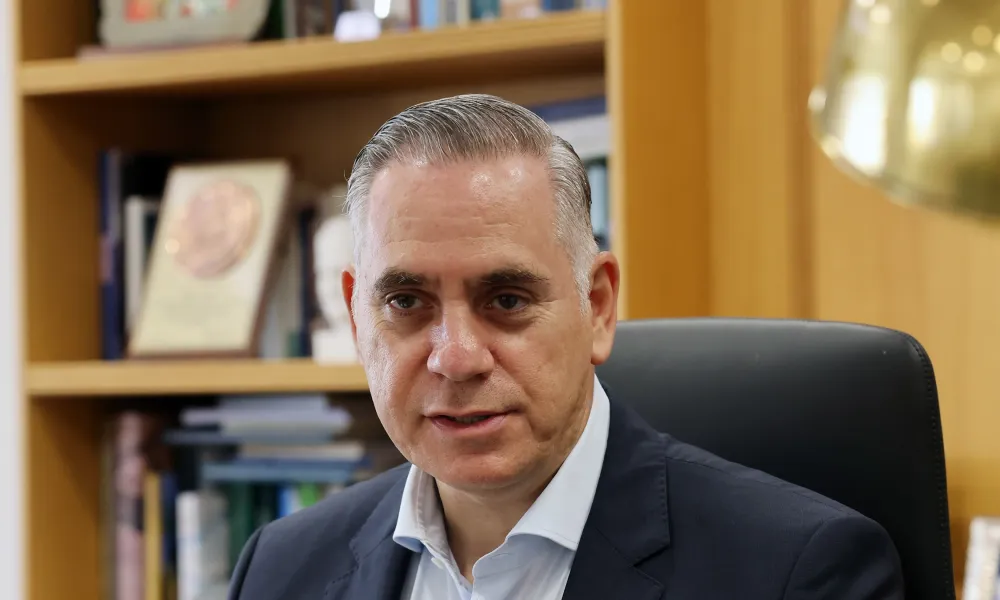

Democratic Party (DIKO) President Nikolas Papadopoulos has given a positive assessment of President Nikos Christodoulides' government, but has made no commitment on whether his party will support him in the 2028 presidential elections. In an interview on Alpha Cyprus's Bras De Fer programme with Aimilia Kenevezou, he also declined to exclude cooperation with the National Popular Front (ELAM). He accused AKEL general secretary Stefanos Stefanou of mockery and irony.
Mr Papadopoulos also kept his own intentions to himself. He said decisions on the elections rest with DIKO's collective bodies.
Decisions referred to party bodies
Mr Papadopoulos said all of DIKO's decisions on the presidential elections would be taken by the party's collective bodies. He also announced that DIKO and the Democratic Front (DIPA) had agreed to set up working groups to promote common policies.
DIKO's position on ELAM
Asked whether DIKO could end up on the same platform as ELAM, Mr Papadopoulos said his party does not pursue a policy of excluding or isolating political forces, despite disagreeing with ELAM on a number of issues.
He noted that DIKO had not denied ELAM the opportunity to seek chairmanships of parliamentary committees, because its MPs had been elected by the people.
Asked whether ELAM belongs to the democratic arc, he disagreed with that approach. He made clear, however, that DIKO does not accept nostalgia for the coup and that the party's historical positions and political legacy remain in force.
Whether ELAM's positions stand in the way of any cooperation, he said, will be assessed by DIKO's collective bodies. He pointed to the strong disagreements his party has had at times with the Democratic Rally (DISY) and AKEL, and said these had not necessarily ruled out future cooperation.
Criticism of AKEL and Stefanos Stefanou
Mr Papadopoulos did not hide his displeasure at how AKEL had responded to DIKO's public invitation to dialogue. He recalled the cooperation between the two parties in the previous municipal elections, which he described as successful.
He asked why AKEL appeared willing to talk to the Movement for Social Democracy (EDEK) but not to DIKO, citing DIKO's participation in government, when EDEK also supports the governing cooperation.
He said DIKO was not demanding that AKEL come to the dialogue table. However, he called the way the party's initiative had been handled "misguided and inelegant" and accused Mr Stefanou of mockery and irony.
Relations with DISY and Alma
On DISY, Mr Papadopoulos referred to the two parties' past cooperation in the House of Representatives on economic issues. He also mentioned his cooperation with Averof Neofytou and his friendly relationship with Giorgos Pamporidis. He said DIKO does not intend to interfere in DISY's internal party procedures.
He repeated that DIKO has serious political disagreements with Odysseas Michaelides, leader of the Alma Movement.
Criteria for supporting Christodoulides
Mr Papadopoulos said the most important decision DIKO will face in the coming period is whether to continue supporting Nikos Christodoulides.
He said the decision would not rest only on an assessment of the current government. It would also depend on:
- the vision for the next five years
- the role DIKO would have in a possible new government
- the candidate's electability
He noted that, despite earlier discussions, the President has not yet formally announced his candidacy.
Asked about the different views within DIKO, between continuing to cooperate with Mr Christodoulides, cooperating with AKEL or running independently, Mr Papadopoulos said he had a strong view of his own but chose not to make it public.
He again urged party officials to limit their public statements, so as not to give the impression that decisions have already been taken.
Asked whether he would run for the Presidency himself, he declined to answer and pointed to the party's collective procedures.
Assessment of the government's record
Although his overall assessment was positive, Mr Papadopoulos acknowledged that there are disagreements and room for improvement in DIKO's cooperation with the government.
He repeated his call for better consultation before major decisions are taken. He cited the tax reform as an example where, he said, DIKO had to take the initiative.
He also acknowledged that the government had not been adequately prepared to deal with last year's wildfires and that ministers had made mistakes.
He said the following issues had not been addressed to the extent he would have wished:
- the high cost of living
- housing
- pensions
- the adequacy of electricity supply
- fuel costs
On the other side, he listed as significant successes the performance of the economy, the agreements on developing Cyprus's natural gas, and the government's handling of the Cyprus problem and foreign policy.
He described his relationship with Mr Christodoulides as positive and their cooperation as constructive.
Joint working groups with DIPA
According to Mr Papadopoulos, DIKO and DIPA have agreed to set up study groups to promote common policies at both government and parliamentary level.
He spoke very positively of his cooperation with DIPA leader Marios Karoyian. He left open the possibility of extending it to other areas, depending on how the joint initiatives turn out. He made clear, however, that the talks are mainly about political cooperation and promoting common positions.
The Cyprus problem and foreign policy
Mr Papadopoulos named the Cyprus problem as the biggest challenge facing the next President of the Republic. He said Turkey's stronger international and regional influence, together with its aggressiveness, points to difficult negotiations ahead.
He described a bizonal, bicommunal federation as a difficult but achievable compromise. His condition was that the state's functionality and viability are guaranteed, with no troops remaining and no veto mechanisms that could paralyse it.
Asked whether he would reject the Annan Plan again, he said he would, arguing that later developments had vindicated the decision of the Cypriot people.
He referred to the policy of Turkish President Recep Tayyip Erdoğan and to Turkey's growing influence in the north. He said he opposed any agreement that relied on promises of a long-term withdrawal of Turkish troops.
He praised Mr Christodoulides' handling of foreign policy, mentioning in particular the cooperation between Cyprus, Greece, Israel and the United States, and the Great Sea Interconnector electricity interconnection project.
The 2013 haircut and personal reflections
Reflecting on his own record, Mr Papadopoulos said that voting against the first proposal for a deposit haircut in 2013 was a mistake. He explained that he made that decision on the basis of the information he had at the time.
He also admitted to making mistakes in how he handled people both inside and outside the party.
On his political path and the legacy of his father, former President of the Republic Tassos Papadopoulos, he said he does not seek to be compared with him but to chart his own course.
He described the ambition to hold executive power as legitimate, adding that any such decision would have to be taken in consultation with DIKO officials.