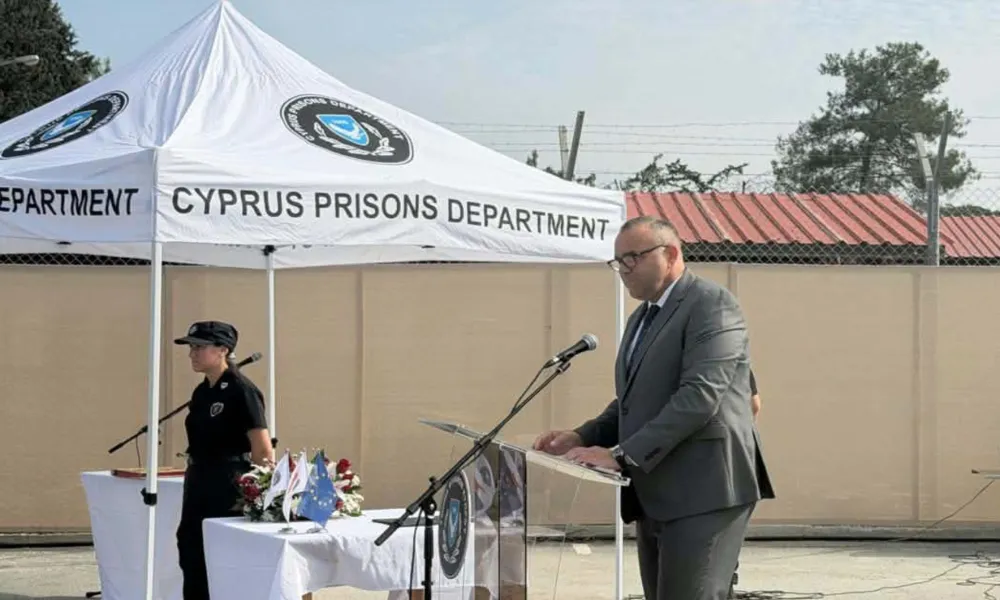

Cyprus Central Prisons are entering a new chapter following the appointment of George Ioannou as the institution's new director, who officially assumed his duties on Monday.
He is the first permanent director to take up the post since Anna Aristotelous resigned in December 2022. In the intervening period, the position was held successively by acting directors Ioannis Kapnoullas, Charis Filippides, Konstantinos Constantinides and Maria Siali.
Siali formally handed over the leadership of the Prisons Department to Ioannou on Monday and will return to her duties as a senior officer within the department.
The new director is a retired brigadier of the Cyprus National Guard. He retired in 2026 and previously served as commander of the National Guard's Commando Forces (LOK).
New director sets out vision for prison reform
Speaking at the ceremony marking his assumption of office, Ioannou described his new role as an important mission involving significant responsibilities, major challenges and a profound human dimension.
He pledged to approach the task with hard work, dedication and effectiveness, while thanking the outgoing management for its contribution.
Continuity, respect for the work of previous administrations and the effective use of accumulated experience were essential prerequisites for progress, he said.
Ioannou outlined his vision of a modern, secure and humane correctional institution, operating on the principles of transparency, meritocracy, justice and efficiency.
He stressed that the state must uphold justice with humanity and ensure security through professionalism, while also creating the conditions for prisoners to be given a genuine second chance when they return to society.
Justice Minister rules out tolerance for corruption and abuse
Justice Minister Costas Fitiris, addressing the ceremony, said the mission of the prison system extended beyond enforcing the law and maintaining order.
It also involved respecting human dignity, promoting rehabilitation and creating the conditions necessary for prisoners to reintegrate successfully into society.
He said the demanding nature of the work required vigilance, composure, discipline, professionalism and a strong sense of responsibility.
Fitiris was also unequivocal about the standards expected within the institution, stressing that there could be no tolerance for corruption, abuse of power or conduct that undermined the credibility of the prison service and the rule of law.
"Deprivation of liberty is the punishment, but the loss of human dignity is not, and cannot be, part of that punishment," he said.
Success measured by prisoners' return to society
The minister argued that the success of the prison system should not be judged solely by the level of security maintained inside its walls, but also by whether inmates eventually return to prison after their release.
He highlighted the importance of society providing former prisoners with a second chance, stressing that successful rehabilitation and reintegration were essential elements of the institution's mission.
Fitiris also thanked the acting director and the majority of prison officers, inspectors and warders for their efforts, despite the persistent challenges facing the department.
These include overcrowding, staff shortages and outdated facilities, all of which continue to place considerable pressure on the prison system.
The appointment of Ioannou comes amid expectations that the new leadership will address these longstanding challenges while seeking to strengthen security, improve conditions and place greater emphasis on rehabilitation and respect for human rights.