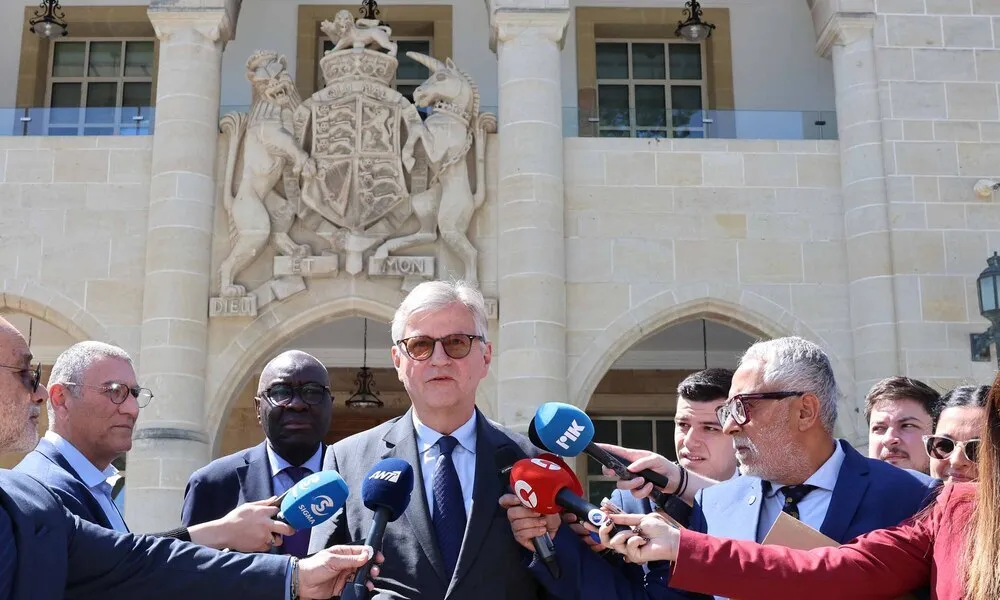

The visit of UN Secretary-General António Guterres to Cyprus on 27-29 July for talks with the island's leaders takes place "within the framework of very intense political efforts" by the Secretary-General and his Personal Envoy on the Cyprus problem, María Ángela Holguín, according to Jean-Pierre Lacroix, UN Under-Secretary-General for Peace Operations. Lacroix made the comments on Thursday during a briefing with journalists in Brussels, responding to a question from the Cyprus News Agency (CNA).
Hopes for progress, role kept separate
Lacroix said he hopes the visit will "offer additional steps of progress" on the political front, while clarifying that his own role is deliberately kept separate from the substance of the negotiations.
"What we do with UNFICYP relates directly to the political process, because it concerns creating conditions on the ground that favour the continuation of political efforts," he said. "The good thing for me is that I remain far from excessive involvement in these political negotiations, which are extremely sensitive and are conducted with the necessary degree of confidentiality."
UNFICYP's mandate and performance
Asked whether conditions on the ground differ from his last visit to Cyprus in April, including with regard to the Pyla plateau, Lacroix did not address specific points of friction, offering instead a broader assessment of the mission's performance.
"UNFICYP is a mission that has responded to its mandate," he said. "The mandate is clear, and it concerns maintaining the ceasefire through monitoring, ensuring that whatever happens," and "any incident moves towards de-escalation, avoiding possible tension, or, God forbid, a repeat of hostilities." He added: "In that respect, UNFICYP has responded and continues to respond."
Peacekeeping tied to diplomatic track
Lacroix directly linked the peacekeeping mandate to the diplomatic effort led by Guterres and Holguín. "It is fundamental to these political efforts, because if you were to see any repeat of tension, and again, God forbid, a repeat of serious tension, then you can imagine the impact on the political efforts," he said.
"Whatever the mandate, ultimately it is political, it concerns supporting political efforts, whether we are simply talking about ceasefire monitoring or a broader mandate. It is always, ultimately, a matter of providing support to efforts for a sustainable political solution," the UN official concluded.
Source: CNA