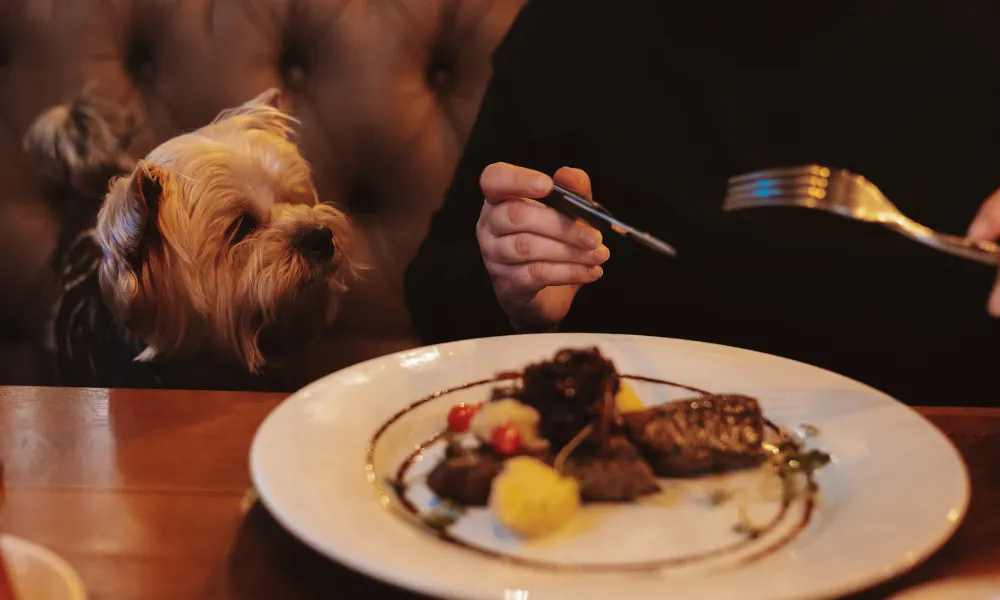

Restaurants seeking to attract dog owners may need to offer more than access to an outdoor table. New research suggests that dedicated food options for dogs can make venues more appealing and encourage customers to spend more.
The study found that actively including dogs in the dining experience produced a stronger response than simply permitting them on a restaurant patio.
More than allowing dogs on the patio
The research was conducted by Rishad Habib, associate professor of marketing management at Toronto Metropolitan University’s Ted Rogers School of Management, alongside hospitality and tourism management professor Julie Kellershohn and management PhD candidate Karun Tangri.
Published in the journal Consumer Behavior in Tourism and Hospitality, it comprised a quantitative survey involving 630 dog owners and an experimental study with another 200 participants.
In the experiment, participants were presented with two restaurant menus. Both came from venues that allowed dogs on their patios, but only one included food specifically prepared for canine customers.
That difference mattered. A dedicated dog menu signalled that the restaurant was actively welcoming pets rather than merely tolerating their presence.
How dog menus influence customers
Participants presented with dog-specific dishes reported a stronger intention to visit the restaurant. They were also more likely to recommend it to others and indicated that they would spend more overall.
According to the researchers, this reflects the emotional importance many owners place on including their dogs in everyday activities.
Some participants were willing to reduce the amount spent on their own meal to accommodate an order for their dog. However, their combined spending remained slightly higher when a pet menu was available.
Dog-inclusive dining can also create opportunities for customers to photograph and share the experience online, potentially extending recommendations beyond the restaurant itself.
Which owners are most interested
The researchers also examined whether different approaches to caring for and training dogs affected interest in dining with them.
They distinguished between authoritative and authoritarian dog-directed parenting styles, using a framework adapted from research into human parenting.
Authoritative owners establish rules and expect their dogs to follow commands, but also pay close attention to their animals’ emotions and comfort. These owners were the most likely to anticipate enjoying a shared restaurant experience and to express an intention to dine out with their dogs.
By contrast, owners with a more authoritarian approach, centred primarily on rules and correction, did not report the same increase in expected enjoyment or interest.
The findings suggest that restaurants offering dog-friendly experiences may appeal most strongly to owners who view their pets as active participants in family and leisure activities.
A potential hospitality strategy
For restaurants, the findings indicate that simply displaying a dog-friendly sign may not generate the same response as providing services designed specifically for pets.
Even relatively modest additions, such as a short menu of dog-appropriate items, may strengthen customers’ sense that both they and their animals are genuinely welcome.
The study measured consumer intentions rather than actual long-term restaurant revenue, meaning the results do not guarantee higher takings for every business introducing a dog menu. They nevertheless provide evidence that thoughtful pet inclusion can influence where dog owners choose to eat, what they spend and whether they recommend the experience.
Source: Toronto Metropolitan University