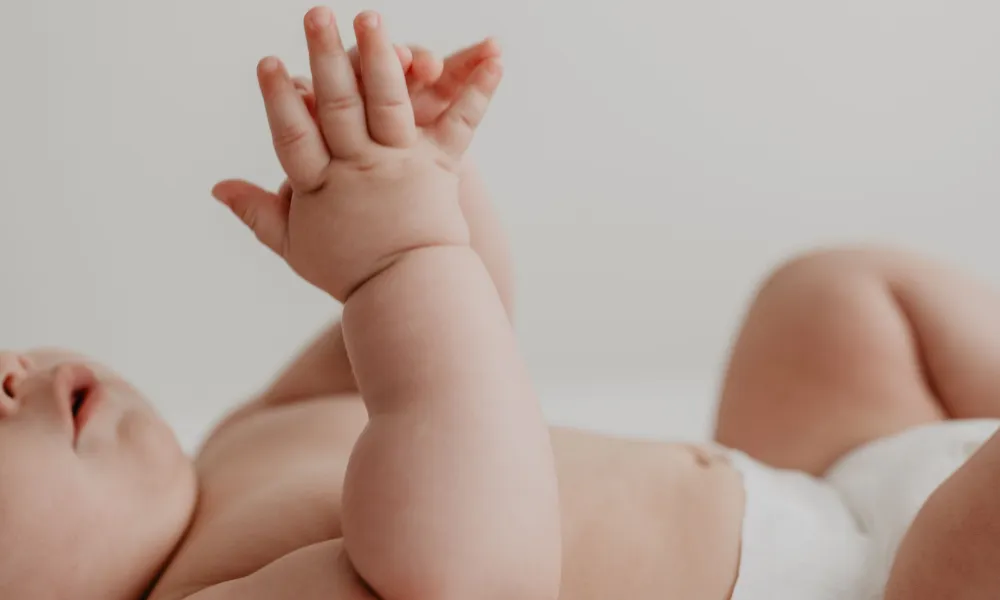

Cyprus is not short on good ideas. It is occasionally short on the courage to try them out loud. Elsewhere, governments and institutions have already tested bold policies and shown what works. Proven Elsewhere brings those practices to Cypriot decision-makers, because the hard part, the actual risk-taking, has already been done by someone else.
Every expectant mother in Finland can receive a cardboard box from the state, filled with clothes, bedding and care products for her baby’s first months. The box can also be used as the baby’s first bed. Finland has offered it since 1938, and the condition for receiving it has always mattered as much as what is inside.
A box introduced in a poorer Finland
Finland passed the Maternity Grants Act in 1937, and the first grants were paid in 1938. At the time, the country was a poor agrarian society where social support came mainly from family, the church and local poor relief. Kela statistics show that in 1936, 4,543 children died before turning one, equal to 66 deaths in every 1,000 births. Influenza, pneumonia, diarrhoea, whooping cough and tuberculosis were the most common causes.
The grant was first intended only for low-income mothers. According to Kela, around two-thirds of new mothers received it in 1938. It was worth 450 Finnish markka per newborn, a little over a third of an industrial worker’s average monthly wage. The first boxes held a blanket, crib sheets, nappies and fabric that parents could use to sew baby clothes.
In 1949, the grant became available to all mothers. To qualify, a mother had to visit a doctor or a municipal prenatal clinic before the end of her fourth month of pregnancy. That condition helped bring pregnant women into contact with the doctors and nurses of Finland’s new welfare state.
Karoliina Koskenvuo, head of a research team at Kela, has said this direct link between medical care and the box saved lives because it allowed problems in both mothers and babies to be detected early. By 2017, Finland recorded 3.9 infant deaths per 1,000 live births and stillbirths, more than a tenfold reduction since the 1930s.
Finnish health experts are careful about how much credit the box itself deserves. Tuovi Hakulinen and Mika Gissler of Finland’s National Institute for Health and Welfare have noted that the country’s low infant mortality has many causes, and that the package may not have reduced it directly. Rising living standards, the expansion of maternity clinics and hospitals, vaccination programmes and better education all played a part.
How Finland runs the scheme today
Kela, Finland’s Social Insurance Institution, has administered the scheme since 1994. Families who are having or adopting a child can choose between the box and a cash payment. Kela awards around 50,000 maternity grants a year, of which about 30,000 are taken as the package. Nearly all first-time mothers choose the box.
The grant rose from €170 to €210 for babies due on or after 1 April 2026, which allowed Kela to add more items. Kela began distributing the latest edition in October 2026. It contains 52 products, including:
- Bodysuits, trousers, caps, mittens and socks
- A wool-blend coverall, a windproof snowsuit and a sleeping bag-blanket
- A duvet cover, sheet, two blankets, a foam mattress and the box with its lid
- A bath thermometer, nail scissors, a hairbrush, a toothbrush and a board book
- Sanitary towels, washable bra pads and condoms for parents
This year’s edition also includes a soft ball for the first time. It is funded through the government’s Suomi liikkeelle programme to encourage physical activity.
“The maternity package we begin to distribute now will be even more useful for the new mother and the baby than before, because of the increase in the value of the maternity grant,” said Veera Petäjä, a Kela specialist.
Contents are decided each year through a public tender, and families have a say. Kela gathers feedback through surveys and social media, and parents vote every year on the pattern of the sleeping bag and snowsuit. The package is not a commercial product, so Kela cannot sell it.
Panu Pulma, Professor of Finnish and Nordic History at the University of Helsinki, has described the box as a symbol of equality and of the importance of children: every family in the country receives the same one.
Proven well beyond Finland, too
A 2020 study by Tampere University, published by Kela, mapped 91 baby box programmes in 60 countries. Many hand out the box at events where parents also receive information on pregnancy, childbirth and baby care.
Scotland adopted the idea most fully. The Scottish Government’s universal Baby Box programme has delivered boxes since August 2017 and is the only scheme of its kind in the UK. Around 89 per cent of families take up the offer, about 41,000 boxes a year, and each one holds items estimated at around £400. The scheme received almost £8 million in 2025-26, and more than 366,000 boxes had been delivered by January 2026. Parents register through their midwife.
Wales launched a pilot of its own, the Baby Bundle, in October 2020 in the Swansea Bay University Health Board area.
Programmes outside Finland have also raised questions. The Lullaby Trust, a UK charity that works on sudden infant death syndrome, has warned there is no evidence the boxes themselves reduce the risk of sudden infant death. It has raised concerns about boxes being marketed as products that do.
What it would take in Cyprus
Cyprus recorded 9,766 births in 2024, down from 10,241 in 2023, according to the Statistical Service of Cyprus (Cystat), and the fertility rate stayed at 1.4. Infant mortality fell to three deaths per 1,000 live births. The case for a box in Cyprus is therefore less about survival and more about what Finland built around it: a shared start for every child and an early link to prenatal care.
Cyprus’s support for new parents is almost entirely in cash. Since October 2024, the childbirth grant has risen in stages from €1,000 for a first child to €2,500 for a fourth and each later child. A separate scheme pays €200 a month to women who have their first child before the age of 30, and 802 mothers had received it.
The Finnish model would not need new money on a large scale. At Finland’s current grant value of €210, a box for every baby born in Cyprus in 2024 would cost about €2 million a year. Like Finland, Cyprus could offer it as a choice next to the existing grant, distribute it through maternity services, and link it to an early prenatal check-up.
The idea has been tested for 88 years. The only thing left to decide is who picks it up first.
Have a good practice worth bringing home? If your country, company or institution does something Cyprus should be trying, we want to hear about it. Send your ideas to peggy.s@politis.com.cy — the next instalment of Proven Elsewhere could be inspired by you.
With information from Kela, Tampere University, the Scottish Government, BBC and the Statistical Service of Cyprus (Cystat)