
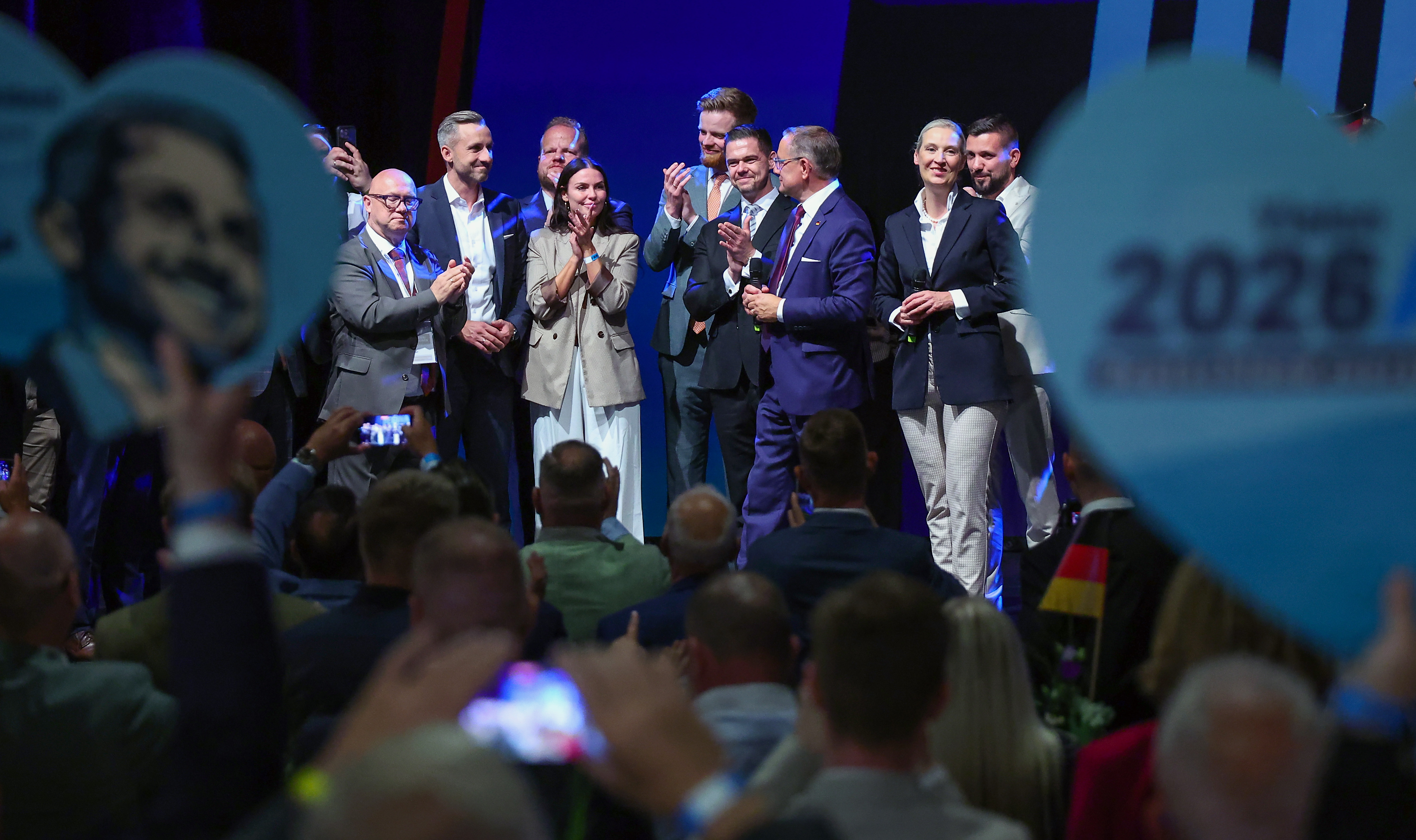
The image of Alice Weidel is perhaps the best starting point for understanding why the "European far right" is not a single political phenomenon. The co-leader of Germany's AfD is a woman, an economist, openly lesbian, lives with her partner, who is of Sri Lankan origin, and the two are raising two children. At the same time, she leads a party whose programme defines the family as "father, mother and children," opposes so-called gender ideology, and has adopted one of the harshest anti-immigration lines in Germany.
The contradiction is only apparent if we treat all parties to the right of the traditional conservative bloc as different versions of the same thing.
Even within political science, there is a substantive distinction between the "radical right" and the "far right." In the relevant literature, the former may accept the democratic principle and elections while questioning elements of liberal democracy, such as pluralism and certain minority rights, whereas the latter questions the democratic order itself at a deeper level. As a result, even the general use of the term "far right" conceals significant differences.
Three different "camps"
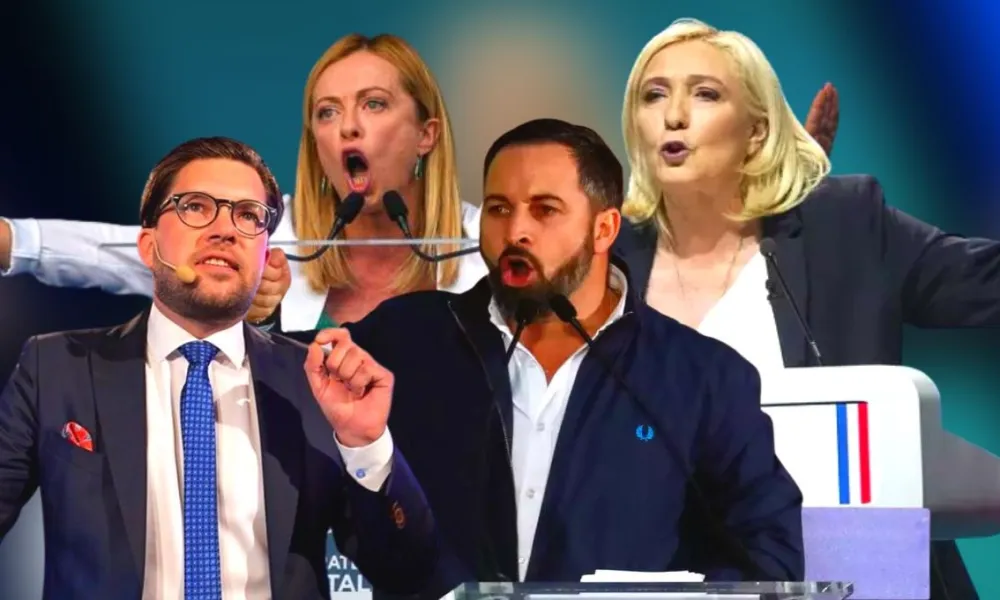
The clearest evidence of these differences lies within the European Parliament itself. ELAM and Giorgia Meloni's Fratelli d'Italia sit with the European Conservatives and Reformists (ECR). Marine Le Pen's Rassemblement National, the Dutch PVV and Viktor Orbán's Fidesz belong to Patriots for Europe. AfD sits further right still in terms of its European alignment, in the Europe of Sovereign Nations group.
These are not merely organisational differences. Behind them lie different conceptions of Europe, the West, Russia, and how far the challenge to today's European order should go.
In the European Parliament, far-right parties are scattered across different political groups. This is not merely a matter of different organisational choices. Between them lie different conceptions of Europe, the West, Russia, and how far the challenge to today's European order should go.
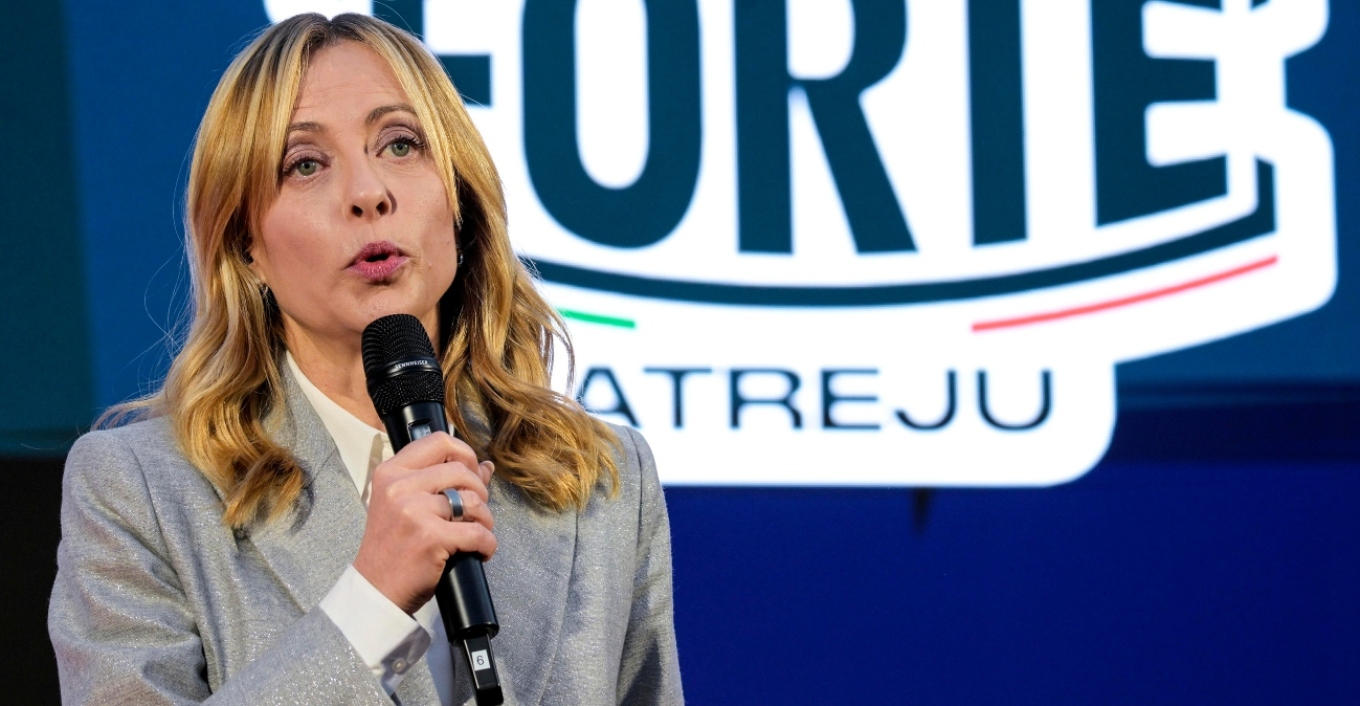
The Meloni government, for example, despite its nationalist roots and hard-line immigration policy, has moved much closer to the Euro-Atlantic core than other forces of the European radical right. Meloni herself has continued to support Ukraine, and in 2026 called for a common European line in negotiations with Russia.
AfD, by contrast, calls for restoring relations with Moscow, opposes German military aid to Ukraine, and maintains a far more confrontational stance towards the EU and the euro. The gap here is substantive, not merely rhetorical.
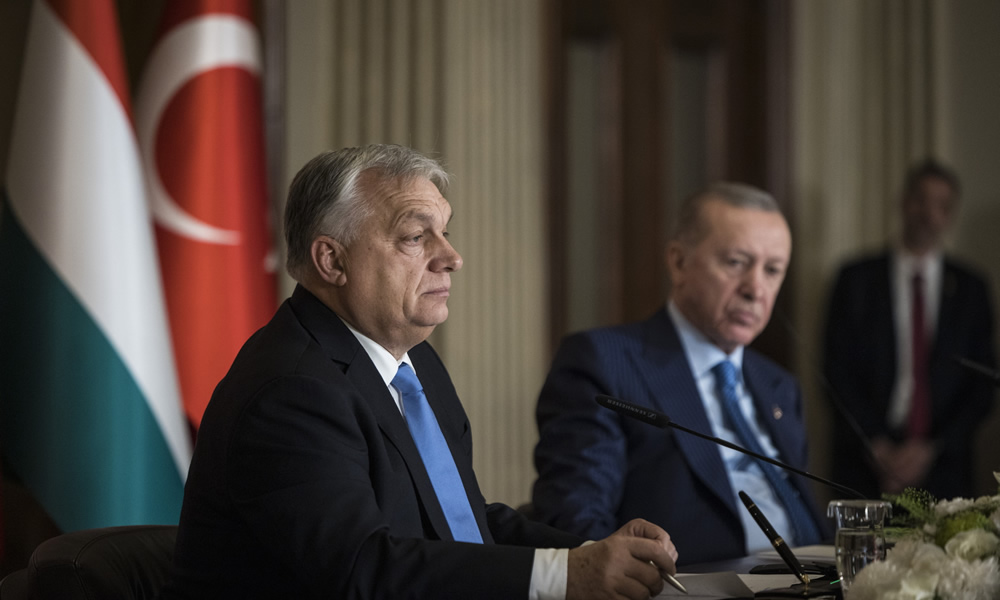
Even more distinctive was the model built by Viktor Orbán. Until his electoral defeat in April 2026, after 16 years in power, Hungary served as a point of reference for part of Europe's nationalist and "anti-woke" right. Orbán repeatedly clashed with Brussels, maintained closer ties with Moscow, and built a political narrative around Christian identity, immigration, and resistance to Western social liberalism.
The major divide on LGBTQ+ issues
This is perhaps where the most interesting cultural divergence lies, between Northern and Western Europe on one hand and Southern and Eastern Europe on the other.
Political science has documented that parts of the radical right in Western Europe adopted elements of gay rights rhetoric, not necessarily out of social liberalism, but as a way of positioning themselves against political Islam. The logic runs roughly as follows: acceptance of homosexuality is presented as a "Western value" that must be protected from societies or communities considered more conservative. Researchers have described this phenomenon using the term "homonationalism."
This partly explains how a lesbian politician can stand at the top of AfD without the party automatically becoming liberal on LGBTQ+ issues.
In Cyprus, by contrast, ELAM uses a far more traditional ideological language. "Fatherland-Religion-Family" is described by the party itself as the central axis of its identity. Its opposition to same-sex marriage and adoption by same-sex couples, as well as to gender self-determination policies, fits directly within this framework.
Here, the Cypriot version sits culturally closer to the former Orbán government. In Hungary, legal gender change, adoption by same-sex couples in practice, and LGBTQ+ content in schools had all been banned. The new government of Péter Magyar announced only in September 2026 that it would begin reversing part of this legislation.
Nationalism doesn't mean the same thing everywhere
There is also a deeper difference. ELAM's nationalism is shaped by the Cyprus problem, the Turkish occupation, Greek national identity, and Orthodoxy. Its foreign policy cannot, therefore, simply be copied from AfD or the RN.
This is visible in the European Parliament too. ELAM's MEP Geadis Geadi has supported resolutions condemning Russian aggressive actions against EU member states, while much of his parliamentary activity focuses on Turkey, the occupation, and the need for European support for the Republic of Cyprus.
For AfD, by contrast, the central external "other" is not Russia but the immigration establishment, Brussels, and current German foreign policy. For Le Pen's RN, it is above all French national sovereignty and immigration. Le Pen indeed revived, in 2026, the position that France should withdraw from NATO's integrated military command.
Not on the economy either
The differences grow even wider on economic policy. Alice Weidel comes from the economically liberal wing of AfD and has described herself as an admirer of Margaret Thatcher. The RN, by contrast, combines nationalism with strong economic protectionism, VAT cuts on essential goods, protection of welfare benefits for French citizens, and greater state intervention.
Fratelli d'Italia moves in a different direction still, combining tax relief, business support and demographic incentives with a strong state policy in favour of the traditional family.
So even the classic economic divide of "more or less state" does not unite this political family.
So what actually unites them?
There is, nonetheless, a recognisable common core. Almost all of them place greater weight on national sovereignty over further European integration, treat mass immigration as a threat, question aspects of multiculturalism, and position themselves against what they describe as a progressive, "woke" or "gender" agenda. But they differ dramatically in how they define the nation they want to protect and, above all, whom they consider the greater threat.
For ELAM, national identity runs through Hellenism, Orthodoxy and the Cyprus problem. For AfD, through German national identity, opposition to immigration, and resistance to the current European order. For Meloni, through a national conservatism that has proven compatible with NATO and EU membership. For Le Pen, through the idea of "national priority." And for Orbán, at least during his long period in power, through a model of an "illiberal" Christian state.
The "European far right," then, exists as a political family, but not as a single ideology. The affinities are real, but so are the conflicts.
And perhaps this is the element most often lost in public debate: nationalism is, by definition, national. When national histories, religions, threats and societies differ, the far rights they produce are inevitably different too.