
Cyprus is closely associated with summer holidays, coastal hotels and long days beside the Mediterranean. Yet beyond the main resorts lies a broader tourism landscape shaped by vineyards, mountain forests, wetlands, traditional villages and small rural businesses.
Visitors can follow official wine routes through the Troodos foothills, dive to one of the Mediterranean’s best-known shipwrecks, sleep beneath the stars in a countryside dome or watch migratory birds gather at the island’s salt lakes. Restored village houses, craft workshops and rural wellness retreats provide quieter alternatives for travellers who prefer to stay longer and move more slowly.
Alternative tourism is not defined by a single destination. It is a way of travelling that places greater emphasis on nature, local communities and experiences rooted in the landscape. The following guide explores six ways to discover a different side of Cyprus, together with specific places to visit and practical advice for planning the trip.
Wine tourism
Wine tourism is one of the most established ways to explore rural Cyprus. The Deputy Ministry of Tourism has created seven official wine routes linking wineries and vineyards with villages, restaurants, museums and other cultural sites. These include the Limassol wine villages, Pitsilia, Commandaria, Laona-Akamas and Vouni Panagias-Ampelitis routes.
The Limassol wine villages offer the most familiar introduction to the island’s winemaking tradition. Omodos, Koilani, Vouni, Arsos and Lofou lie among the vineyards on the southern slopes of the Troodos mountains, with Omodos remaining one of the best-known destinations for visitors.
Above Omodos, Oenou Yi Winery offers guided tours and tastings covering the production process from the grape harvest to bottling. Reservations are required, making it a better option for travellers planning their visit in advance rather than arriving as part of an unstructured village tour.
Nearby Koilani deserves time beyond a brief stop on the route. Set at around 820 metres in the Limassol wine villages, it remains one of Cyprus’s main grape-growing communities and is known for its wines and grape-based products. Traditional houses still display old earthenware jars and equipment once used for winemaking and the distillation of zivania. Koilani is also home to Vlassides Winery, which cultivates vineyards around the village and offers organised tours and tastings by appointment. The winery provides a more contemporary perspective on the area’s long association with viticulture, making Koilani a useful stop for visitors interested in both traditional and modern Cypriot winemaking.
Higher in the Troodos range, Kyperounda Winery provides a different perspective on Cypriot wine. Located in the Pitsilia region at around 1,200 metres above sea level, it is surrounded by steep mountain vineyards and represents the island’s high-altitude wine production.
In western Cyprus, Vasilikon Winery in Kathikas sits on the Laona-Akamas route. Visitors can explore its wine museum and attend tastings on a terrace overlooking the surrounding hills, making it an accessible stop for travellers staying in the Paphos region.
Further inland, Vouni Panayia Winery near Pano Panagia focuses heavily on indigenous Cypriot grape varieties. The visitor experience includes an educational film, a traditional museum, a tasting room and a restaurant serving seasonal local food. Its vineyards, at around 1,000 metres above sea level, include Xynisteri, Promara, Spourtiko, Maratheftiko and Yiannoudi.
Wine tourism is not limited to tasting finished bottles. A good winery visit can explain how altitude, climate and soil influence production, while also introducing travellers to grape varieties rarely found outside Cyprus. Visits during late summer and early autumn may also coincide with the harvest, although access to vineyards and production areas depends on the winery.
Adventure tourism
Cyprus’s compact geography makes it possible to combine mountain hiking, cycling, climbing and diving within a single trip. Troodos provides the strongest base for land-based activities, while Larnaca and the coastal regions offer access to some of the island’s best-known underwater sites.
For an accessible introduction to hiking, the Artemis Trail circles the upper slopes of Mount Olympus in the Troodos National Forest Park. The seven-kilometre circular route takes around two and a half to three hours and is officially graded as easy. At roughly 1,850 metres, it passes through black pine forest and offers wide views across the island, making it a suitable option for visitors who want mountain scenery without a technically demanding climb. More experienced hikers can tackle the Teisia tis Madaris Trail near the Madari fire lookout tower. Although the circular route is only three kilometres long and takes around 90 minutes, it carries the highest official difficulty rating of three because of its steeper and more rugged terrain. At an altitude of about 1,580 metres, the trail passes dramatic cliffs and geological formations and offers extensive views towards the Mesaoria plain and Morfou Bay. It is better suited to confident hikers wearing appropriate footwear.
Travellers looking for organised activities can visit Adventure Mountain Park near Kyperounta. The family-run site offers supervised rock climbing, electric mountain-bike tours and rentals, as well as other outdoor activities. Its location near the Madari trail network also allows visitors to combine a guided activity with a longer walk through the surrounding forest. Advance booking is advisable, particularly for climbing and cycling.
Troodos is also one of the island’s main cycling areas, with steep paved climbs, forest tracks and gravel routes. Activate Cyprus offers guided road cycling, mountain biking and gravel-bike tours for different ability levels, together with bike rental. More experienced road cyclists can attempt climbs towards Mount Olympus, while mountain and gravel riders can follow quieter routes through the forests and villages.
Below the surface, the MS Zenobia off Larnaca is Cyprus’s best-known dive site. The 172-metre ferry sank on its maiden voyage in 1980 and now lies on its side at depths ranging from around 16 to 42 metres. The wreck contains vehicles and cargo and has become a habitat for grouper, barracuda, moray eels, turtles and other marine life.
The Zenobia is not a beginner shore dive. Access is by boat, and the official tourism portal lists an advanced qualification as necessary. Divers should book through a licensed centre, discuss which parts of the wreck match their certification and avoid entering enclosed sections without the appropriate training.
Conditions should shape any adventure itinerary. Mountain weather can change quickly, while exposed trails and cycling routes become difficult during the hottest summer hours. Walkers should carry water, use suitable footwear and check for temporary trail closures. Guided providers are the safer choice for climbing, technical cycling and diving, particularly for visitors unfamiliar with the terrain.
Glamping and nature stays
Glamping offers a way to stay close to nature without giving up the basic comforts of conventional accommodation. In Cyprus, options range from off-grid yurts and mountain domes to wooden cabins near the coast.
Yurts in Cyprus, outside Simou village in the Paphos district, is one of the island’s best-established examples. The ecological retreat includes three authentic Mongolian yurts and a wooden cabin overlooking a rural valley. Each yurt has a private outdoor shower and toilet, while the cabin includes a small kitchenette. Hiking, cycling, pottery workshops, horse riding and birdwatching can also be arranged in the surrounding area.
In the Larnaca mountains, Dome in Nature near Vavatsinia offers a private geodesic dome surrounded by forest. The accommodation sleeps up to four guests and includes a kitchen, bathroom, fireplace, air conditioning and a large skylight designed for stargazing. It is closer to a self-contained holiday home than traditional camping, making it suitable for travellers seeking privacy and comfort in a rural setting.
Agros Glamping Boutique provides another mountain option in the Limassol district. Its domes are located near Agros and include modern facilities, private hot tubs and access to activities such as mountain biking, hiking and organised all-terrain vehicle tours. Some facilities and activities require advance reservation.
For a coastal stay, Cyprus Glamping Park in the Pentashinos area of Agios Theodoros offers wooden cabins close to the sea. The cabins include kitchens, private bathrooms, Wi-Fi and air conditioning, while shared areas provide barbecue facilities. The location allows visitors to combine a nature stay with swimming, walking and cycling.
The term “glamping” covers very different levels of comfort. Some properties offer hotel-style facilities, while others remain deliberately simple or off-grid. Travellers should check whether bathrooms are indoors or outdoors, whether cooking facilities are provided and how easily the property can be reached.
Season is also important. Mountain stays can become cold at night in winter, while domes and tents may be considerably warmer during the peak summer months. Access roads, parking, heating, air conditioning and nearby shops should all be confirmed before booking.
Birdwatching and wildlife tourism
Cyprus’s position on the eastern Mediterranean migration route makes it an important stopping point for birds travelling between Europe, Africa and Asia. More than 400 species have been recorded on the island, most appearing as passage migrants or seasonal visitors. Cyprus is also home to three breeding species found nowhere else in the world: the Cyprus Wheatear, Cyprus Warbler and Cyprus Scops Owl.
The most important birdwatching area is the Akrotiri Peninsula, south-west of Limassol. Its salt lake, marshes, reed beds, coastline and agricultural land form the island’s largest natural wetland complex and support a wide range of waterbirds, raptors and migratory species.
The Akrotiri Environmental Education and Information Centre is a useful starting point for first-time visitors. It includes exhibitions on the peninsula’s habitats and a wildlife observation point overlooking the salt lake. Akrotiri is particularly rewarding during the spring and autumn migration periods, while flamingos and other waterbirds are most commonly present during the wetter winter months.
The Larnaca Salt Lake complex is the island’s best-known location for winter flamingos. Numbers vary considerably according to rainfall, water levels and food availability, so their presence should never be treated as guaranteed. Greater Flamingos generally arrive in November and leave by the end of February, although some may remain longer when conditions are suitable.
Visitors should observe the lake from established paths and viewing areas rather than approaching the birds across the salt flats. Entering the lake can damage the habitat and disturb feeding flocks, while the apparently dry surface may conceal unstable mud.
A short drive north of Larnaca, Oroklini Lake offers a more compact and accessible birdwatching experience. The protected Natura 2000 wetland has observation hides and is particularly important for breeding Black-winged Stilts and Spur-winged Lapwings. It also attracts herons, ducks and other migratory waterbirds at different times of the year.
Birdwatching is not limited to wetlands. The Troodos forests provide opportunities to see the Cyprus Wheatear and Cyprus Warbler, together with endemic subspecies including the Cyprus Jay, Cyprus Coal Tit and Short-toed Treecreeper. The Artemis Trail is one accessible route through high-altitude forest habitat, while quieter forest roads and trails around Troodos can also be productive during spring and early summer.
For visitors unfamiliar with local species or access points, BirdLife Cyprus offers small-group birdwatching tours with itineraries adapted to the season and the interests of participants. The organisation also publishes recent sightings and runs scheduled field trips to areas including Akrotiri, Larnaca, Oroklini, Troodos and Paphos.
The best period depends on the experience sought. Spring and autumn offer the greatest variety of migratory birds, winter is the main season for flamingos and waterfowl, and late spring is well suited to finding Cyprus’s endemic breeding species.
Birdwatchers should remain on established tracks, keep a respectful distance from wildlife and avoid using recordings near nesting birds. Access conditions can also change, particularly around Akrotiri and other areas close to livestock, military land or protected habitats, so recent notices should be checked before travelling.
Agritourism and village stays
Agritourism allows visitors to experience Cyprus from within its rural communities rather than from a purpose-built resort. Traditional stone houses, former family homes and village buildings have been restored as guesthouses, apartments and small hotels, often retaining courtyards, wooden beams, fireplaces and local architectural features.
The Cyprus Agrotourism Company represents more than 150 accommodation providers, wineries, artisans and rural businesses. Its listings provide a useful starting point for travellers looking for recognised village properties across the island.
In the Marathasa Valley, Casale Panayiotis is one of Cyprus’s best-known village accommodation projects. Its rooms and suites are distributed across seven restored houses within Kalopanayiotis rather than contained in a single hotel building. Guests remain connected to the village’s lanes, restaurants and historic sites, including the UNESCO-listed Monastery of Saint John Lampadistis.
Casale Panayiotis offers a relatively luxurious form of agritourism, combining traditional accommodation with restaurants and a spa. It suits travellers who want the atmosphere of a mountain village but prefer the services of a full hotel. Its restaurants also use seasonal produce sourced from Kalopanayiotis and neighbouring communities.
For a more self-contained rural stay, Cyprus Villages operates restored apartments in Tochni and Kalavasos. In Tochni, the accommodation is spread across traditional stone houses, including Danae House, an eight-apartment complex arranged around a courtyard and swimming pool. Breakfast is served in the village, while some properties can also be booked on a half-board basis.
Tochni is officially promoted as one of the island’s established agritourism destinations. Its central position between Larnaca and Limassol also makes it practical for visitors who want access to villages, archaeological sites and the southern coast without changing accommodation.
In the Limassol wine country, Apokryfo occupies a cluster of renovated stone houses at the edge of Lofou. The property includes suites and larger houses with fireplaces and equipped kitchens, making it suitable for both couples and groups. Its location allows visitors to combine a village stay with wineries, walking routes and nearby communities on the Troodos foothills.
Western Cyprus offers quieter options away from the main mountain resorts. Kostaris Goudi Village Houses consists of restored stone houses sharing a courtyard, garden and small swimming pool in Goudi, near Polis and the Akamas region. Traditional features include an old oven and wine press, while the location can be used as a base for visiting Latchi and walking in Akamas.
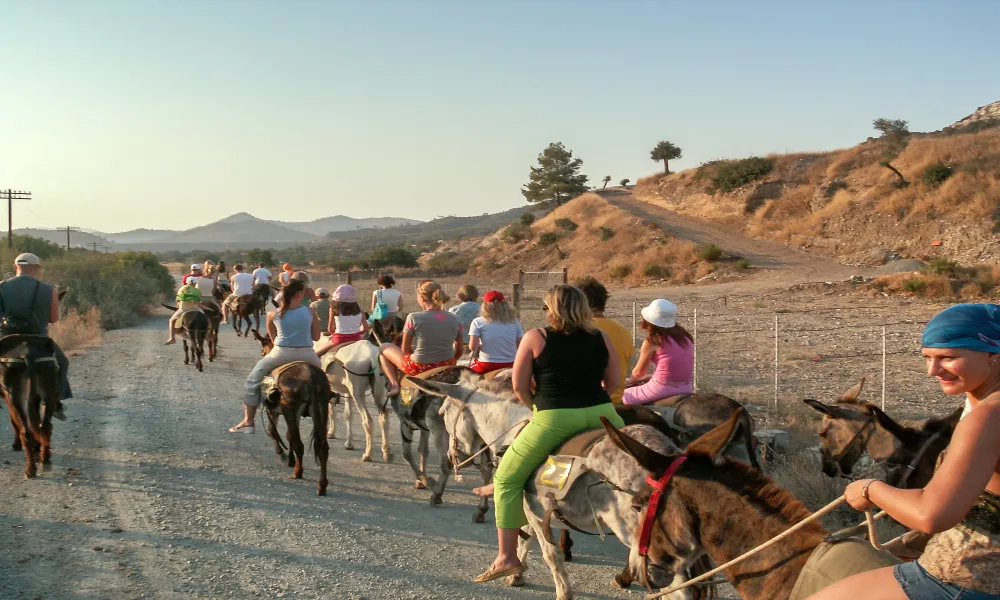
Cyprus’s rural heritage can also be experienced through its donkey farms, reflecting the animal’s historic role in village transport and agriculture. Golden Donkeys Farm in Skarinou allows visitors to meet and feed donkeys while learning about traditional rural life. In the Paphos district, Argonaftis Donkey Farm near Kelokedara offers organised village experiences that may include supervised donkey riding, local food and demonstrations of rural traditions. Activities and riding availability should be confirmed in advance.
The experience varies considerably between properties. Some operate like boutique hotels, with restaurants, spas and reception services. Others are independent houses where guests cook for themselves and may have little contact with staff after arrival. Travellers should check whether meals, heating, parking and daily housekeeping are included.
Location also matters. A well-known village such as Kalopanayiotis or Lofou may have several restaurants and attractions within walking distance, while smaller communities may offer only one café or grocery shop. Rural public transport remains limited, making a car the most practical option for most village itineraries.
Agritourism is best approached as more than inexpensive accommodation. Staying overnight allows visitors to experience villages after day-trippers leave, use local restaurants and shops, and explore nearby wineries, trails and cultural sites at a slower pace. Visitors should also remember that these are residential communities, not open-air museums, and respect private homes, churches and village life.
Cultural, wellness and slow tourism
Alternative tourism does not always involve physical adventure. Cyprus also offers quieter experiences centred on traditional crafts, rural culture, wellness and a slower pace of travel.
The Cyprus Handicraft Centre in Nicosia provides one of the broadest introductions to the island’s traditional crafts. Visitors can watch artisans working in embroidery, weaving, basketry, woodcarving, pottery, metalwork and leatherwork, while handmade products are available from the centre’s shop. The workshops operate separately from the retail area, so opening hours should be checked before visiting.
Pano Lefkara remains the island’s best-known destination for traditional lace and silver filigree. Visitors can see craftspeople working in village shops and workshops, while the Local Museum of Traditional Embroidery and Silversmithing explains how the two crafts developed. The village is well suited to a slow day trip combining craft workshops, stone-built streets and local cafés rather than a brief shopping stop.
In the Paphos district, the Fyti Weaving Museum preserves the village’s distinctive woven textiles, known for their geometric designs and vivid colours. The museum displays traditional looms and demonstrates a craft that has been practised in the community for centuries. Workshops are not held continuously, so travellers seeking a hands-on experience should contact the museum before travelling.
Traditional pottery can also be explored in villages such as Kornos and Foini, which remain associated with Cyprus’s red-clay pottery tradition. Kornos is particularly known for vessels made using clay from the surrounding area, although visitors should confirm whether local workshops are open before arriving.
Wellness tourism offers a different form of rural escape. Secret Forest near Miliou, in the hills above Paphos, combines accommodation with mineral-spring pools, spa treatments, fitness sessions, guided walks and structured wellness programmes. The experience is closer to a dedicated retreat than a standard hotel stay, and programmes may include meals and scheduled activities.
In Kalopanayiotis, the Myrianthousa Spa at Casale Panayiotis offers hydrotherapy facilities, steam rooms, treatment rooms and private spa experiences overlooking the Marathasa Valley. It can be combined with a village stay, short walks and visits to nearby monasteries and traditional neighbourhoods.
These experiences are best approached without an overfilled itinerary. Spending a full day in one village, observing a craft, visiting a small museum and stopping at a local café often provides a stronger sense of place than moving quickly between several attractions.
Workshop schedules, spa access and treatment availability vary, and many experiences require advance booking. Travellers should contact venues directly, particularly when visiting rural areas outside weekends or the main tourism season.
Alternative tourism reveals a Cyprus that cannot be experienced entirely from the coast. Its vineyards, forests, wetlands and villages each offer a different reason to travel inland and explore the island at a slower pace.
These experiences also require more planning than a conventional resort holiday. Winery tours, outdoor activities, workshops and rural stays often need to be booked in advance, while seasonal conditions can determine whether a trail is suitable, migratory birds are present or a harvest is under way.
The reward is a more varied and locally connected journey. Whether it involves tasting indigenous wines, hiking through Troodos, watching flamingos at Akrotiri or spending the night in a restored village house, travelling beyond the usual itinerary offers a fuller picture of Cyprus.
The beaches remain one of the island’s greatest attractions, but they are far from the only reason to visit.