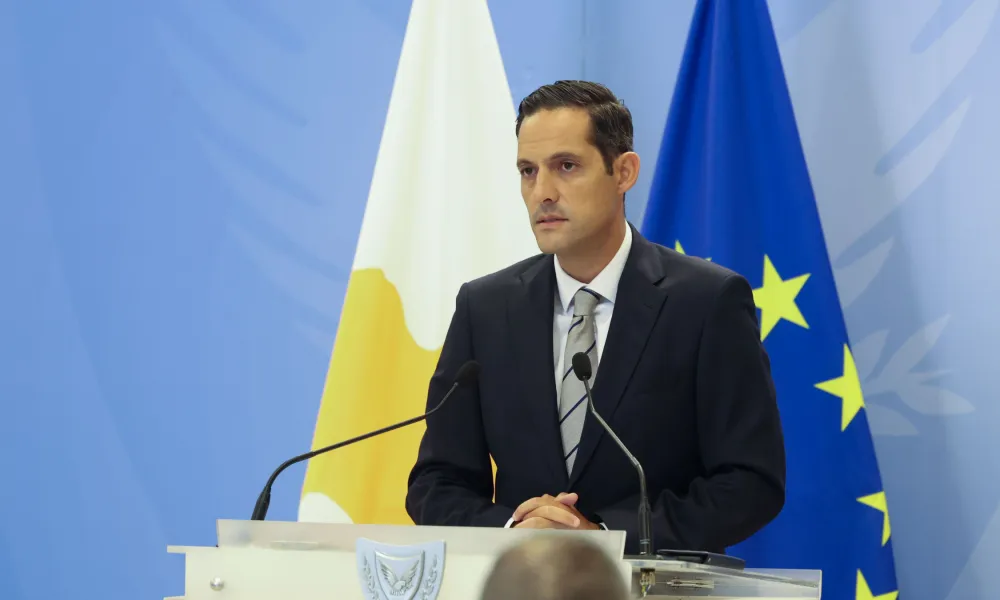

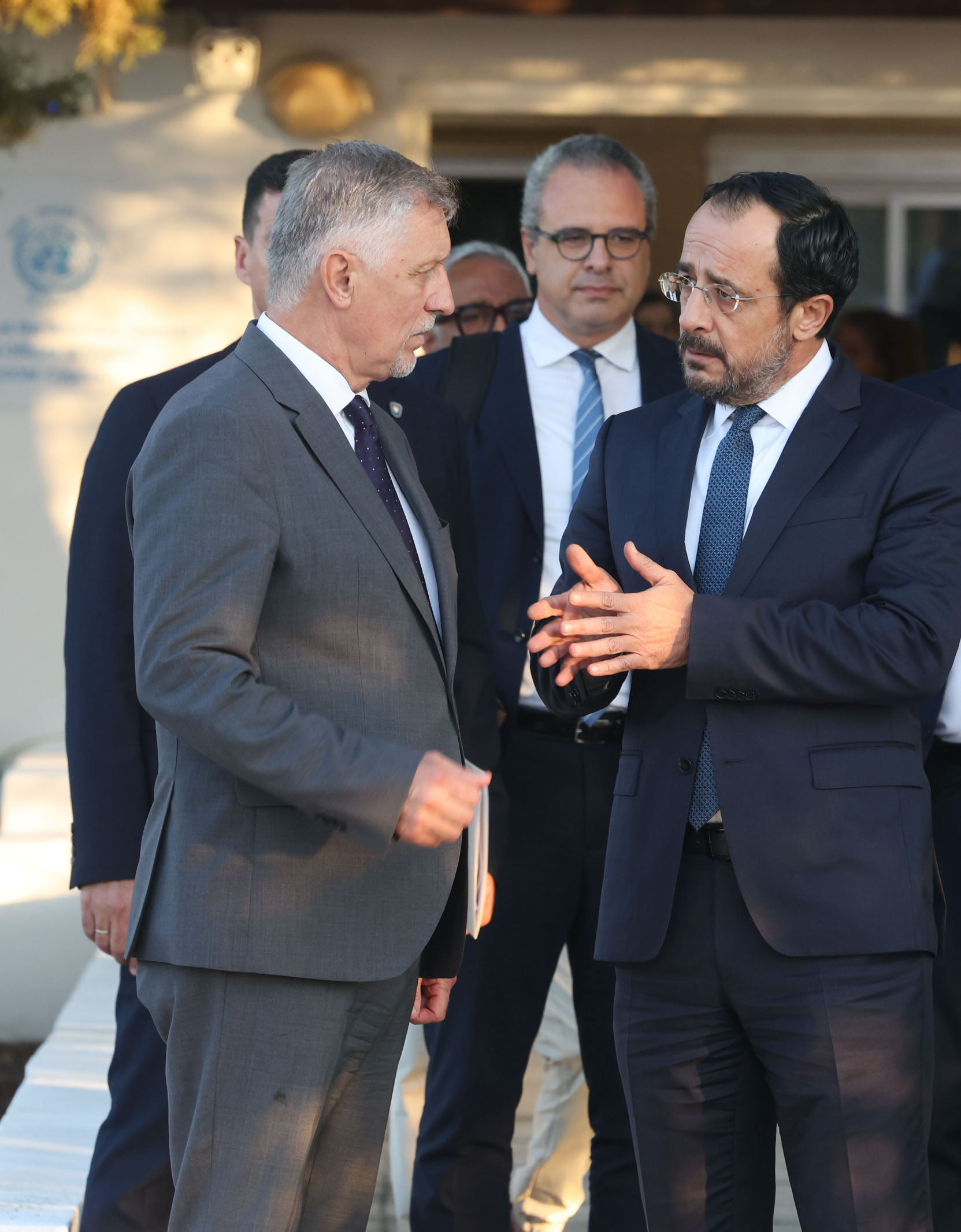
Following their lengthy meeting at the old Nicosia airport on Wednesday, the two leaders have agreed to meet again next Wednesday, on 2 September at 3pm, announced Government Spokesperson Konstantinos Letymbiotis on Thursday.
“Following a long period of stagnation there is once again more frequent contact, more substantive discussion and concrete next steps,” he said.
While progress at the leaders’ level was necessary, “to achieve substantive progress, the position, political will and contribution of the guarantor powers, and particularly of Turkey, remain crucial,” he added.
On political equality
Following Wednesday’s meeting between the two leaders, Tufan Erhürman said in a post on social media that political equality, along with its substance and content, forms the very essence of the Cyprus problem.
“This issue cannot be made subject to any form of ‘give-and-take’ with other matters […] Unless there is clarity on this issue, it will not be possible to achieve progress either on the remaining aspects of the methodology, including the ‘convergences’, or on substantive matters,” he warned.
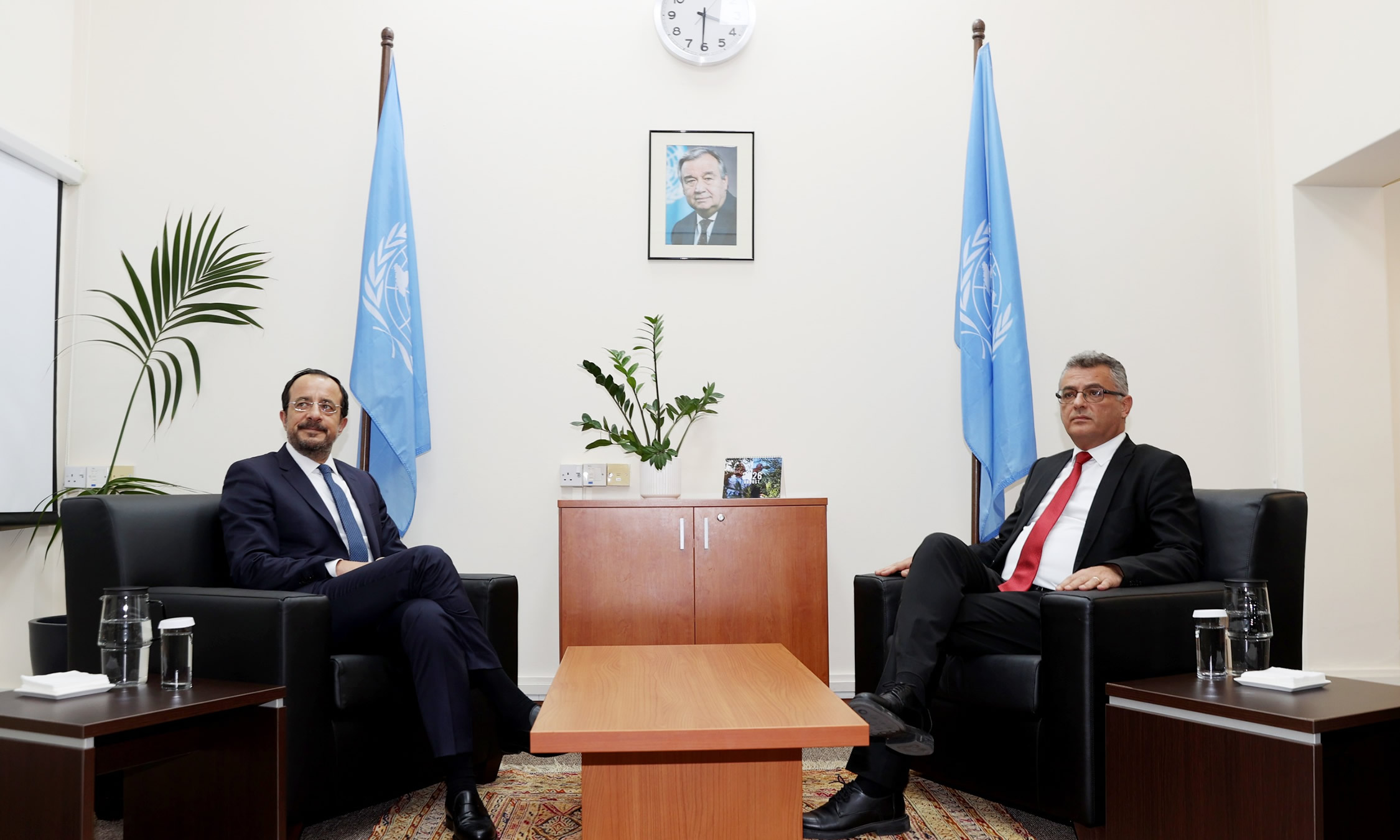
Asked to comment, Letymbiotis said these issues have been discussed with complete clarity at the table. He recalled the explicit reference to political equality in the first joint statement issued by the UN following a meeting between Christodoulides and Erhürman.
“Equally important are the references to the convergences already recorded. We have repeatedly stressed that the negotiating acquis must be preserved. Not only do we respect it, but we consider it an essential basis for any progress.”
Crossings and demining
On confidence-building measures (CBMs), the spokesperson said the Greek Cypriot side accepted the UN Secretary-General’s proposal in March 2025 in Geneva to open four crossing points simultaneously. However, when the other side changed position, the Greek Cypriot side proposed opening another pedestrian crossing in the old town. Then, when the UN chief suggested a compromise proposal on opening Mia Milia and Athienou, this was also accepted, said Letymbiotis.
“We hope that through regular contacts there will be a corresponding response from the other side so that we can announce the simultaneous opening of two, four, or even all of the proposed crossing points,” he added.
On demining, he said the UN identified areas across the island for demining.
“We responded immediately, identified specific areas and are awaiting a corresponding response from the other side so that we can proceed as quickly as possible.”
Negotiator: T/Cs slowing down process
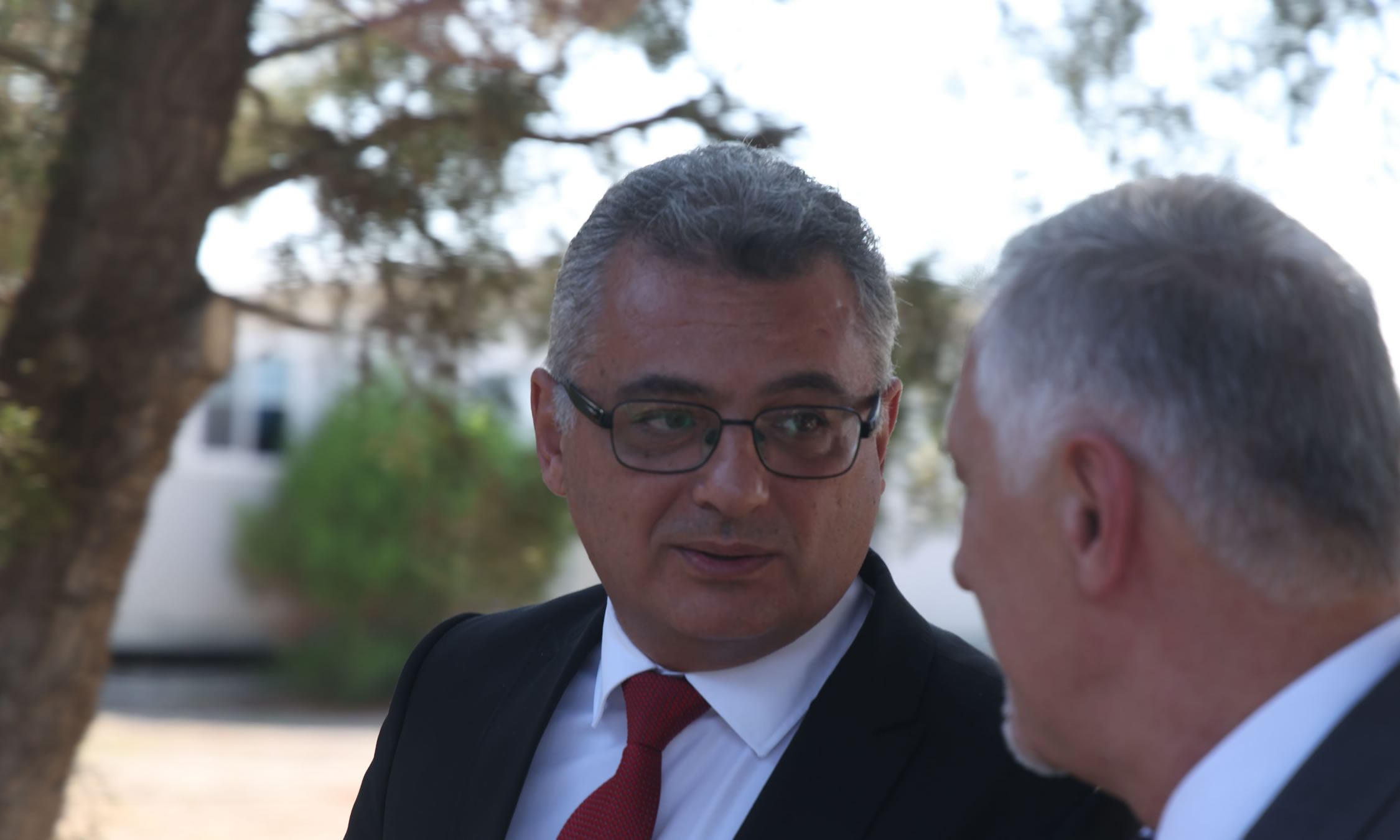
Speaking on Politis Radio's Morning Briefing programme, Greek Cypriot negotiator Menelaos Menelaou expressed concern that the crossing points issue is being treated by the other side as a precondition for progress.
"By treating it as a precondition, the side preventing a breakthrough on the issue is at the same time turning it into an obstacle to the next steps as well," he said.
Despite expectations of progress following the change of leadership in the Turkish Cypriot community, Menalou said: "At various stages we encountered an approach of slowing down the process."
On the trust-building measures concerning Maronite and Armenian communities, raised by President Nikos Christodoulides during the last leaders’ meeting, Menelaou said these included: expanding opportunities for resettlement in Maronite villages; improving access to communities where restrictions remain in place, and restoring cultural heritage monuments belonging to both communities.
Cancellations and concerts
On recent efforts to cancel music festivals, football camps, and other such events in the north, Erhürman said the latest leaders’ meeting took place "under the shadow" of these negative developments. Rather than building trust, trust was being eroded, he said.
During his press briefing, meanwhile, Letymbiotis was asked why some events have been cancelled – such as the planned visit by Barcelona’s football academy – while others are set to go ahead.
“The position of the Republic of Cyprus was, is and remains institutional and clear. We do what we are obliged to do as an internationally recognised state. We inform, present the factual data, and explain international law and the applicable legal and institutional framework, with full documentation. The final decision, of course, rests with the organisation itself, which assesses all the relevant facts.”
He rejected the notion put to him by one journalist that the government was applying “pressure” to cancel such events, which risked undermining trust between the two communities. The spokesperson argued the government does what any internationally recognised state is obliged to do, using diplomacy to present the facts clearly.
On football, he reminded that there has been a FIFA-UEFA agreed framework in place since 2013, which provides institutional mechanisms for such matters. He questioned why this was framework was not being used.
These issues serve to highlight the fundamental need to resume negotiations and resolve the Cyprus problem, “so that the Republic of Cyprus may function as a normal state throughout its territory,” he said.
Civil society
At the press briefing, Letymbiotis also announced the Greek Cypriot members of the Steering Committee of the Civil Society Consultative Body that both leaders had previously agreed to set up. The members are Pantelis Poetis, Alexandros Lordos, Amalia Avraam, Sophia Papamichalopoulos and Marios Michaelides.
Asked to elaborate on the consultative body, the spokesperson said it will include 50 participants from each community, who will discuss issues affecting daily life.
Membership is expected to vary depending on the topics under discussion, allowing broader participation from civil society in both communities, while ensuring representativeness in terms of age, geographical origin and gender.
The body is expected to submit recommendations and views to both leaders on the different issues.
“The Consultative Body can serve as an additional channel of communication and constructive contribution by civil society to the ongoing effort,” he said.
Dana’s diplomatic briefing
Meanwhile, on the issue of the recent diplomatic briefing by Turkish Cypriot negotiator Mehmet Dana in the buffer zone on August 19, government sources have denied asking diplomats not to attend the event.
The sources argued that foreign diplomats who received an invitation bearing the symbols of the breakaway entity in the north were advised to be cautious of the potential instrumentalisation of the event through the presence of symbols and flags. However, diplomats were not asked by the Foreign Ministry to skip the briefing, insisted the sources.