
This week, Politis to the Point's Phrase of the Day was devoted to a single theme: violence against women. It ran alongside the 16 Days of Activism against Gender-Based Violence, which began on 25 November.
The seven quotes come from UN Secretaries-General, a former US Secretary of State, a former President of Greece, a French campaigner and Cyprus' Commissioner for Gender Equality. They span more than three decades, yet they carry one message: violence against women is a violation of human rights, and responsibility lies with the perpetrator.
Beijing, 1995: "Women's rights are human rights"
Hillary Rodham Clinton, then First Lady of the United States, addressed the UN Fourth World Conference on Women in Beijing on 5 September 1995, in front of representatives from 189 countries.
"If there is one message that echoes forth from this conference, let it be that human rights are women's rights and women's rights are human rights, once and for all."
The phrase became an international rallying cry for gender equality.
Kofi Annan: "The most shameful human rights violation"
In remarks on International Women's Day in 1999, then UN Secretary-General Kofi Annan said:
"Violence against women is perhaps the most shameful human rights violation, and it is perhaps the most pervasive. It knows no boundaries of geography, culture or wealth."
Ban Ki-moon: "Never acceptable, never excusable, never tolerable"
His successor, Ban Ki-moon, spoke to the UN Commission on the Status of Women in February 2008, as he launched a global campaign to end violence against women:
"There is one universal truth, applicable to all countries, cultures and communities: violence against women is never acceptable, never excusable, never tolerable."
That campaign, UNiTE, sets the theme of the 16 Days of Activism every year. For 2026, the theme is "UNiTE to End Violence Against Women and Girls: Ensure justice, protect survivors, end impunity".
António Guterres: "The most pervasive human rights violation"
In his message for the International Day for the Elimination of Violence against Women in 2022, current UN Secretary-General António Guterres said:
"Violence against women and girls is the most pervasive human rights violation in the world."
He called on the world to "consign violence against women and girls to the history books".
Gisèle Pelicot: "Shame must change sides"
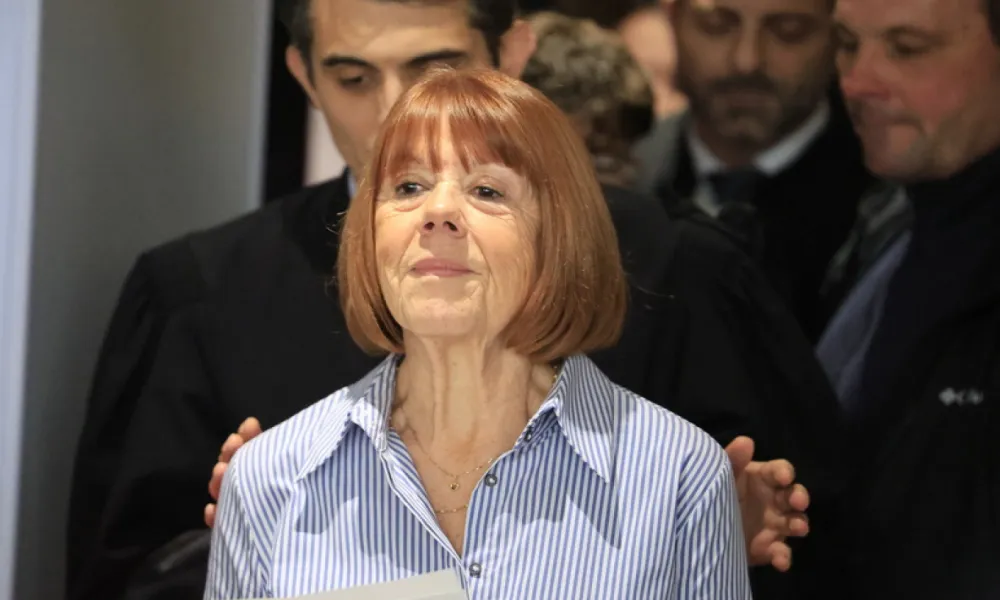
Gisèle Pelicot became a global symbol in 2024 during the mass rape trial in France in which her former husband and dozens of other men were convicted. She waived her right to anonymity and asked for the trial to be held in public.
Her words, "la honte doit changer de camp" ("shame must change sides"), became a rallying cry far beyond France. Her message is that it is not victims who should be ashamed to report sexual violence, but those who commit it.
In February 2026, she published her memoir, "A Hymn to Life: Shame Has to Change Sides".
Closer to home: Greece and Cyprus
Katerina Sakellaropoulou, former President of the Hellenic Republic, marked the International Day for the Elimination of Violence against Women with a message that reflects a change many women's organisations have described:
"The silence has been broken. Women are speaking out, asking for help, fighting back."
In Cyprus, Commissioner for Gender Equality Josie Christodoulou is answering one question a day on violence against women in a joint series with Politis to the Point. Explaining the warning signs of abuse that leaves no visible marks, she said:
"Violence is never justified, and responsibility always lies with the perpetrator, never with the victim."
The 16 Days series continues
The 16 Days of Activism run every year from 25 November, the International Day for the Elimination of Violence against Women, to 10 December, Human Rights Day.
Throughout the campaign, Politis to the Point and the Commissioner for Gender Equality are publishing one question and answer each day, written for every woman living in Cyprus, including those who do not speak Greek. So far, the series has covered:
- Day 1: How gender equality is linked to violence
- Day 2: What gender-based violence is and how to recognise it, even when it is not physical
- Day 3: The myths that still surround violence against women, such as "she provoked him"
The series continues daily until 10 December.
This article is part of Politis to the Point's coverage of the 16 Days of Activism against Gender-Based Violence. The Commissioner for Gender Equality's daily series continues tomorrow.