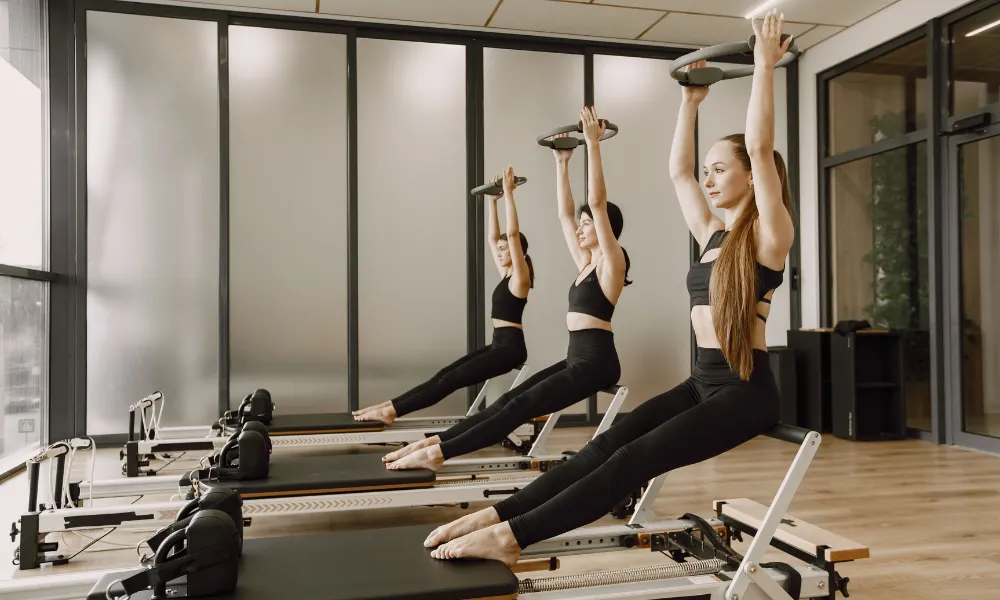

An instructor has completed 300 hours of Pilates training and holds a certification from an international organisation. A physical education graduate has never worked on a reformer. Under the law, only the second may teach the method. The example is not hypothetical. It was described by the Director General of the Cyprus Sport Organisation (CSO), Dr Vasos Koutsiountas, speaking to Politis, and he ended with an admission: “It is a problem. How we solve it, we do not have an answer yet. Because I understand both sides.”
Politis spoke to everyone involved. That included the CSO, which licenses gyms, and the Ministry of Education, Sport and Youth, which keeps the Register of PE Instructors. It also included the association of graduate PE instructors, PASYPEFAA, and the Pilates Instructors Association. The interviews show that each side has an argument that is hard to refute. The problem is that these arguments do not fit within the current framework at the same time.
What the law says
The profession of PE instructor is regulated by the Registration of PE Instructors Law of 1995. Anyone holding a university degree in Sport Science and Physical Education is entered in the Register. Under Article 6, anyone who works as a PE instructor without registration commits a criminal offence. At the same time, gyms are licensed by the CSO under the Private Gymnastics Schools Regulations of 1995, as amended in 2012.
The law does not mention Pilates, yoga or any other method. It speaks of “PE instructors” and “gymnastics.” As CSO officer Michalis Terzopoulos explained, the law ranks above the organisation’s regulations, so the CSO cannot bypass it. The result, according to Dr Vasos Koutsiountas, is a binary of “either you are a PE instructor or you are not.”“Someone who did a two-day online course and got a certificate is lumped in with someone who did 300 hours of training and is seriously qualified,” he said. “We do not distinguish between them. So we are not protecting the public.”
PE instructors: enforce the law
For Dr Antonis Alexopoulos, Chair of the Board of PASYPEFAA and lecturer in Sport Sociology at European University Cyprus, there is no grey area. Pilates is a method of exercise and, when offered as an organised service to the public, it falls under the 1995 law. “We are not asking for new privileges. We are asking for the enforcement of a law that has been in force for thirty years,” he said.
Dr Alexopoulos does not argue that the degree on its own is enough to teach Pilates. He argues that it is the necessary foundation, with knowledge of anatomy, physiology, kinesiology and exercise physiology, on which specialisation must be built. He likened the relationship to physiotherapy, where graduates need additional training for specific methods. As a point of comparison, he noted that many Pilates certifications correspond to roughly four months of study, while the anatomy and physiology courses of a degree alone add up to around 270 hours.
PASYPEFAA rejects the idea of lighter criteria, which its chair describes as deregulation in a field that concerns health. It says, however, that it is open to mechanisms for certifying specialisation, even for graduates, provided these are added to the basic qualifications and do not replace them. Asked about a possible conflict of interest, since he himself teaches at a university, Dr Alexopoulos replied that the degree requirement is set by a law that predates his role. He also noted that the association defends the interests of the profession, like any professional body, without this conflicting with public health.
Finally, he acknowledged that the association has no data on the number of studios with non-graduate instructors, nor on injuries attributable to either category. “The lack of inspections is precisely the problem,” he said.
Pilates instructors: we are not asking for equal status
The Pilates Instructors Association (SEP), a non-profit organisation founded in 2019, considers that the question has been framed wrongly. “A Pilates instructor is not, and does not call themselves, a PE instructor,” said the association’s president, Stella Nisiotou Takoushi. As she explained, the instructor asks only to be able to teach the method in which they have been trained, and only at the level their proven competence allows. The real issue, according to Ms Nisiotou Takoushi, is not “a four-year degree or a certificate of a few weeks.” It is whether whoever teaches has documented and assessed training specifically in the method.
The SEP president did not hide that the vast majority of its members are not registered PE instructors, as they do not hold a physical education degree. She pointed out, however, that there is currently no route through which specialised training can be assessed and recognised. The SEP opposes fast-track training and refers to international standards such as those of the Pilates Method Alliance and EuropeActive. According to its president, it would accept a transition period, after which those who do not meet the new standards would stop teaching. It also cites Directive (EU) 2018/958, under which restrictions on access to regulated professions must be proportionate to the public interest objective they serve.
Ms Nisiotou Takoushi acknowledged that professional liability insurance is not a condition of membership, noting that no such specialised product is available on the Cypriot market. The association does require its members to hold first aid certification.
What the Audit Office recorded
The SEP refers to the Audit Office’s Special Report EE-EY 18/2026 on the CSO. According to the SEP, the report mentions 21 Pilates studios. They were included in a complaint by the Pancyprian Association of Gym Owners about 156 premises operating without a licence. Based on the CSO table included in the report, 17 were described as “under investigation as to whether they fall within the regulatory provisions.” Two held a licence, legal measures were pursued against one, and one concerned a case that was withdrawn.
The SEP also notes that the Audit Office examined the draft of the new regulatory framework. It recorded that there is still no clear definition of a gymnastics school, of the equipment or of the services provided, and it explicitly listed Pilates studios among its examples. In other words, the lack of clarity is not merely one side’s claim.
The CSO: we understand both sides
The CSO is caught in the middle. “I understand the PE instructors’ association, which tells me that to provide physical activity you must be a PE instructor, that is what the law says,” said Dr Vasos Koutsiountas. “But I also understand the other person, who did 300 hours of training.” The issue, he added, does not concern Pilates alone. It also concerns yoga, CrossFit and other forms of exercise, as well as graduates of recognised two-year programmes, who have acquired basic knowledge and skills without being PE instructors.
In 2016, the CSO commissioned a study on modernising the qualifications of fitness instructors. According to Mr Terzopoulos, the study mapped the main jobs in the sector, among them personal trainer and group exercise instructor. It proposed occupational standards with a description of duties, the knowledge and skills required, and recognised routes for acquiring them through assessment, courses and examinations. According to the CSO’s representatives, the study did not go ahead because a dispute arose over responsibility, on the argument that the matter falls under the law administered by the Ministry of Education. “We will try to revive the study,” said Dr Vasos Koutsiountas.
The SEP gives a different picture of the same process. According to the association, the study was completed by Ernst & Young in July 2017 and adopted by the CSO Board. The CSO was then working with the Human Resource Development Authority (HRDA) on developing occupational standards. In July 2019, however, according to the association, the CSO Board decided to ask for the standards for personal trainers and group exercise instructors to be removed from the HRDA project. The reasoning was that existing regulations already set out the qualifications adequately. The association wants to know what data led to this change of direction.
The CSO has also applied for a European mutual learning activity between member states on gym licensing and the fitness industry, and expects a reply in March. As its representatives noted, there is no common European standard. France requires university diplomas, and Greece follows similar logic with certain exceptions. In Belgium the communities apply different systems, and in the United States the rules differ from state to state.
The Ministry: no room for change
On behalf of the Ministry of Education, Sport and Youth, Theoti Ppourou, Inspector of Physical Education for Secondary General Education, spoke to Politis. According to the ministry, the need to modernise the law has already been recognised. In February 2024, the Law Commissioner was asked to draft a new bill, and the draft was completed in March 2025. The bill was put to public consultation from 26 May to 27 June 2025 and is currently with the Legal Service for legal vetting. The ministry gave no timetable for its submission to Parliament.
On substance, the ministry is clear. The new bill retains the same academic requirement, namely a degree requiring four years of study. The ministry says it has repeatedly stated that it does not intend to change this, as doing so would amount to a substantial regulatory intervention with implications for public health and safety. Asked about creating separate professional categories, such as Pilates or yoga instructor, the ministry replied that the state cannot regulate exercise on the basis of commercial names. What matters, it said, is the nature of the service provided.
Asked whether PASYPEFAA and the Pilates Instructors Association had been invited to the consultation, the ministry referred to the public consultation on the e-Consultation platform, in which anyone interested could take part. On the Audit Office’s recommendation, the ministry asked for a clear distinction of responsibilities. Gym licensing belongs to the CSO, while the ministry is responsible only for registration and the licence to practise the profession. The new bill does, however, provide for a Registration Council of PE Instructors, with representatives of the ministry, the CSO, the Ministry of Health and the association of registered PE instructors.
Where they agree, and what was left unsaid
Reading everyone’s positions, the points of convergence, in the author’s personal view, are more numerous than the dispute lets on. Both associations accept that a degree does not automatically make someone a Pilates specialist and that a short certification is not enough. Both call for objective and transparent criteria for assessing specialisation programmes, covering content, duration, supervised practice and examinations. Both state that the final decision should rest with the state. PASYPEFAA notes that the new bill provides for recognising postgraduate training providers through continuing professional development units. The SEP is essentially proposing a similar mechanism for those without a degree.
The disagreement comes down to a single point: whether a degree is a necessary condition for someone to teach a specific method of exercise. The 1995 law and the 2025 bill answer yes. The CSO recognises that this answer leaves gaps, but does not have the power to change it. The ministry, which has the power, says it does not intend to.
What it means for people who exercise
For anyone who simply wants to exercise safely, the conclusions from this dispute are practical. The licence on the wallshows that the premises operate legally. The ministry’s Register shows whether the instructor is a registered PE instructor. Neither shows whether they have been trained in the method they teach. That is something people have to ask for themselves, and they should ask both. They should ask the graduate whether they have specialised, and the instructor without a degree how many hours of training they have and who assessed them.
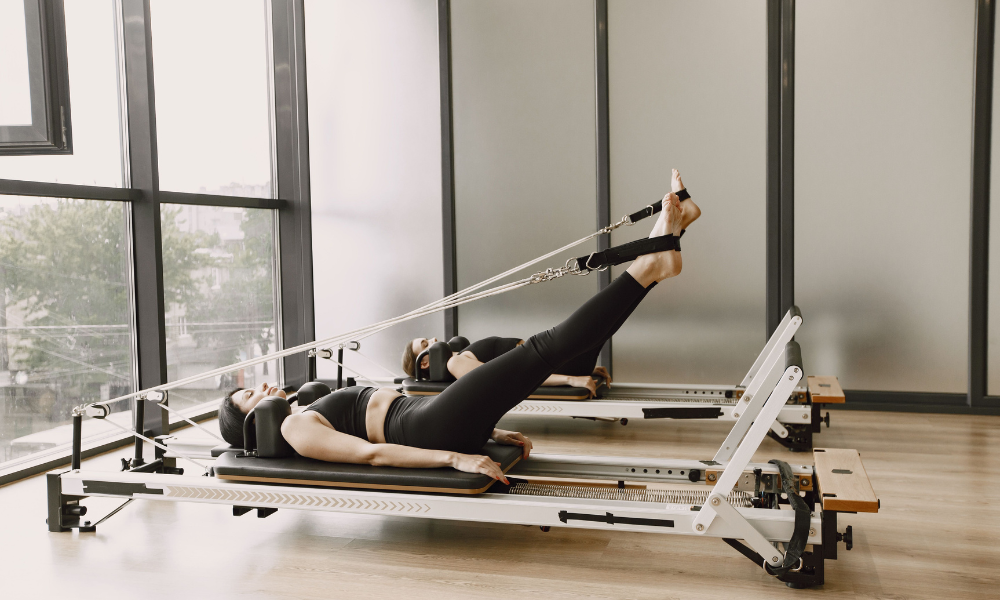
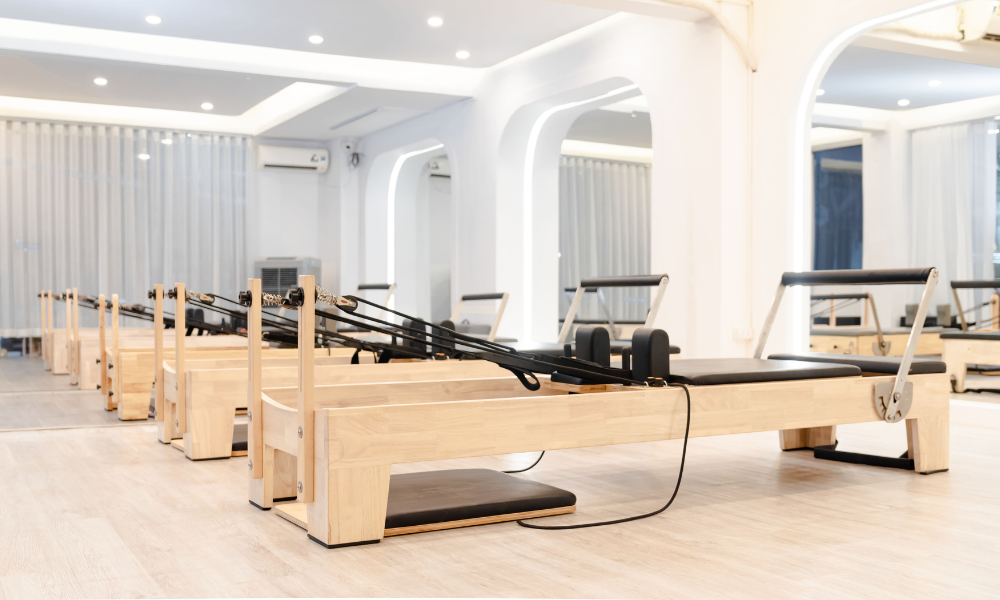
People who exercise also learn that a weekend certificate and training of several hundred hours currently sit in the same legal category, and that no one has data on which is ultimately safer. Until the new bill leaves the Legal Service and the state decides exactly what it wants to regulate, the responsibility for the choice falls, in practice, on the person lying on the reformer.