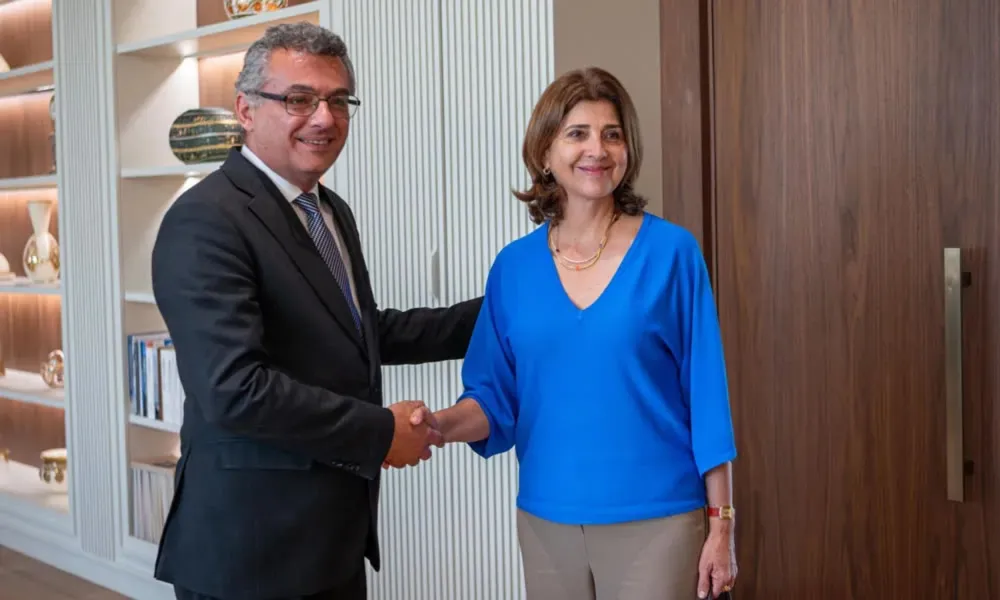
U.N. Secretary-General António Guterres’s personal envoy for Cyprus, María Ángela Holguín Cuéllar, said Turkish Cypriot leader Tufan Erhürman declined a proposed trilateral meeting in New York because it offered no new basis for progress. She said the meeting had not been planned and that Guterres’s schedule called for separate meetings with both leaders.
Greek Cypriot leader Nikos Christodoulides proposed a trilateral meeting during the U.N. General Assembly’s high-level week. In an exclusive interview with ANKA News Agency, Holguín said she consulted Turkish Cypriot leader Tufan Erhürman, who asked whether there was “any new proposal that would merit such a meeting.” She told him that Christodoulides had repeated proposals he had already made at the leaders’ previous bilateral meeting in Cyprus.
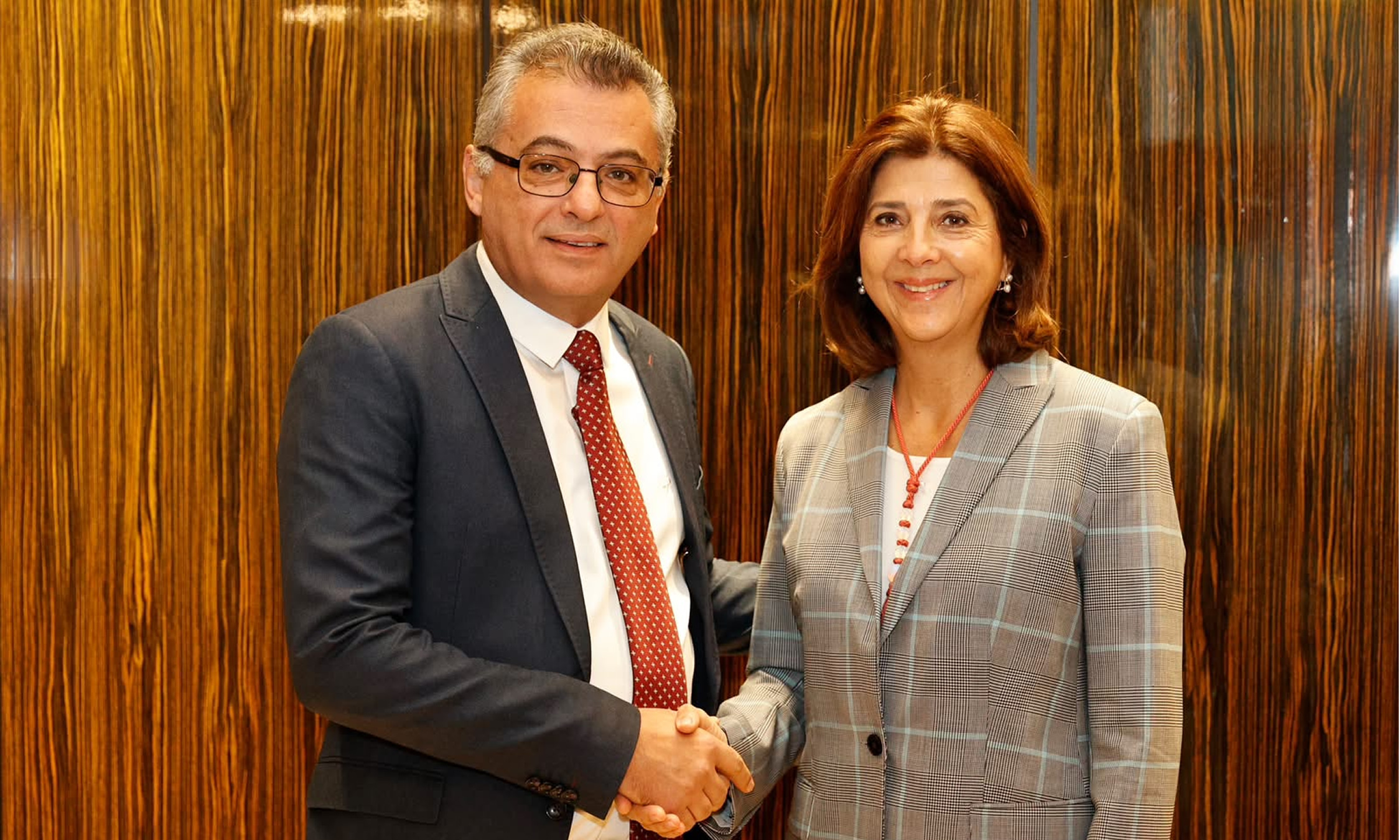
“Without the necessary conditions for progress, the meeting would not have a positive outcome,” Erhürman concluded, according to Holguín. Her account indicates that the Turkish Cypriot leader’s decision followed the absence of a new proposal and the lack of groundwork—not a rejection of dialogue in itself.
As facilitators, Holguín said, she and the U.N. wanted to see both sides advance the process “as much as possible.” But she emphasized that leaders retained responsibility for political choices. They could “listen to and receive advice,” she said, “but ultimately, the decisions rest with the leaders.”
Confidence measures await political will
Holguín said one confidence-building measure could be implemented immediately: the establishment of a technical committee on natural disasters. The two sides agreed to create the committee some time ago, but still had not settled how they would coordinate responses to disasters occurring anywhere on the island.
Other measures—including those on irregular migration, demining and sports—also remained possible, she said, but required political will. Her assessment places the obstacle not only in technical details but in whether the two sides are prepared to translate earlier understandings into practical cooperation.
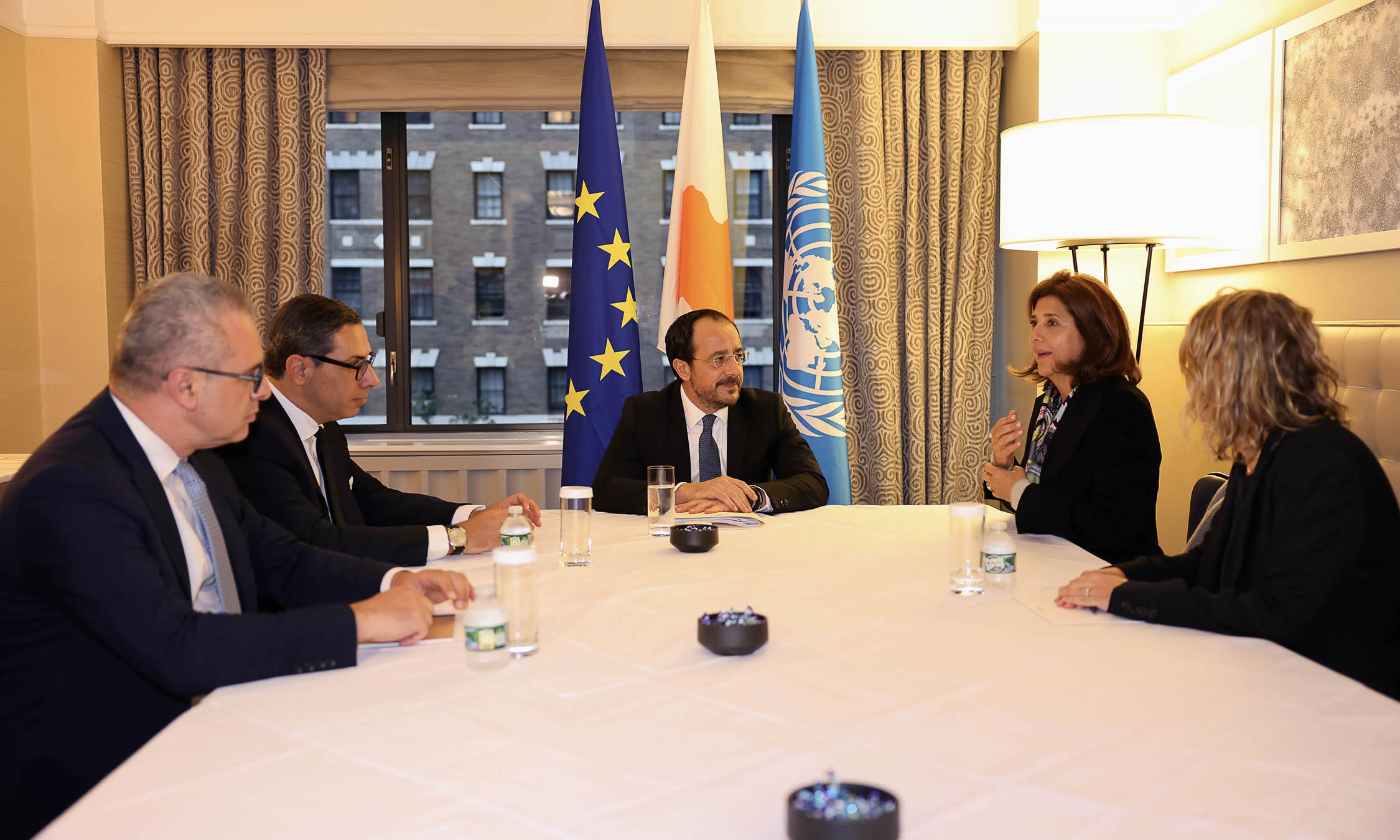
New crossing points could improve communication and connectivity between the communities, Holguín said. She named Athienou–Aglandjia, Mia Milia and Louroujina–Lymbia, and singled out Mia Milia as a potential boost to trade. Both chambers of commerce, she noted, had highlighted the economic benefits of opening it.
“However, so far, there has been no political will to move forward,” she said. The comment underscores the gap between the practical advantages both sides may recognize and their willingness to reach agreement on implementation.
October visit to focus on substance and method
Holguín said she would continue working to create conditions for a 5+1 meeting with “a constructive and concrete agenda.” Preparatory work has included a document on negotiating convergences that the parties would have at their disposal when negotiations begin. She also plans to review confidence-building measures agreed in the past and initiatives presented in recent months.
A central part of her October visit, she said, will be methodology: how negotiations could be structured to avoid early deadlock while recognizing the complexity of the Cyprus issue.
The parties would be invited to propose approaches that “do not create early barriers, but instead provide pathways,” she said. A methodology, in her view, should establish “the spaces, rules and principles needed to achieve short, medium, and long-term objectives.”
“Every negotiation” requires the parties to agree on a method for conducting it, Holguín said. The U.N. is therefore asking them to work together on a framework that would allow negotiations to begin “when they so decide.”
She made clear, however, that the U.N. would not dictate the outcome or the steps the parties must take. “The UN is in Cyprus to facilitate, not to impose or dictate what needs to be done,” she said. Negotiations require a willingness to make concessions, build consensus and seek mutual benefits—conditions she said “do not appear to exist at the moment.”
Convergences document to be delivered when talks begin
Holguín said the U.N.’s review of previous convergences drew on joint documents submitted by the two sides between 2015 and 2017, along with other records in the organization’s archives. The “closest thing to a record” of those convergences, she said, was “precisely the set of Joint Documents from 2015–2017.”
The document will not be delivered before negotiations begin. Holguín said releasing it earlier could create a new dispute over the negotiating record and its interpretation.
“Delivering it earlier would open up a new source of dispute,” she said. “The document will be delivered when negotiations begin and when the document becomes useful.”
Her approach reflects the U.N.’s effort to preserve a shared record while avoiding a preliminary argument over how past understandings should be read. Holguín acknowledged that disputes can be difficult to prevent in Cyprus, where, as she put it, “there will always be a reason to keep one open.”
She also challenged the assumption that past practice should continue simply because it is familiar. “If things have always been done this way, that may be precisely why not much has been achieved,” she said.
Hostile atmosphere complicates efforts to restart talks
Asked whether a conducive environment could be created while international contacts with Turkish Cypriot representatives are restricted and other confidence-eroding actions continue, Holguín answered: “Definitely not, because they add complexity to an already complicated issue.”
“Negotiations do not come out of nowhere, nor do they emerge from a hostile environment,” she said. Instead, they require “an understanding and acceptance of the other side and its existence.” Holguín said she had discussed the issue with the negotiators several times, particularly over the past month.
Her answer framed the environment surrounding the talks as part of the substance of the process: cooperation and mutual recognition cannot be set aside until negotiations formally begin. They are, in her view, among the conditions that make meaningful negotiations possible.
Holguín also warned that regional developments were making the diplomatic environment less favorable. The situation in the Middle East and Eastern Mediterranean was becoming “increasingly complicated,” she said, with potential negative consequences for Cyprus.
A Narrowing Window for Cyprus Diplomacy
“Clearly, the favorable moment we had over the past year and into the current year is slowly disappearing,” Holguín said, warning that mounting tensions in the Middle East and Eastern Mediterranean could carry negative consequences for Cyprus. Her remark gives the planned October visit added urgency: the diplomatic space that once offered an opportunity to rebuild momentum may not remain open indefinitely.
The challenge is to turn preparation into visible action. The leaders have proposals before them, confidence-building measures that could be implemented, and U.N. work on past convergences and negotiating methodology. Yet Holguín’s assessment points to a persistent gap between those elements and the political will needed to put them into practice. If that gap remains, October could become another round of consultations without tangible progress.
The visit will therefore test whether both leaders are ready to take practical steps that can strengthen trust and make a future negotiating meeting worthwhile. Progress on even a limited number of agreed measures, alongside a shared approach to methodology, could help preserve the remaining diplomatic opening. Continued delay, by contrast, would deepen mistrust as the regional environment grows more difficult.
Full text of the interview:
1. Why do you think Turkish Cypriot leader Tufan Erhürman declined the proposed trilateral meeting in New York, and did your own assessment of the preparatory discussions influence his decision? Was there a possibility of progress?
Holguin: In New York, a trilateral meeting was not on the agenda, and the Secretary-General met with both leaders separately, as planned. The Greek Cypriot leader suggested holding a trilateral meeting. I consulted with the Turkish Cypriot leader, who asked me whether there was any new proposal that would merit such a meeting. I told him that Mr. Christodoulides had reiterated the proposals he had put forward during their last bilateral meeting in Cyprus. In this context, Erhürman considered that, without the necessary conditions for progress, the meeting would not have a positive outcome.
On the Cyprus issue, as facilitators, we certainly wish to see both sides advance the process as much as possible. However, we cannot interfere in the political decisions that are ultimately for the leaders to make. They can listen to and receive advice, but ultimately, the decisions rest with the leaders.
2. Which of the seven confidence-building measures are ready for immediate implementation, which remain under negotiation, and what specifically is preventing agreement on new crossing points?
Holguin: One that can be implemented immediately is the agreement to establish a new technical committee on natural disasters. This CBM was agreed upon some time ago, but there is still no agreement on how the parties would coordinate their responses to natural disasters occurring anywhere on the island. Other CBMs, such as those concerning irregular migration, demining and sports, require political will.
As for the crossings, Athienou–Aglandjia, Mia Milia and Louroujina–Lymbia could certainly improve connectivity and communication between the two communities. Trade could also benefit significantly from the opening of Mia Milia, as has been highlighted by both chambers of commerce. However, so far, there has been no political will to move forward.
3. When you return to Cyprus in October, what concrete commitments, timetable and implementation mechanisms will you seek from the two leaders before recommending a trilateral or 5+1 meeting?
Holguin: We will continue to insist on the need to create the conditions for a 5+1 meeting with a constructive and concrete agenda. To that end, we have worked on the substance, including the convergence document that the parties will have at their disposal when they begin negotiations. The parties also need to implement some of the confidence-building measures (CBMs) agreed in the past. I would also like to review with the parties the different initiatives that have been presented in recent months.
The UN is in Cyprus to facilitate, not to impose or dictate what needs to be done. Any negotiation requires the parties to have the will to make concessions. Building consensus and seeking mutual benefits are essential; however, these do not appear to exist at the moment.
I want to take advantage of my visit to Cyprus to work on methodology. The parties will be invited to propose approaches that do not create early barriers, but instead provide pathways that take the complexity of the issue into account and establish the spaces, rules and principles needed to achieve short, medium, and long-term objectives. In every negotiation, the parties agree on a methodology to create a structure for conducting the negotiations. Hence, the UN’s call for the parties to work together on a methodology that will allow them, when they so decide, to begin negotiations.
4. The UN has completed its review of previous convergences. Will both sides receive an identical consolidated document, and how will you prevent selective interpretations of the negotiating record from creating another dispute?
Holguin: The convergences are a single body of work, based on the joint documents that both parties submitted to the UN between 2015 and 2017. The UN has also examined other documents in its archives that reflect past efforts. The closest thing to a record of the convergences is precisely the set of Joint Documents from 2015–2017.
It is difficult to prevent a new dispute from emerging in Cyprus; unfortunately, there will always be a reason to keep one open. I understand, and people often remind me, that things have always been done this way. But perhaps we need to consider that, if things have always been done this way, that may be precisely why not much has been achieved. For the same reason, the document will be delivered when negotiations begin and when the document becomes useful. Delivering it earlier would open up a new source of dispute.
5. Can a conducive environment be created while the Greek Cypriot side seeks to restrict international contacts with Turkish Cypriot representatives and the Turkish Cypriot side reports other confidence-eroding actions? Will you ask both leaders to halt such practices as part of the confidence-building process?
Holguin: Definitely not, because they add complexity to an already complicated issue. Negotiations do not come out of nowhere, nor do they emerge from a hostile environment. On the contrary, they arise from an understanding and acceptance of the other side and its existence. I have discussed this with the negotiators on several occasions, particularly over the past month.
The regional situation does not help either. The situation in the Middle East and the Eastern Mediterranean is becoming increasingly complicated and may have negative consequences for Cyprus. Clearly, the favorable moment we had over the past year and into the current year is slowly disappearing.