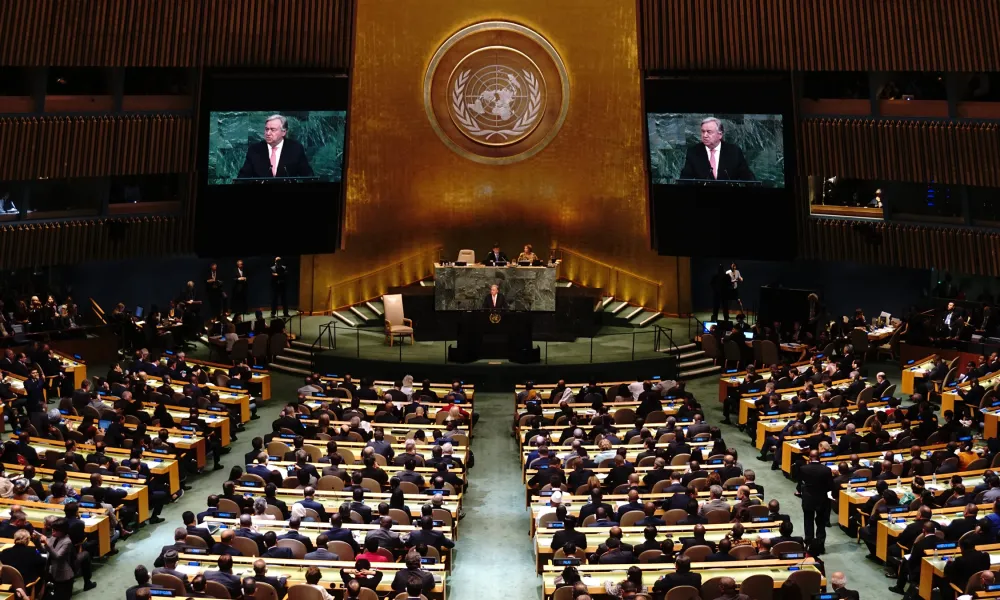

The battle of narratives over what took place on the sidelines in New York, which also saw the UN envoy weigh in, has made one thing clear – the sides are no closer to, and possibly further from, peace talks.
In post-UN General Assembly comments, Personal Envoy for Cyprus María Ángela Holguín strongly indicated that political will, among other things, was lacking. Turkish Cypriot leader Tufan Erhürman accused President Nikos Christodoulides of deflecting attention from the issues at hand by dumping 19 “new ideas” on the table. Christodoulides suggested the Turkish side wants to do away with UN parameters for a solution while his negotiator accused them of a “pattern of obstruction”.
‘Missed opportunity’
After the effort to hold a trilateral meeting with Erhürman and UN Secretary-General António Guterres in New York collapsed, Christodoulides told an audience of Cypriot diaspora that his 19 “new ideas” on confidence-building measures (CBMs), methodology and substance were positively received by the UNSG and could have opened the way for a resumption of talks if only the Turkish side had responded positively.
Post-Guterres
On his meeting with the UN Security Council permanent members, the president confirmed that the basis of the Cyprus peace effort, as well as the negotiating acquis, will not be lost when a new UN Secretary-General replaces Guterres.
To those adopting a “negative approach” in the hope of departing from established solution parameters when Guterres leaves, he said: “Under no circumstances will this happen.”
Holguín weighs in
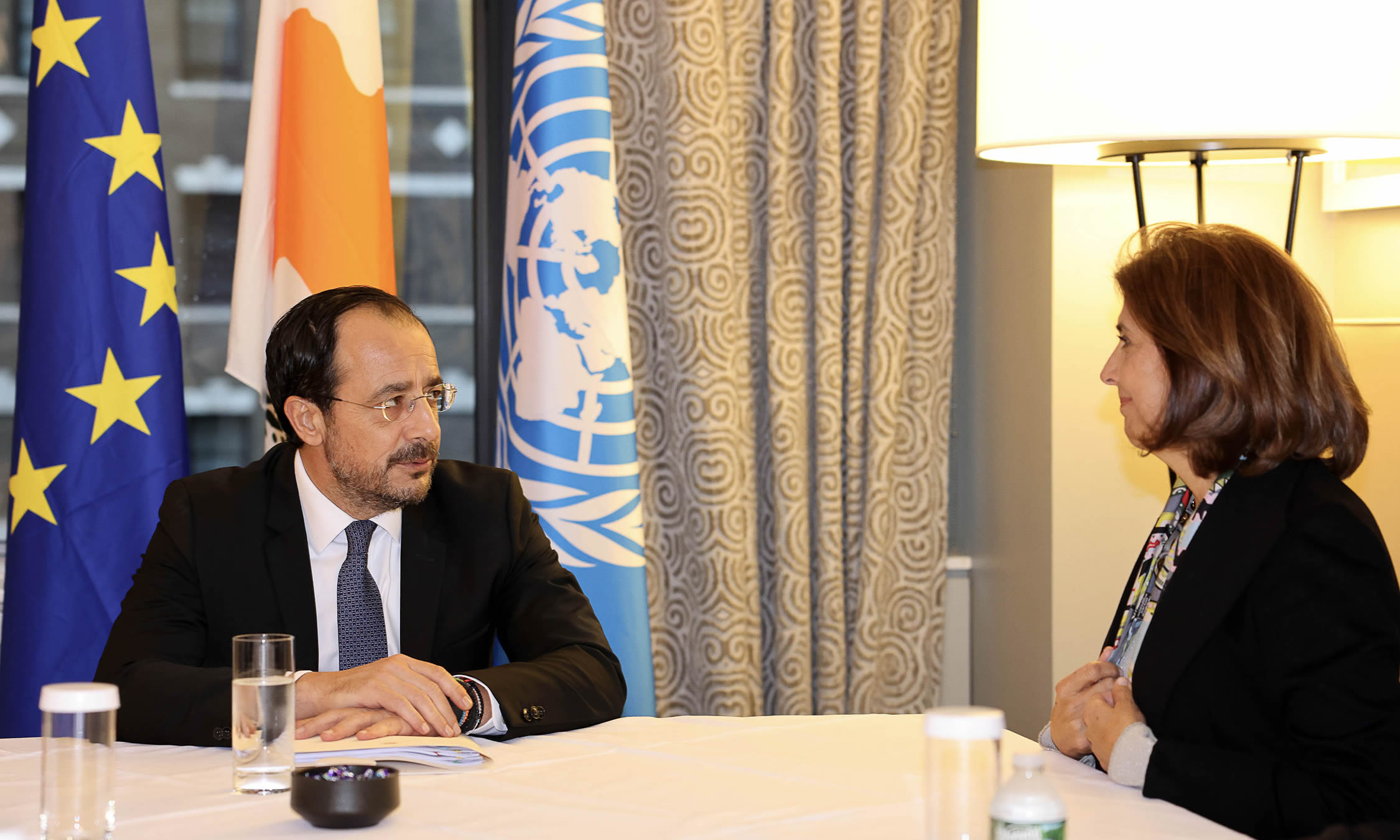
In a statement on Saturday and in an interview to Anka News Agency’s Yusuf Kanlı on Monday, the UN envoy indicated that the necessary political will was lacking, along with the ability to cooperate, make concessions, build consensus and seek mutual benefit.
Holguín clarified that a trilateral was never on the agenda in New York, though Christodoulides had proposed one while there which Erhürman did not consider timely.
Holguín said to move forward, the leaders need to “urgently” implement CBMs already agreed by both sides, demonstrating their ability to cooperate and initiate a peace process. This requires political will, she noted.
On crossing points, Holguín referred to the benefits of opening Athienou-Aglandjia, Mia Milia and Louroujina-Lymbia. She did not mention Kokkina.
The UN envoy also spoke of the need to make concessions in any negotiation. “Building consensus and seeking mutual benefits are essential; however, these do not appear to exist at the moment.”
On the UN ‘convergences document’, Holguín confirmed that “convergences are a single body of work, based on the joint documents that both parties submitted to the UN between 2015 and 2017”.
She revealed that the UN document will only be available to the parties “when they start negotiations,” noting that “delivering it earlier would open up a new source of dispute”.
Politis understands the Turkish Cypriot side did not want the UN document delivered in advance, not wishing to be bound by past convergences beyond an agreement in principle, and possibly fearing that the sides would get bogged down in details.
Holguín said she will be in Cyprus in October to “encourage both parties to create the conducive environment for the start of a new process”. The UN will invite both sides to present their proposals on methodology that “do not create early barriers”.
Asked if recent steps by the Greek Cypriot side restricting international contacts with Turkish Cypriot representatives helped create a conducive environment, the envoy replied: “Definitely not.”
Negotiations “arise from an understanding and acceptance of the other side and its existence,” she said.
The envoy concluded that the “favourable moment” the peace effort had is “slowly disappearing” as the regional situation becomes “increasingly complicated” with potential negative consequences for Cyprus.
On the defensive
The Turkish Cypriot leader went on the defensive on Monday in a press conference during which he gave a detailed account of why he declined a trilateral meeting.
In a nutshell, Erhürman argued he will not go to meetings just for the sake of it. He is happy to meet Christodoulides in Cyprus as many times as needed, but when others are included, there needs to be the prospect of results, not just photo opportunities.
On the three leaders’ meetings held after Guterres left the island, Erhürman said the first involved discussion of the seven CBMs Guterres raised with them. The second was “devoted entirely” to “confidence-eroding actions” undertaken by the Greek Cypriot side. At the last meeting, Erhürman said Christodoulides came with 19 new proposals, as if the seven existing CBMs “never existed”.
He stipulated that by that point, no progress was recorded on the seven CBMs, methodology or substance.
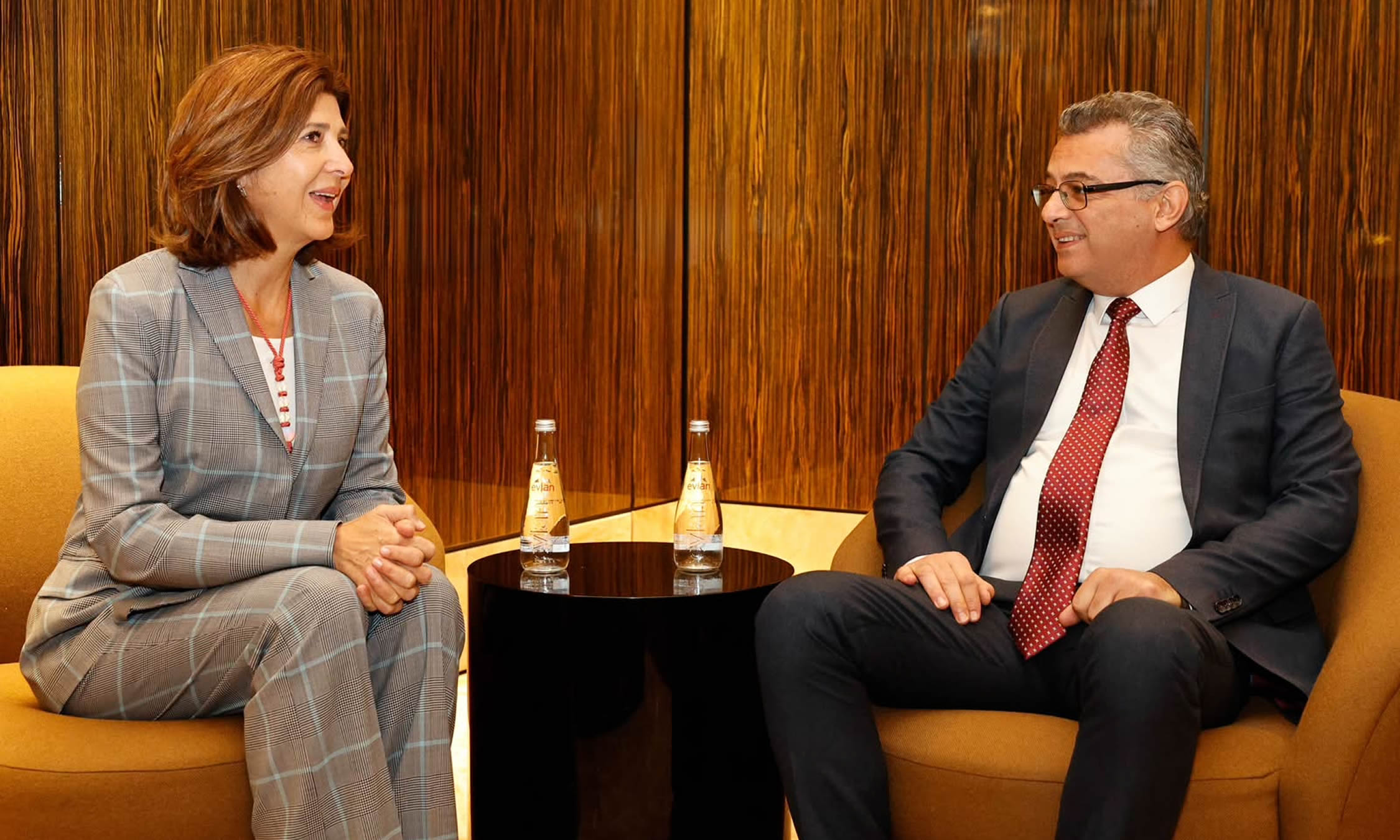
In New York, there was no new development on CBMs. When the UN envoy conveyed Christodoulides’ proposal for a trilateral, Erhürman asked if there was a possibility for agreement on at least some of the seven CBMs. He received no reply. When Holguín hinted that a compromise on a rotating presidency was possible, Erhürman asked if it concerned an agreement in principle or an effort to link it to security and guarantees. Again, no reply.
Erhürman questioned whether Christodoulides’ intention was to forget about the seven CBMs and start from zero with 19 new items.
“There is an English expression: Moving the goalposts,” he said.
“Everyone must decide. Do we want a solution, or do we want negotiations? That is the real question,” he added.
‘Pattern of obstruction’
In reference to the failed effort to hold a trilateral, Greek Cypriot negotiator Menelaos Menelaou spoke on Monday of “a pattern of obstructing efforts to speed up the steps that need to be taken”.
While “significant steps have been taken” in preparing for negotiations, an obstacle to further progress was “the delaying tactics” of the Turkish Cypriot side, he said.
Meanwhile, the government said it will convene the National Council on Wednesday to discuss the latest developments.