
In New York, President Nikos Christodoulides has held his last meeting with António Guterres as UN Secretary-General, and says a trilateral meeting with the Turkish Cypriot leader is feasible, provided there is political will. In Nicosia, meanwhile, both mayors of the capital have withdrawn from the Cyprus Forum after the organisers changed how they described one of them.
What happened at the Cyprus Forum
The organisers had initially described Mehmet Harmancı as the "mayor of [the] Nicosia Turkish Municipality" but later changed his title to "leader of the Turkish Cypriot community of Nicosia".
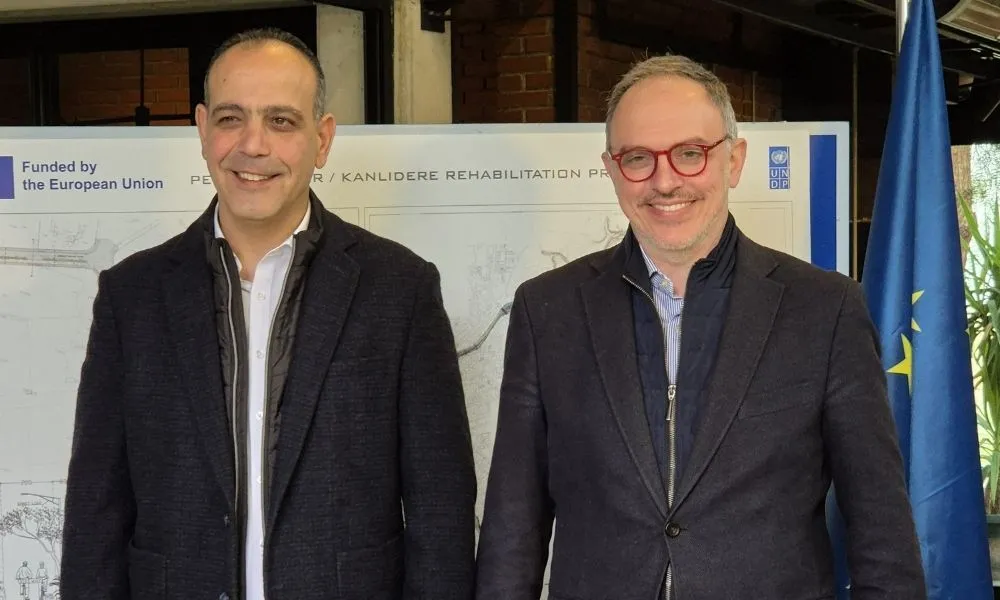
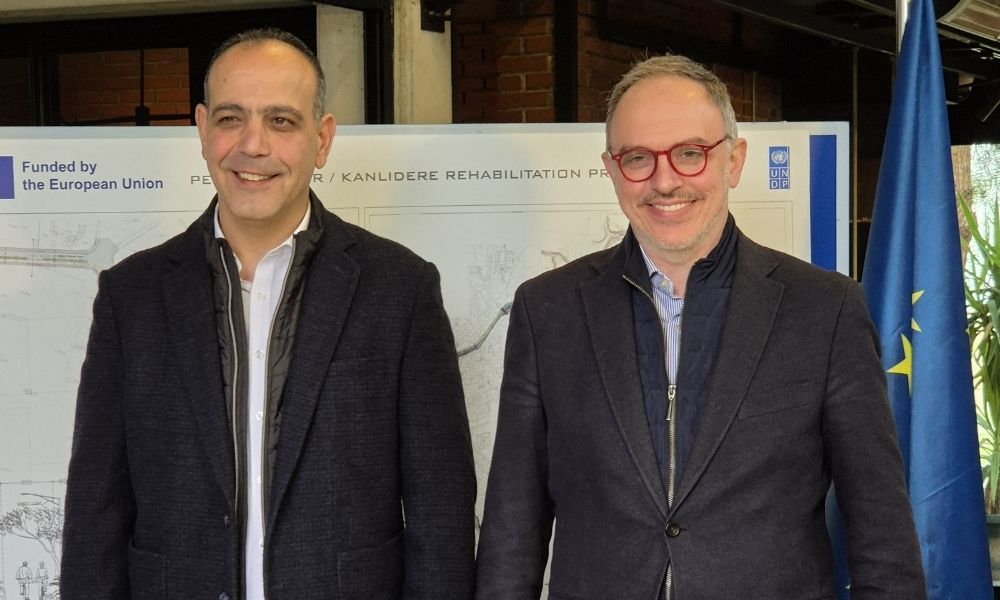
Mehmet Harmancı, who heads the Nicosia Turkish Municipality, and Charalambos Prountzos, Mayor of Nicosia, had been due to present the Forum's Peace and Democracy Award together, as they did in the previous two years.
ELAM MP Andreas Papacharalambous objected strongly to the participation of a Turkish Cypriot official in Cyprus Forum 2026. In its statement, the party described Harmancı as the "pseudo-mayor" of occupied Nicosia. It also objected specifically to his being addressed as "mayor of the Turkish municipality of Nicosia".
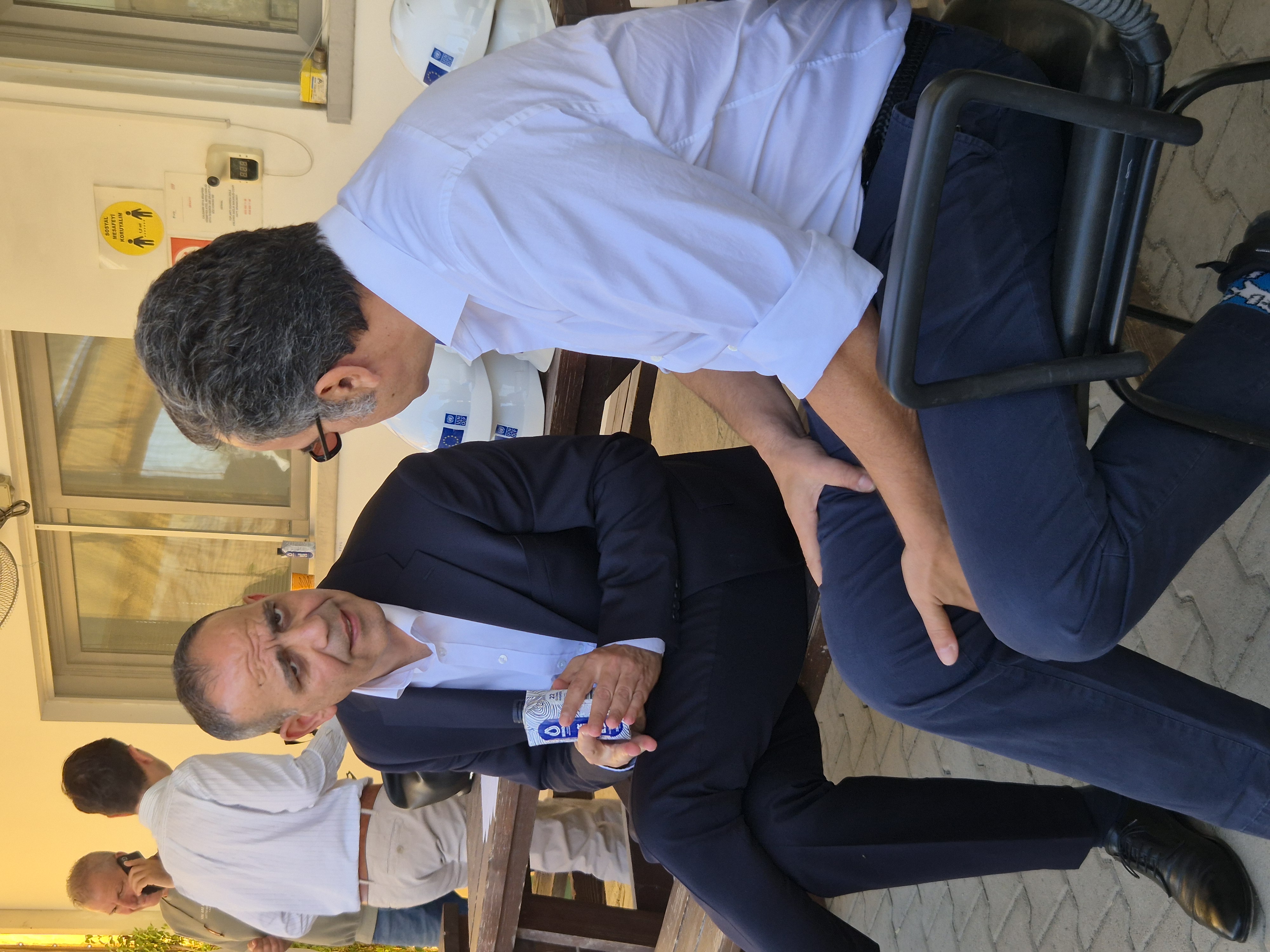
In a statement issued yesterday, the Forum said a political party had called on it to withdraw the invitation to Harmancı, and that this "would not happen under any circumstances". It said, however, that the title shown in the non-final agenda posted on its website was not acceptable to the Greek Cypriot side. The organisers said they then adopted the title used at recent meetings between Prountzos and Harmancı, and contacted both men to resolve the matter.
Harmancı gave a different account of the change. He said the Forum's statement had described the new title as the "correct" one, following consultation with Republic of Cyprus officials, and that he later received an email saying the change had been made to stop the crisis from growing. He rejected that explanation, arguing that the matter could not be treated as simple crisis management.
The Forum said it then received letters of withdrawal from Harmancı and, subsequently, from Prountzos, "as a sign of solidarity". It said it understood and respected both decisions. Dozens of other prospective attendees also pulled out.
Turkish Cypriot media reported that a number of Turkish Cypriot participants were among those who withdrew.
The award, now in its third consecutive year, will still go to one Greek Cypriot and one Turkish Cypriot for their contribution to peace and democracy. It is awarded posthumously and will be handed by the organisers to the recipients' representatives. The Forum said 220 speakers remain scheduled across more than 50 discussions, and apologised if its actions had set back the bicommunal cooperation it supports.
The legal starting point: resolutions 541 and 550
Nearly every naming convention on Cyprus traces back to two UN Security Council resolutions from the 1980s. Resolution 541, adopted on 18 November 1983, considered the attempt to create a "Turkish Republic of Northern Cyprus" invalid. It deplored the declaration by the Turkish Cypriot authorities of the purported secession of part of the Republic of Cyprus, and considered it legally invalid. Critically, it called upon all states not to recognise any Cypriot state other than the Republic of Cyprus.
The Security Council's text did three things that still shape terminology today. It put the name "Turkish Republic of Northern Cyprus" in quotation marks. It described the governing structures in the north as "Turkish Cypriot authorities". And it referred to "the two communities in Cyprus", the framework the UN still uses.
According to a Republic of Cyprus government publication, resolution 550 (1984) reaffirmed resolution 541, repeated the call on all states not to recognise the entity, and called on them not to facilitate or in any way assist it.
How the Republic of Cyprus refers to the north
Because the Republic regards the entity in the north as legally invalid, official titles used there are not recognised. The government's own public material reflects this. It refers to the "so-called 'Turkish Republic of Northern Cyprus'", the "occupied part of the Republic of Cyprus" and the "separatist entity". The Republic's traveller advice uses the phrase "Turkish Occupied Areas of the Republic of Cyprus" and states that the Government of the Republic of Cyprus is the only recognised government on the island.
In practice, Greek-language media and politicians mark titles in the north with quotation marks or the prefixes "so-called" (λεγόμενος) and "pseudo-" (ψευδο-). The north's foreign ministry is routinely written as "so-called foreign ministry", and its assembly as "so-called parliament".
The Turkish Cypriot leader is the main exception. The Republic does not call Tufan Erhürman "president", but it does recognise his role as the interlocutor of the Turkish Cypriot community in UN-led talks. Public broadcaster RIK / CyBC refers to him as the leader of the Turkish Cypriots. After a recent meeting, President Nikos Christodoulides referred to him as "the Turkish Cypriot leader" when he described their talks.
The foreign ministry and the diplomatic corps
The Ministry of Foreign Affairs works to stop foreign governments from taking steps that could amount to recognition by implication, meaning an act that confers status on institutions in the north without formal recognition. This extends to meetings, events and the titles used at them.
The approach was visible in August. Erhürman said the Cypriot foreign ministry had called embassies to discourage diplomats from attending a briefing organised by the Turkish Cypriot side, a claim confirmed by diplomatic sources. EUalive also reported that Nicosia moved to have the Serbian festival EXIT withdrawn from a music event at Kyrenia Castle, and succeeded. From the Republic's perspective, this is a policy of preventing steps that could upgrade the occupation regime. Erhürman argues instead that it supports his claim of isolation outside the negotiating table.
According to Harmancı's account, the Cyprus Forum title change followed consultation with Republic of Cyprus officials. The Forum's statement of yesterday does not name any government body. It refers only to the title not being acceptable to the Greek Cypriot side.
How the United Nations addresses the two leaders
The UN applies a two-track system, and the difference is visible in official readouts from the Secretary-General's office.
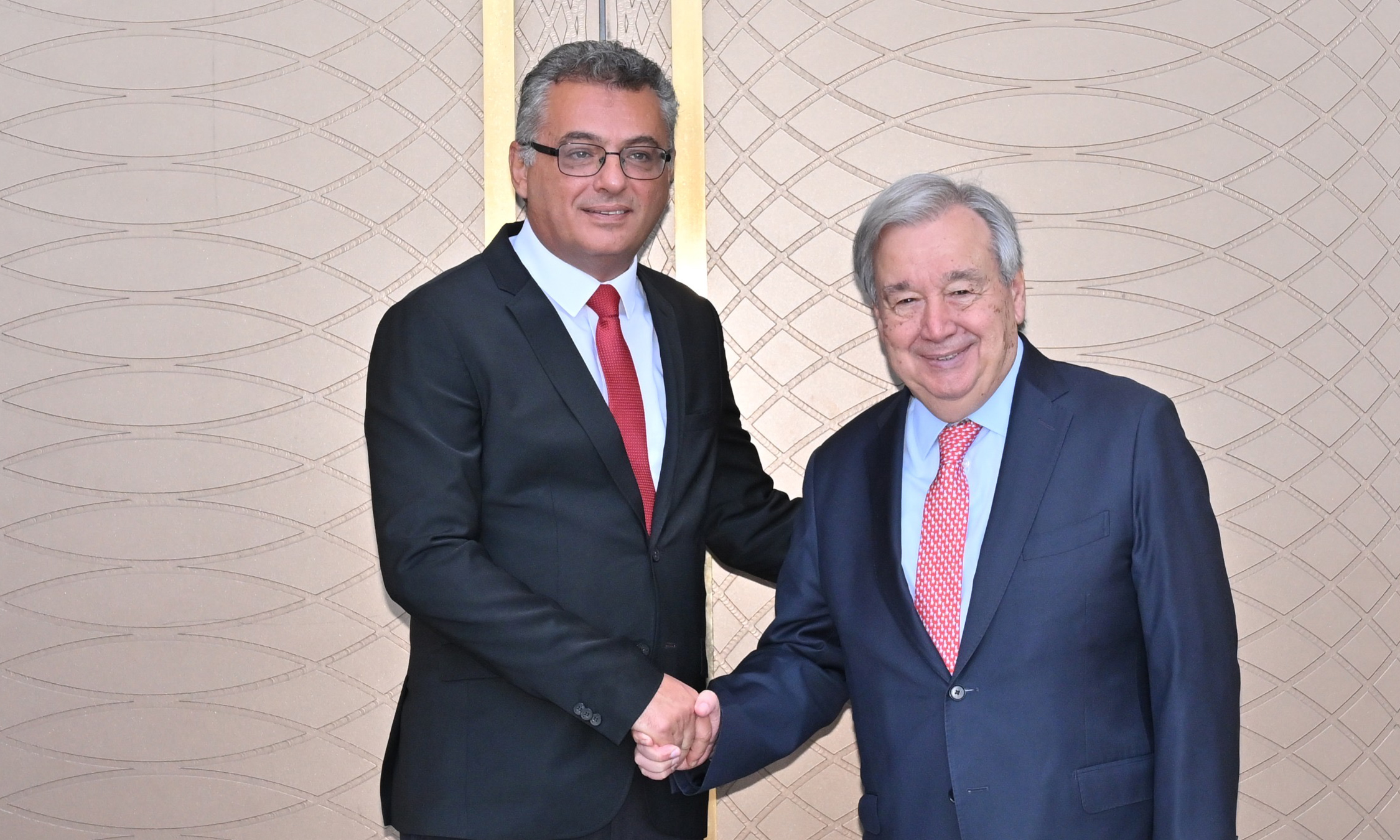
When Nikos Christodoulides meets the Secretary-General as a head of state, he is addressed by his state title. A September 2026 readout records that the Secretary-General met with H.E. Mr. Nikos Christodoulides, President of the Republic of Cyprus. This reflects the Republic's status as a UN member state.
When the two leaders meet within the UN's good offices mission, both are addressed as community leaders. A readout of a September 2025 trilateral meeting refers to the leader of the Greek Cypriot community, Mr. Nikos Christodoulides, and the leader of the Turkish Cypriot community, Mr. Ersin Tatar. This equal community framing reflects the negotiating format, in which the two sides take part as communities rather than states.
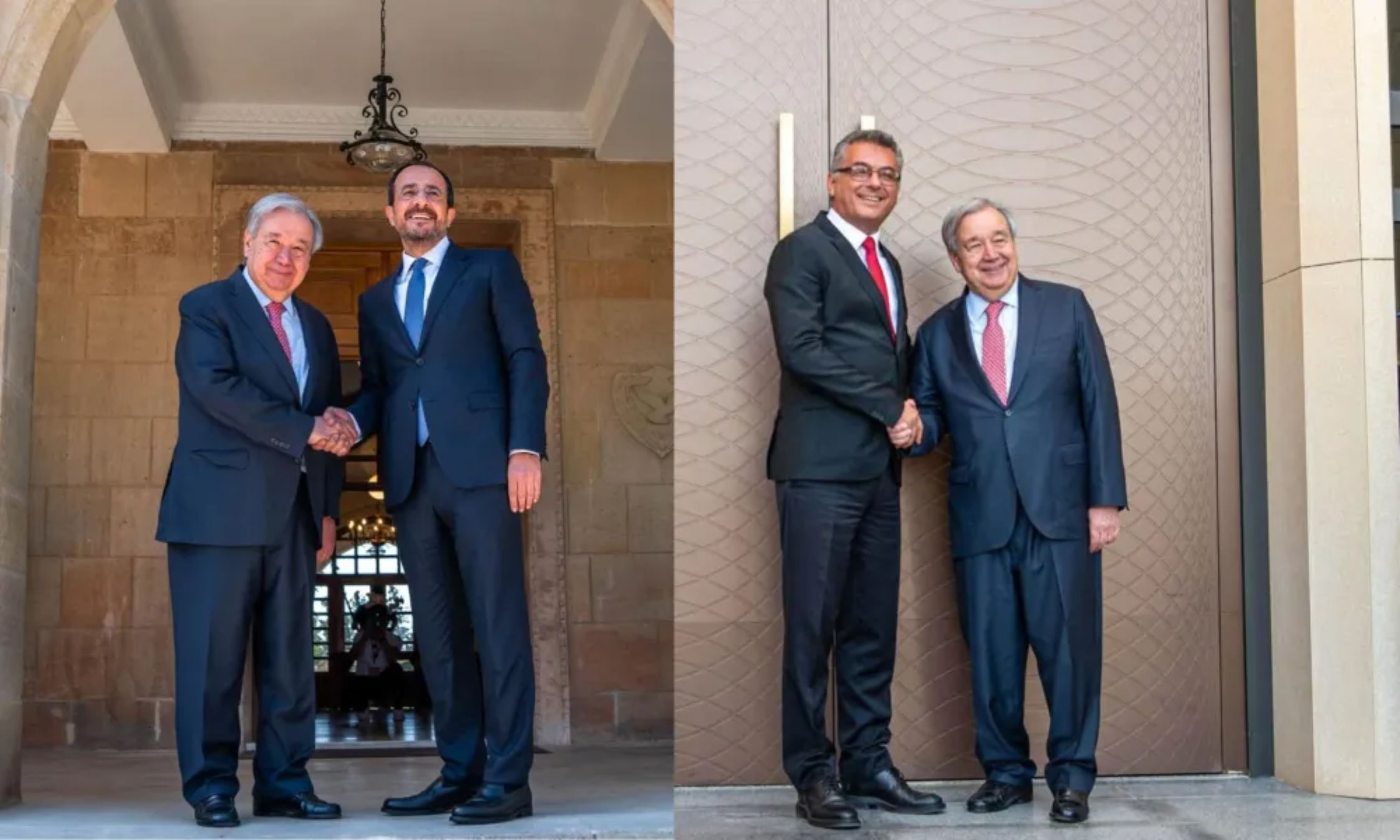
The Turkish Cypriot leader receives the community title in every setting. In February 2026, the Secretary-General held an introductory meeting with H.E. Mr. Tufan Erhürman, Leader of the Turkish Cypriot Community. The courtesy form "H.E." (His Excellency) is applied to him, but no state title is used. The same formula was used for his predecessor, Ersin Tatar, in 2024.
Security Council Report, an independent organisation that tracks the Council's work, follows the UN's leader-level language. It refers to Turkish Cypriot leader Tufan Erhürman and Greek Cypriot leader Nikos Christodoulides. It also describes Erhürman's October 2025 victory as winning the Turkish Cypriot leadership election, replacing Ersin Tatar.
UN terminology in peacekeeping reports
The UN Peacekeeping Force in Cyprus (UNFICYP) uses a geographic vocabulary that avoids both recognition and the Republic's preferred term "occupied". The Secretary-General's January 2026 report on UNFICYP is an example. It describes humanitarian assistance for Greek Cypriots and Maronites residing in the north and Turkish Cypriots residing in the south, and a delivery of medications to the Turkish Cypriot side.
The standard UN terms are therefore "the north", "the south", "the Greek Cypriot side" and "the Turkish Cypriot side". The UN refers to "Turkish Cypriot authorities" when describing governing bodies in the north. The name "TRNC", when it appears in UN texts, is placed in quotation marks.
The Republic itself does not accept this terminology in its own statements. In a July 2026 press release, the Ministry of Foreign Affairs welcomed the Secretary-General's commitment to resume negotiations on the basis of the agreed framework and the relevant Security Council resolutions. It continues to use "occupied areas" in its own communications.
Mayors, municipalities and the 1960 Constitution
The Harmancı dispute touches on a distinct legal question: the status of Turkish municipalities. Article 173 of the Cyprus Constitution contains provisions for the establishment of separate Greek and Turkish municipalities in the five major cities of the island, namely Nicosia, Limassol, Famagusta, Larnaca and Paphos. The council of the Turkish Cypriot municipality was to be elected by Turkish Cypriot voters, and the provision was subject to review within four years by the President and Vice-President of the Republic.
The bodies predate independence. A 1959 colonial law recorded that the Turkish inhabitants of those five towns had set up bodies in July 1958 to perform municipal functions. It provided that the law would expire upon the establishment of separate municipalities under the proposed Constitution of Cyprus. The legislation needed to implement Article 173 was never brought forward, which became one of the constitutional disputes of 1963.
This history is why the name "Nicosia Turkish Municipality" is treated differently from titles such as "president" or "prime minister" in the north. It has a reference point in the Republic's own Constitution. Critics argue that the body in its current form operates within the administrative structures of the north, and that using the title "mayor" confers legitimacy on it.
Usage in the Greek-language press varies. In June 2026, Politis listed Harmancı among conference participants as the Turkish Cypriot mayor of Nicosia, alongside Nicosia Mayor Charalambos Prountzos. ELAM uses "pseudo-mayor". The Cyprus Forum's revised title, "leader of the Turkish Cypriot community of Nicosia", followed the UN's community-leader model and applied it at municipal level.
How the Turkish Cypriot side describes itself and the south
The Turkish Cypriot side uses state titles for its own institutions and generally avoids the name "Republic of Cyprus" for the south. Turkish media in particular use these titles. Turkey's A News described Erhürman as "Turkish Republic of Northern Cyprus (TRNC) President" and cited a statement from the "TRNC Presidency".
The same logic applies at municipal level, in mirror image. Turkish Cypriot outlet Haber Kıbrıs referred to Prountzos as "South Nicosia Mayor" (Güney Lefkoşa Belediye Başkanı). Özgür Gazete called him the Nicosia Greek Municipality Mayor (Lefkoşa Rum Belediye Başkanı). Haber Kıbrıs also described the government of the Republic as the "Greek Cypriot Administration" (Rum Yönetimi).
Terms commonly used in reporting
For Tufan Erhürman, the Republic, the UN, the EU and most international media use "Turkish Cypriot leader", and the UN's formal version is "Leader of the Turkish Cypriot Community". For Nikos Christodoulides, "President of the Republic of Cyprus" is used in all state contexts. "Greek Cypriot leader" appears only in UN good offices settings and in some international reporting.
For the territory, the Republic uses "occupied areas". The UN uses "the north", and Security Council resolutions place "Turkish Republic of Northern Cyprus" in quotation marks. For the governing structures, the UN uses "Turkish Cypriot authorities". The Republic and Greek-language media use "so-called" or quotation marks before individual titles.
Source: Cyprus Forum, United Nations, Security Council Report, Government of the Republic of Cyprus, Council of Europe, Cyprus Inform, Bağımsız, Haber Kıbrıs, Özgür Gazete, EUalive, RIK