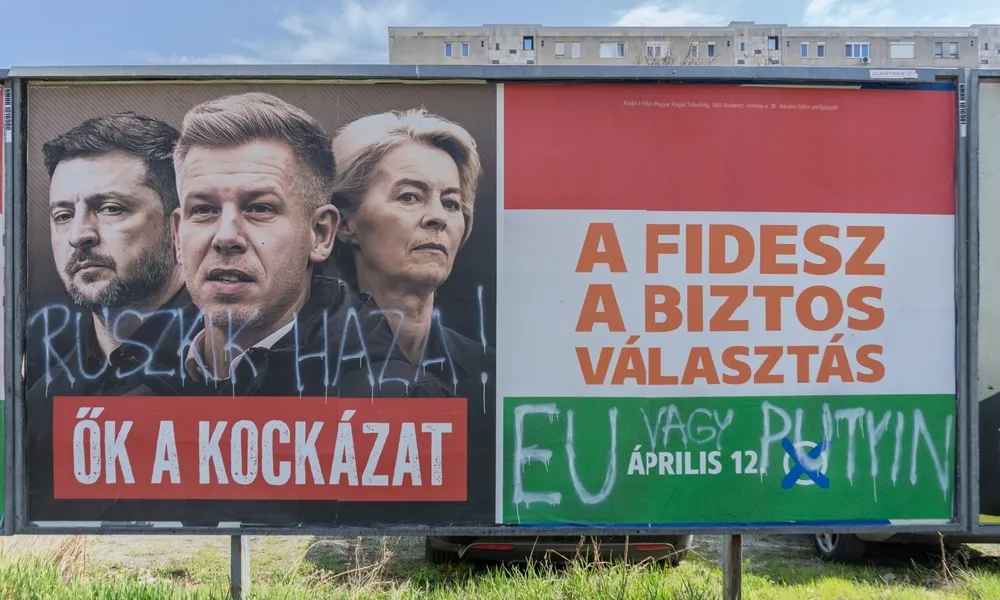



Hungarians go to the polls on Sunday in what analysts across the political spectrum are calling the most consequential election the country has seen since its first free vote after the fall of communism in 1990. After 16 years of unchallenged dominance, Prime Minister Viktor Orban faces a genuine threat to his grip on power, and with it, a potential reshaping of Hungary's place in Europe, its relationship with Russia, and the future of the EU's own internal coherence.
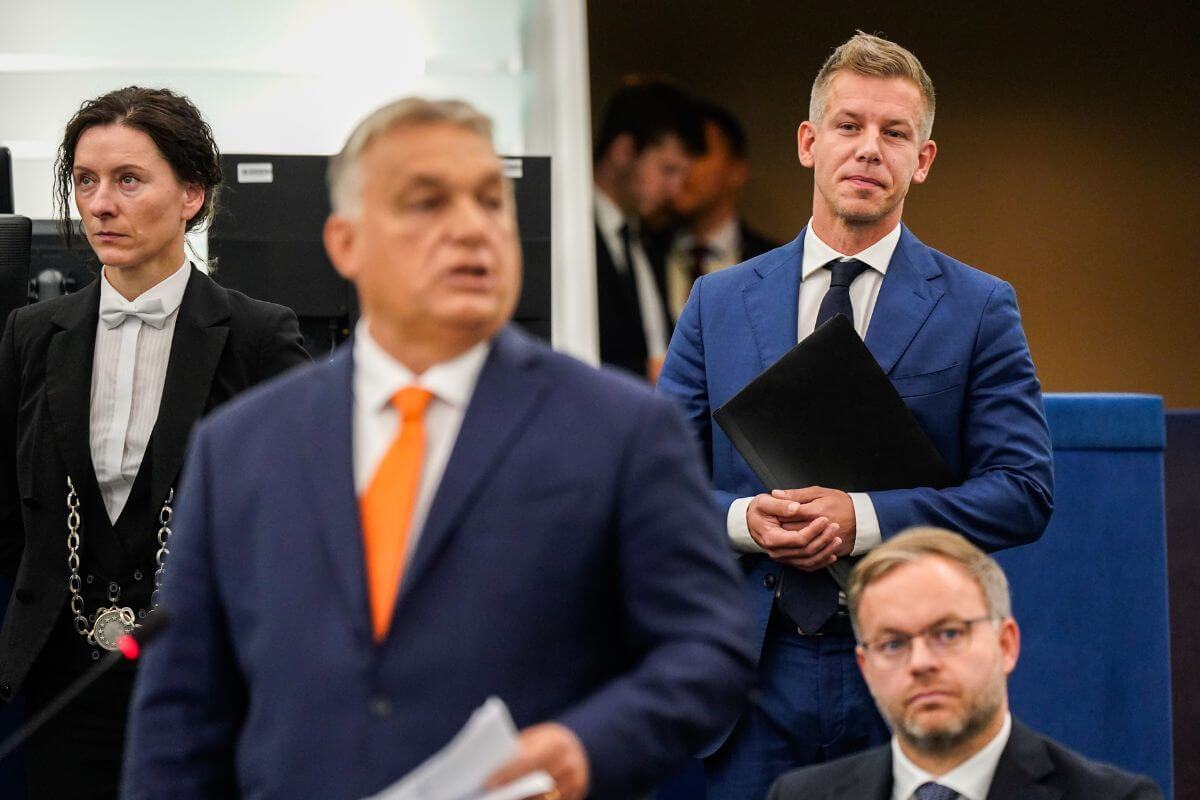
The man threatening to end the Orban era is Peter Magyar, a 45-year-old conservative and former Fidesz loyalist who broke with the ruling party in 2024 and built a political movement, Tisza, from near-nothing into a force that has led most independent polls by double digits. The latest independent polling by Medián puts Tisza ahead by 20 to 21 percentage points among decided voters, a margin that, if it holds, would represent a political earthquake. Magyar himself has been careful not to bank on it. "No one should allow themselves to be misled or lulled into complacency," he told supporters this week. "Elections are not won in opinion polls, and there are at least 30 to 40 constituencies where the difference is within 1,000 votes."
What Orban built, and what it will take to undo
Over 16 years, the Fidesz government systematically captured state institutions, reshaped the electoral system to its advantage, and eroded democratic checks and balances. Independent media has been hollowed out or bought up by Orban-aligned oligarchs. The judiciary has been stacked. Constituency boundaries were redrawn by the Fidesz-controlled parliament as recently as December 2024, cutting Budapest's electoral districts while adding seats in Fidesz-friendly Pest County. Analysts calculate that Tisza must win the national vote by roughly 3 to 5 percentage points simply to secure a parliamentary majority, a threshold that creates a meaningful buffer for Orban even as his approval fades.
The central question is not only whether Fidesz can be voted out of office, but whether it can be removed from power. Even a Tisza victory with a simple parliamentary majority would leave Magyar governing against a deeply entrenched apparatus of Orban loyalists in the courts, the public media and the civil service. The comparison most analysts reach for is Poland after the ouster of Law and Justice in 2023: a new government, but the machinery of the old one still lodged inside the state. A Tisza supermajority, able to amend the constitution, would open the door to deeper reforms; a simple majority would risk a prolonged legislative blockade.
The lived economy
Orban has presented this election as a stark choice between "war or peace," framing Magyar as a warmonger in the pocket of Brussels and Kyiv. But the discontent that has driven Hungarian voters toward Tisza is more prosaic. Three years of economic stagnation and rising living costs, combined with the conspicuous enrichment of oligarchs connected to the government, have eroded Fidesz's base in ways that anti-migration rhetoric and anti-EU diatribes can only partially offset. "An end to the Orban regime would provide a major boost to the Hungarian economy," Berenberg chief economist Holger Schmieding wrote this week, noting it would remove a key obstacle to EU cooperation and unlock billions in frozen EU funds. Budapest currently stands in the way of a €90 billion EU loan to Kyiv, which Orban has blocked as leverage in a dispute with Ukraine over a damaged pipeline carrying Russian oil.
The energy question cuts in unexpected ways. Orban built his "peace agenda" partly on the promise of cheap Russian gas and oil, positioning himself as the realist who kept Hungarian household bills down while Brussels pushed for a costly break from Moscow. Hungary remains heavily reliant on Russian oil and gas and has consistently refused to join EU efforts to phase out dependence on Russian energy since the full-scale invasion of Ukraine in 2022. The Iran war, which has driven global energy prices sharply higher, has put that strategy under strain: the very crisis Orban claimed his Russian ties would insulate Hungary against has now arrived through a different door.
Russian and American hands on the table
The foreign interference in this campaign has been, as one Budapest researcher put it, unprecedented, and mostly not covert. A recording leaked to a consortium of European media outlets captured Hungarian Foreign Minister Peter Szijjarto telling his Russian counterpart Sergey Lavrov that he was working to have a Kremlin-linked billionaire's sister removed from EU sanctions lists, and signing off with: "I am always at your disposal." Szijjarto did not dispute the authenticity of the recording, saying only that it constituted foreign interference in Hungary's election, without specifying by whom. A secret 12-point strategic cooperation plan signed by Szijjarto in Moscow in December 2025, reported by Politico, included provisions for Russian-language education and cultural ties strengthening Moscow's footprint inside an EU and NATO member state.
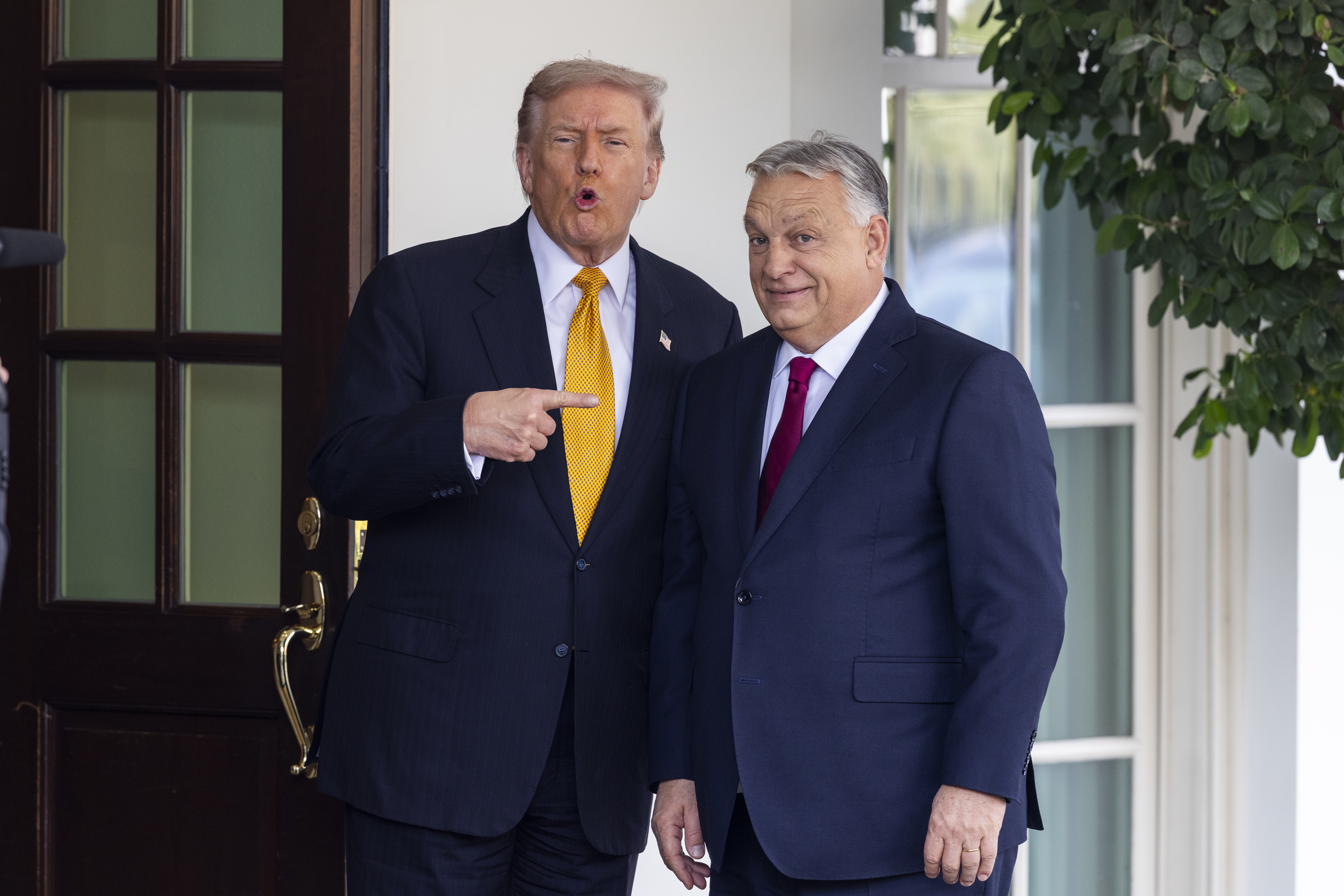
Trump offered his "complete and total endorsement" to Orban by phone to a Budapest stadium of Fidesz supporters, declaring "I love Viktor" to wild cheering. Vice President JD Vance flew to Budapest in person, held a press conference at Buda Castle in which he called Orban "one of the only true statesmen in Europe," and attacked the EU for what he called "disgraceful" interference in the vote, while standing next to the man whose foreign minister has been recorded taking instructions from Moscow. The European Commission responded that elections were "the sole choice of the citizens." The Kremlin followed within hours, with spokesman Dmitry Peskov warning that "many forces in Brussels would not like Orban to win."
Both the Trump administration and Moscow see Orban as a linchpin of their common antagonism toward Europe. For Trump, a Fidesz defeat would be a blow to the network of "patriotic European parties" his national security strategy has pledged to promote. For Putin, it would remove his most effective interlocutor inside EU institutions, the leader who has watered down sanctions, blocked Ukraine aid and kept Russian energy money flowing into a Western alliance that has otherwise tried to strangle it.
The swing
One of the more striking subplots of this campaign has been the potential role of Hungary's Roma minority, who make up around 8 percent of the population. Orban's government has long relied on Roma votes, delivered through public employment schemes and local patronage networks. But education policies pursued since 2011 have, according to researchers and a government-commissioned report since taken off official websites, systematically deepened segregation. The lowering of the mandatory school attendance age from 18 to 16 led to a 21-percentage-point drop in Roma children aged 17 remaining in school, compared to a 5.9-point drop among non-Roma students over the same period. A remark in January by Transport Minister Janos Lazar, who used a racial slur to declare that "someone has to clean the toilets on InterCity trains," crystallised what critics say has always been the government's underlying attitude. In a race this close, the Roma vote may matter more than any campaign strategist planned for.
What Sunday could mean beyond Hungary
The election is being described by Chatham House's Gregoire Roos as "one of the most momentous elections in Europe and for Europe in many years." In Moscow, Hungary has been a precious troublemaker inside the EU. In Washington, it has been a laboratory of sovereigntist politics. In Brussels, it has been an obstacle, a veto, a chronic irritant, and a cautionary tale. A Magyar government would almost certainly move to unfreeze EU funds, reconsider Hungary's posture on Ukraine, and restore at least some of the institutional independence Orban has spent 16 years dismantling. Whether a new government could do any of that with a simple majority, against the full weight of a captured state, is the question that will outlast Sunday's result.
Winning the election, as Magyar himself has noted, is the merely the beginning.
Sources: Reuters, The New York Times, Atlantic Council, CSIS, EUobserver, Prism News, Euronews