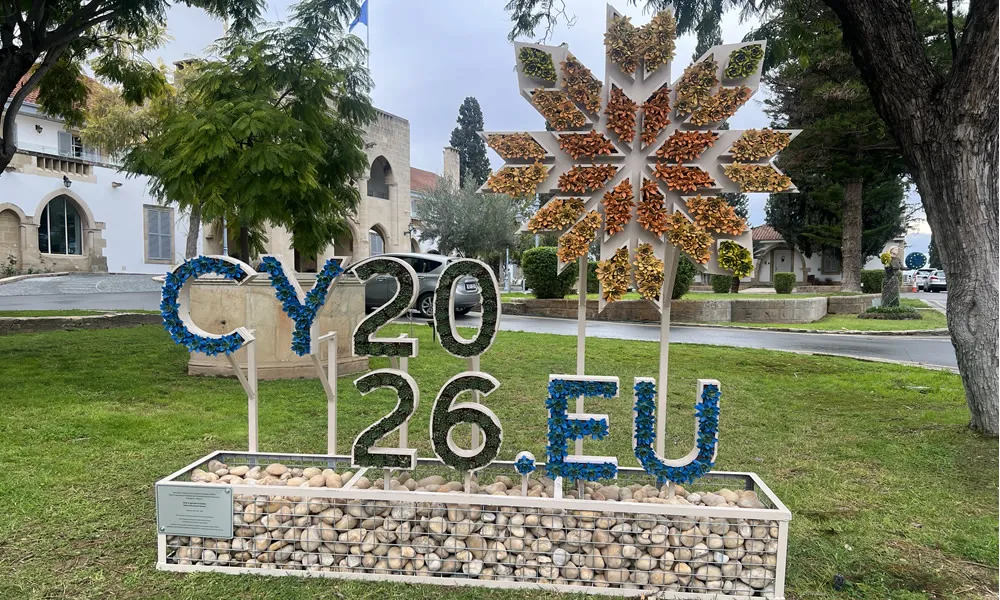
The Cyprus EU Presidency is returning to normal operations from April after a brief break in procedure due to the US-Israeli war on Iran launched on February 28.
The aerial bombardment of Iran triggered an Iranian response in the form of missile and drone strikes –against Israel and the Gulf states hosting US military assets. One drone – believed to have been launched from southern Lebanon – also found its way to the British bases in Cyprus on the second day of March.
For a while, air travel to Cyprus and the region became unpredictable. Some airlines continued flights to Cyprus while others such as the Lufthansa group briefly suspended flights.
Online or rescheduled
With no clear end in sight, the Cypriot Presidency decided in the first week of March to postpone all informal Ministerial Councils scheduled to take place in Cyprus that month and reschedule them for later dates, while all technocratic level meetings and conferences would be conducted online, via Video Teleconference (VTC).
According to the Presidency Spokesperson in Nicosia Stella Michael, a total of 44 meetings were affected by the development: 20 were held online, 20 were rescheduled, and four were cancelled.
“The work of the Cypriot Presidency proceeded in cooperation with the competent Ministries and Deputy Ministries, ensuring the smooth and effective implementation of its programme,” said Michael.
As for flights to and from the European mainland, normal operations resumed within a week of the war’s launch.
Some EU Commissioners still came to Cyprus in March, for example, during the Youth Conference, and conducted online meetings from the Conference Centre in Nicosia. However, in-person ministerial meetings in Cyprus will resume normally from April.
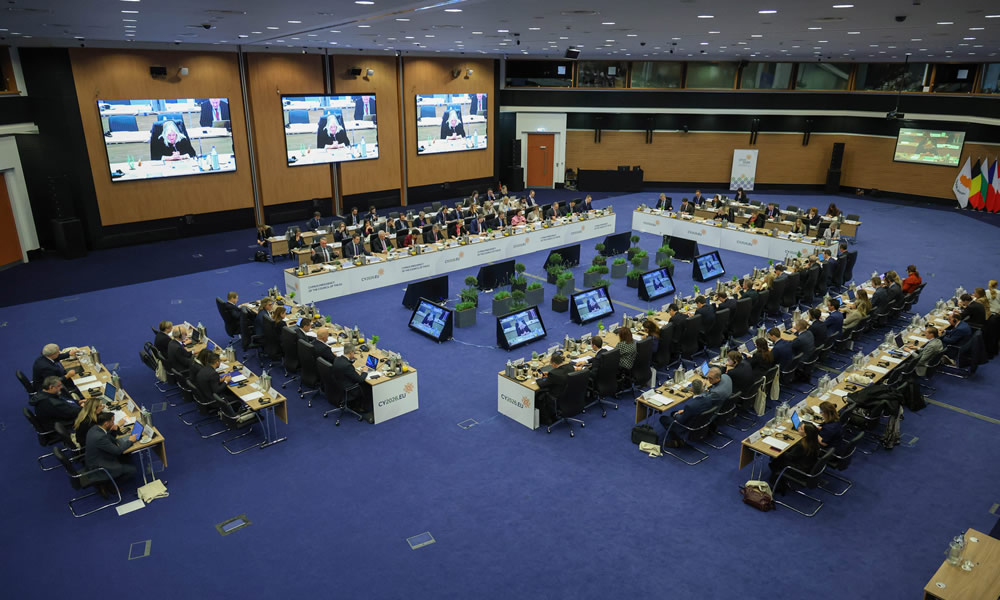
The only informal ministerial meeting that won’t take place in person is the Informal Meeting of Ministers for Research and Innovation (Informal COMPET Research) on March 31. All the other planned ministerial meetings due to take place on the island have been rescheduled for the second half of the Presidency from April to June.
The Cyprus Presidency has the new dates for the rescheduled meetings published on its official website.
These include informal ministerial meetings relating to: Telecommunications; European Affairs; the Eurogroup, Economic and Financial Affairs and Central Bank Governors meeting (ECOFIN); Culture; and Defence.
A bumpy 2nd Presidency
This is the second time Cyprus holds the rotating Presidency of the EU Council – the first was in 2012. Suffice to say, the second run got off to a rocky start. The day after the opening ceremony in Nicosia – with all the pomp and ceremony that entailed – a video was posted online including allegations of corruption, illegal campaign funding and cash for access schemes linked to the presidential palace. The palace denied the allegations but that did not stop the President’s chief of staff – seen in the video – from stepping down. The reverberations from the video of unknown origin lasted around a month and then quietly subsided.
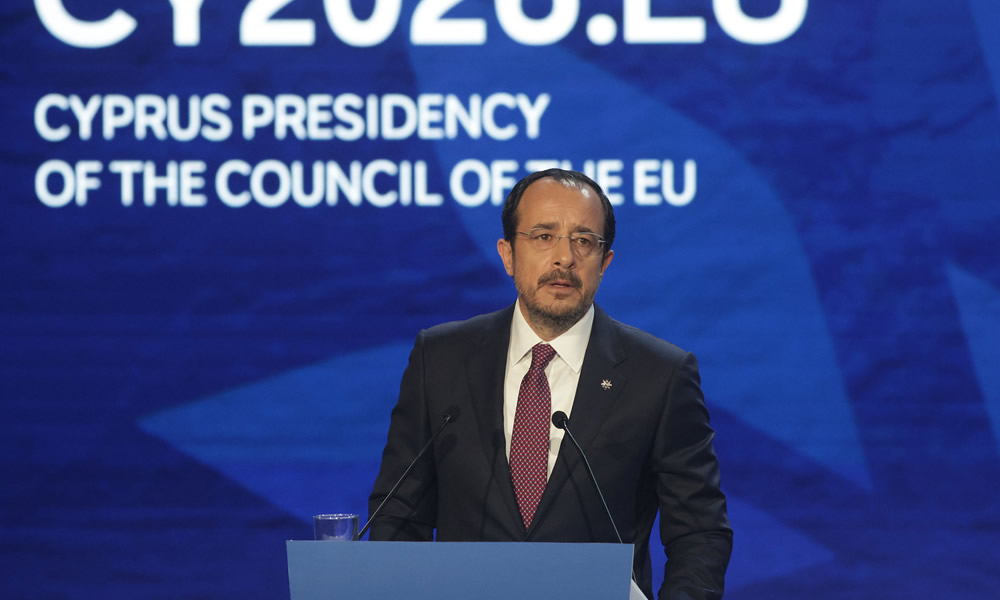
It was almost business as usual until the regional war kicked off at the end of February.
War and peace
Today, the aerial warfare continues unabated, while the island is surrounded by European naval assets providing a protective umbrella over it. Access to the Strait of Hormuz remains limited, fomenting a global energy crisis.
However, a sense of near normality has returned to the Cyprus Presidency, which is reaching its midway point. Cypriot officials are pushing for de-escalation and effective diplomacy to bring the regional conflict to an end. The alternative, of course, is escalation, intensified bombing attacks – including on energy infrastructure which apart from the environmental damage, has an even bigger impact on global energy prices – and possibly a ground invasion with all the potential consequences that may bring.
But as things stand, life goes on in the EU Presidency, and Cyprus will host high-profile meetings in the coming months, including the Foreign Ministers meeting (Gymnich) and the informal meeting of the 27 EU Heads of State or Government, along with the three Presidents of the EU institutions. The big question on the latter is whether the nine or so non-EU regional leaders who have been invited will be in a position to attend the meeting on April 23-24 – or whether the war will take a turn for the worse.