
However, other side effects of an economic nature are emerging. The image Cyprus currently sends to potential visitors and tourists is that it may not be the safest place for carefree holidays. That said, it would not be wise to place tourism and the economy above the life and safety of citizens.
Perhaps steps to strengthen the island’s defence and security could have been taken in a lower tone, allowing the tourism sector to proceed with this year’s planning without creating the impression that Cyprus is in a war zone. In reality, Cyprus is not on high alert. It is simply that politicians enjoy making an impression and often rush to gain political points from a situation, creating circumstances that enhance their image. It is the curse of democracy.
Imagine a travel agent trying to convince markets that life in Cyprus continues normally and that evacuation measures concern only a very small geographical part of the island, while at the same time television news broadcasts show political leaders standing in front of frigates and military aircraft. “Everyone is doing their job,” politicians will say, and indeed that is the case. The travel agent seeks financial gain, while the politician seeks electoral benefit. The question is which of the two harms the broader public interest and imposes a cost on citizens.
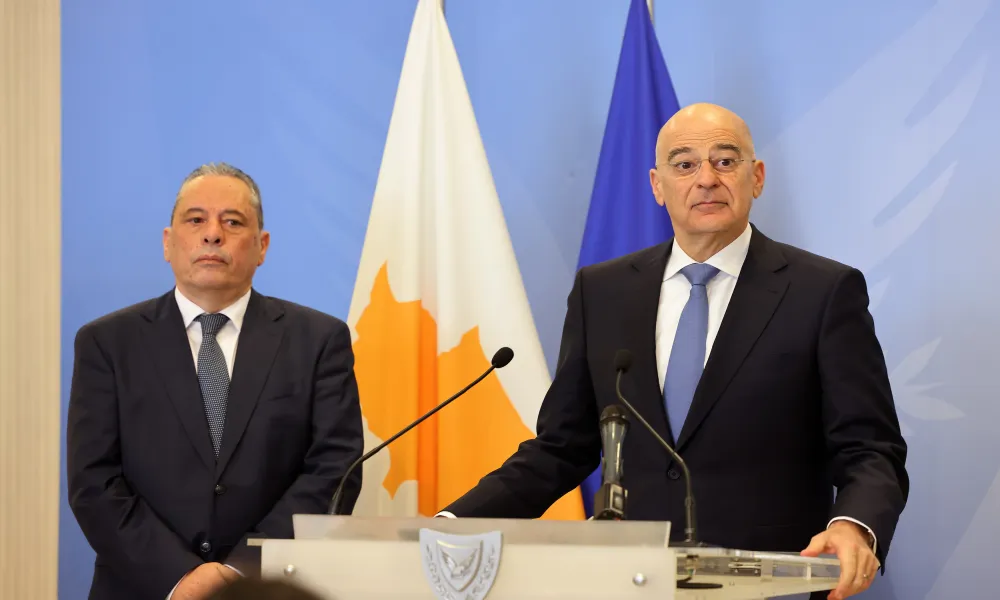
Beyond the economic consequences of this political handling of a difficult situation, there are also implications for the Cyprus issue. For example, Greece’s Defence Minister Nikos Dendias visited the island following the deployment of Greek frigates and F-16s and made statements referring to the Turkish invasion. These were unnecessary remarks that benefit only Mr Dendias, who is a politician and needs votes. The issue is that a minister of another country exploited the situation politically at the expense of Cyprus and the island’s residents. It is hard to imagine a serious state accepting such a development.
The Greek defence minister could have avoided grand statements about “Cyprus lying close by”, especially when the relatives of those killed during the invasion are still alive and remember the infamous phrase “Cyprus lies far away”, after which they were left to face the Turkish army alone. In difficult moments, words will matter. Now, the threat was a Hezbollah drone.
Seriousness and responsibility serve Cyprus’ interests far better than grand rhetoric delivered from a position of safety. Mr Dendias could have publicly stated the situation as it is: that Greek forces arrived to address the possibility of an attack by Hezbollah. That is the reality. There is no need to inflate expectations among a population that has suffered greatly and now needs realism more than ever.
The presence of Greek forces on the island and Mr Dendias’ statements prompted reactions from Turkish Cypriots and Turkey, and today six Turkish F-16 aircraft are in Cyprus. Yesterday’s statement by President Nikos Christodoulides, who said that “whatever Turkey does, it will remain an occupying power in Cyprus”, does not resolve the problem created by the strengthening of foreign military forces on the island. The issue will only be resolved through an agreement on the Cyprus problem, not through competition over who has brought the most aircraft.