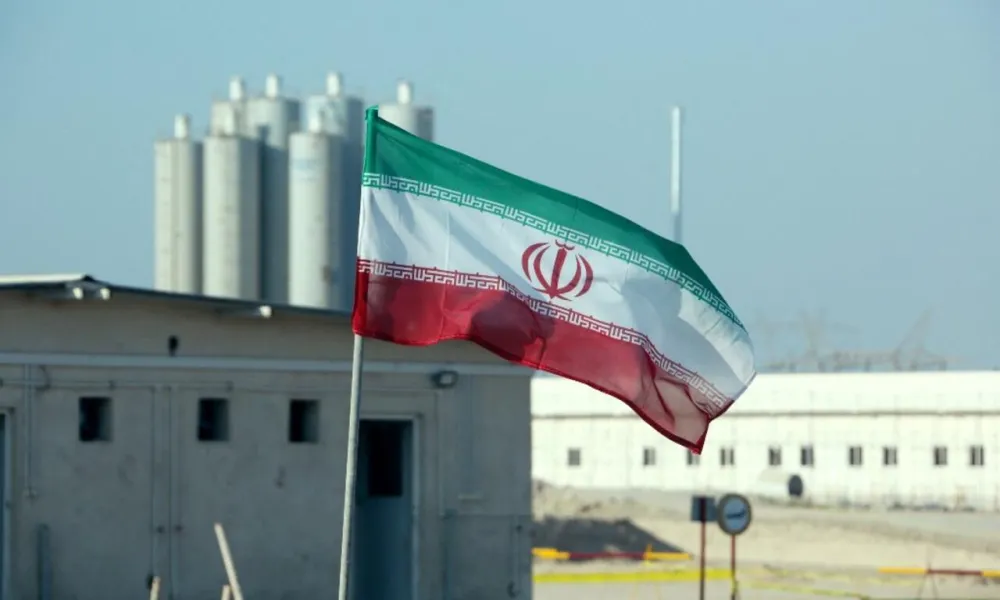
Satellite imagery analysed by CNNi suggests that recent US and Israeli strikes have caused significant damage to parts of Iran’s nuclear supply chain, but several key sites may remain intact.
Watch the CNNi video here.
In recent months, the US and Israel have targeted uranium production facilities and other critical parts of Iran’s nuclear infrastructure. However, CNNi’s analysis indicates that some important locations, including possible storage sites for highly enriched uranium, may not have been hit.
Experts who spoke to CNNi said it remains unclear how effective even the strikes considered successful have been.
From universities to uranium mines
One site in central Tehran, which the US and Israel believe is linked to the early stages of Iran’s nuclear supply chain, was struck in mid-March as part of the US-Israeli campaign.
The institution has been under US sanctions since 2012 over allegations that it was involved in research and development linked to weapons of mass destruction.
CNNi examined dozens of sites across Iran to assess how much of the country’s nuclear chain has been taken out of operation. Its conclusion is that the damage is significant, but not as extensive as Washington and Tel Aviv would have wanted.
Saghand mine appears untouched
The process begins at facilities such as the Saghand uranium mine, where uranium ore is extracted. Satellite images show that the mine has expanded considerably in recent years, with new equipment and increased activity visible at the site.
CNNi said it found no signs of damage at Saghand after the recent strikes. More recent imagery still appears to show machinery operating at the location, suggesting that the first stage of Iran’s nuclear supply chain may have remained intact.
Serious damage at Ardakan
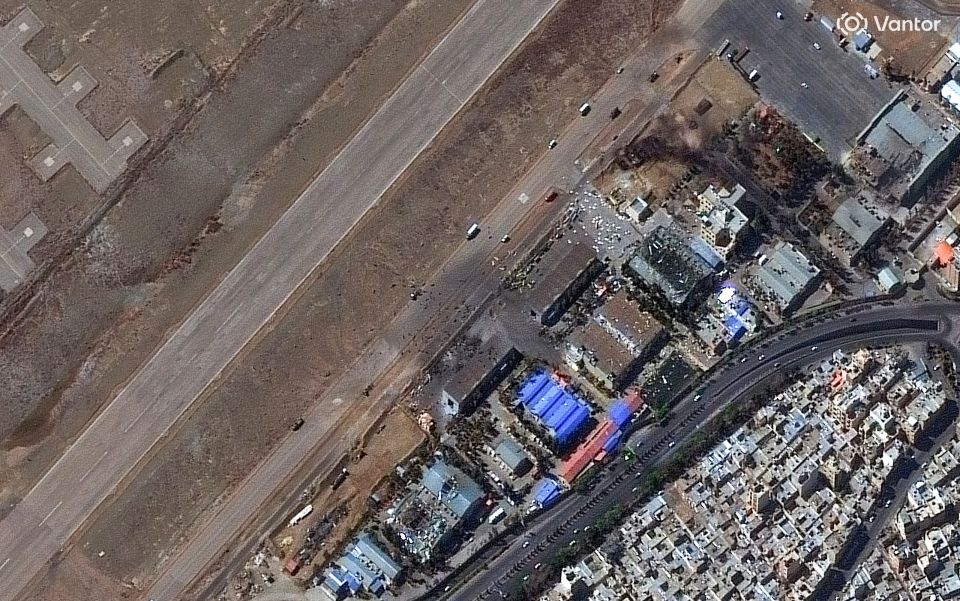
The uranium ore is then transferred to facilities such as the Ardakan plant, where it is processed into yellowcake, a concentrated form of uranium.
According to CNNi, the Ardakan facility suffered serious damage in strikes on March 27.
Satellite imagery taken the following month showed no major changes at the site, suggesting that Iran had not yet begun substantial repair work.
The critical question of Isfahan
After yellowcake is produced, it is moved to facilities such as those in Isfahan, where it is purified and converted into uranium hexafluoride. This is a critical stage in the nuclear fuel cycle and, according to CNNi, has become a major concern for the US and Israel.
Le Monde had previously identified, in satellite imagery taken days before Israeli strikes, a truck near the area. Experts who spoke to CNNi said the containers seen in the images may have been carrying uranium into underground tunnels.
Days later, facilities in the area were heavily damaged by Israeli attacks, with several buildings destroyed. However, the underground tunnels do not appear to have been struck in the latest US-Israeli attacks.
Concern over underground tunnels
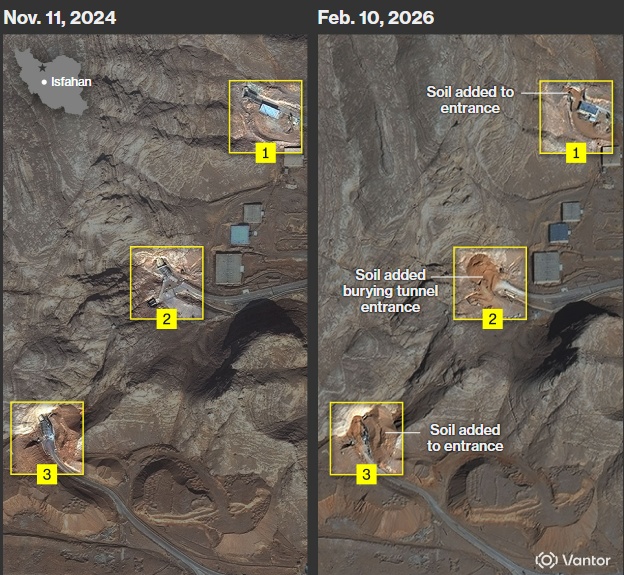
In early 2026, Iran covered several entrances to the underground tunnels at Isfahan with soil, blocking access to them. In April, CNNi reported, additional roadblocks were placed in front of the entrances.
The move has strengthened suspicions that something highly valuable may remain inside. Despite this, the tunnels were not hit in the latest wave of strikes, raising questions among experts.
David Albright, founder of the Institute for Science and International Security and a nuclear weapons expert, told CNNi that the material believed to be stored inside the mountain at Isfahan represents a major risk.
He said the amount of enriched uranium produced by Iran is roughly equivalent to a full year of output from its enrichment complex and is believed to be located mainly, if not almost entirely, at Isfahan.
Source: cnn.gr