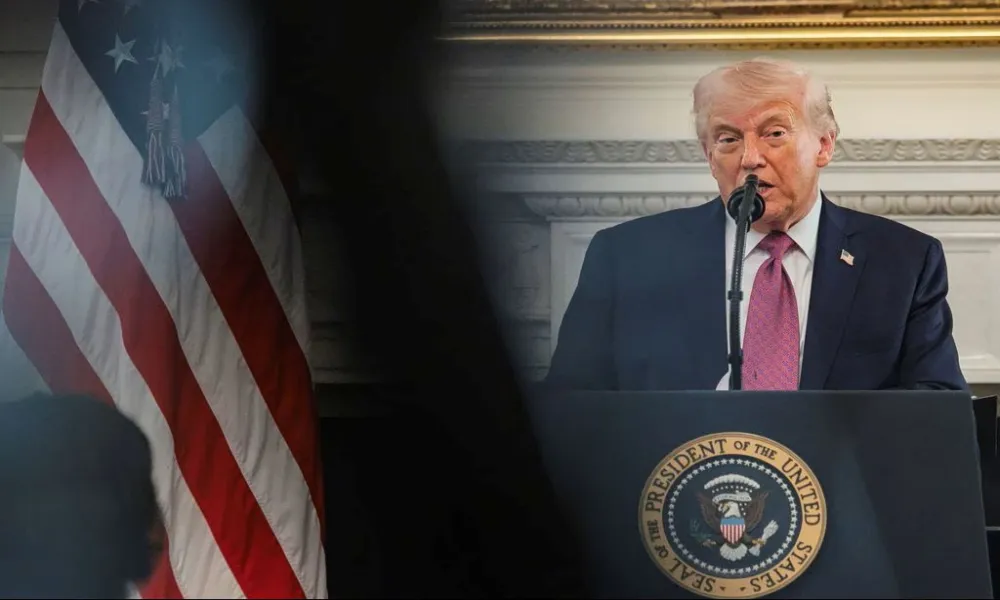

The 60-day deadline for United States President Donald Trump to seek approval from the US Congress to continue military operations against Iran expires today. If authorisation is not granted, the law requires that the operations be terminated, although the administration has indicated it may disregard this requirement.
Under the US Constitution, only the US Congress has the authority to declare war. However, legislation adopted in 1973 allows the president to initiate limited military operations to respond to emergencies arising from attacks against the United States.
The same law requires the president to end military operations after 60 days, obtain congressional approval to continue them or request a 30-day extension on the grounds of “unavoidable military necessity” to protect US armed forces.
The conflict with Iran began on 28 February, and Trump informed Congress two days later, triggering the start of the 60-day countdown.
Dispute over the deadline
The US administration appears unwilling to follow any of the options outlined in the law. It argues that the timeline has effectively been suspended since a ceasefire took effect on 8 April.
US Defence Secretary Pete Hegseth told a Senate hearing yesterday that “the 60-day timeline has been paused” following the ceasefire.
A senior administration official also said that hostilities which began on 28 February had ended and that there had been no exchanges of fire between US forces and Iran since 7 April.
Democratic lawmakers reject that interpretation. The Senate Democratic leader Chuck Schumer said that the countdown cannot simply be halted while US troops remain exposed to risk.
Military options under discussion
Two months after the start of US-Israeli strikes against Iran and retaliatory attacks by Tehran against targets in Israel and several Gulf countries, the Strait of Hormuz remains effectively closed, disrupting global shipping and driving energy prices higher.
Efforts to resolve the conflict have stalled. Trump was scheduled yesterday to receive briefings on plans for a series of new strikes against Iran aimed at forcing Tehran back to negotiations, a US official told Reuters.
Although such options have long been under consideration, the report, first published by Axios, pushed oil prices sharply higher. Brent crude, the international benchmark, rose to 126 dollars per barrel before easing to about 114 dollars.
Another plan reportedly presented to Trump would involve the deployment of ground forces to take control of part of the Strait and reopen it to navigation.
Officials have also said the president is considering extending the US naval blockade of Iranian ports or declaring victory unilaterally.
Maritime coalition proposal
In a sign that Washington may also be exploring de-escalation scenarios, a US State Department cable due to be delivered to partner countries by 1 May calls on them to join a new coalition called Maritime Freedom Construct.
The initiative aims to restore free navigation through the Strait of Hormuz.
Trump reiterated yesterday that Iran’s economy is “a disaster”, though analysts say Tehran may not quickly yield to US pressure.
He also repeated that Iran will not be allowed to acquire nuclear weapons and argued that petrol prices, a major concern for the Republican Party ahead of the November midterm elections, will “fall like a rock” once the conflict ends.
Iranian warnings
Iranian officials warned that further US action could lead to a prolonged escalation.
Foreign ministry spokesman Esmail Baghaei said it would be unrealistic to expect quick results from negotiations with the United States.
Meanwhile, a senior official of the Islamic Revolutionary Guard Corps warned that any new US attack, even a limited one, would lead to “long and painful strikes” against American positions in the region.
The commander of Iran’s Aerospace Force, Majid Mousavi, said: “We have seen what happened to your bases in the region. We will see the same happen to your warships.”
Iran’s Supreme Leader Mojtaba Khamenei said in a written message that Tehran, under its new management of the Strait, would prevent “the abuse of this waterway by enemies”, suggesting Iran intends to maintain control over the passage.
Global economic warning
Antonio Guterres warned that if the disruption caused by the closure of the Strait continues until mid-year, global economic growth will decline, inflation will rise and tens of millions of people could fall into poverty and extreme hunger.
“The longer this vital artery remains closed, the harder it will be to reverse the damage,” he said.
The United Arab Emirates also announced that its citizens are banned from travelling to Iran, Lebanon and Iraq and urged those currently in those countries to leave immediately due to the deteriorating regional situation.
Source: ANA-MPA