


Encouraged by higher-than-expected inflows into Cyprus's dams, which appear to be approaching 40% capacity compared with just 24% at the same point last year, farmers are calling for a revision of the water allocation decision made by the Council of Ministers in January. Regional authorities are also registering their discontent, with district-level organisations preparing their own requests ahead of a critical meeting next month.
The backdrop is a decision taken by the government in early 2026, based on the state of the dams last year, to allocate 22.2 million cubic metres of water for irrigation, down from 33 million cubic metres in 2025, and 103.4 million cubic metres for water supply, down from 114 million cubic metres in 2025. This translates to a 33% reduction for the agricultural sector and a 10% reduction for the water supply network.
The WMAAC meeting
The key moment will come after Easter, at the 25 April session of the Water Management Advisory and Consultative Committee, when the Water Development Department, which is modelling scenarios over a three-year horizon, will brief all stakeholders on the island's water situation and recommended policy direction. Agricultural organisations plan to attend with a joint demand for additional water allocations where possible, particularly for tree crops such as olive and citrus groves, as well as for open field crops including potato cultivation via the Southern Conveyance System, requesting 2 to 3 million tonnes of water. At the same time, they have made clear they will not accept water supplies being held at last year's levels in areas where dams have already overflowed.
District authorities and the 10% cut
The presidents of the District Organisation of Water Supply Authorities, known by their Greek acronym EOA, will convene on 15 April to agree on joint proposals ahead of the WMAAC meeting. Konstantinos Giorkatzis, president of the Nicosia EOA, told Politis that one position his organisation will put forward concerns what he described as a "unilateral and unjust decision by the responsible ministry to apply a blanket 10% reduction in water supply across all districts, with no differentiation by district and no adequate technical justification or historical evidence to support it." He argued that a fairer approach would be to calculate the reduction in proportion to each district's share of non-revenue water in total consumption. "Nicosia has a 20% non-revenue water ratio," he said. "It is also worth noting that Nicosia district has no alternative water sources, which means a 10% reduction in the state network translates to roughly 10% in practice. Other districts can supplement their supply through alternative sources, boreholes or reservoirs."
A three-year problem
The Water Development Department's director, Iliana Tofa-Christidou, moved to temper expectations of any significant loosening of water policy. "We do not anticipate dramatic changes to our planning. The main reason is that we continue to face a problem over the three-year horizon, at a time when there is also uncertainty about future dam inflows," she told Politis. She stressed the need to preserve reserves for the next two years to avoid returning to the difficulties of the past. On the farmers' requests for small additional allocations for specific crops and areas, she said this was not ruled out and was among the scenarios being examined, but that the department needed to be 100% certain any concessions would not create problems over the three-year period before committing to them. She was explicit about geographical limits. "Because most of the dams connected to the Southern Conveyance System form the backbone of the water supply network, I find it particularly difficult, to the point of impossible, to make changes for that area. For other areas, there may be some room," she said.
The potato question
From the agricultural side, Tasos Giapanis, secretary general of Panagrotikos, told Politis that farming organisations would attend the WMAAC meeting to request additional water for crops such as olives and citrus where possible, while also pressing for 2 to 3 million tonnes of water for potato cultivation in the Kokkinochoria area via the Southern Conveyance System. He noted that in other years, 13 million tonnes had been allocated for that purpose. He argued the case by pointing out that potato producers, the Potato Marketing Board, the agricultural export body SEDIGEP and private traders already hold signed two and five-year contracts with foreign buyers to whom they cannot refuse delivery of potatoes on grounds of water shortage.
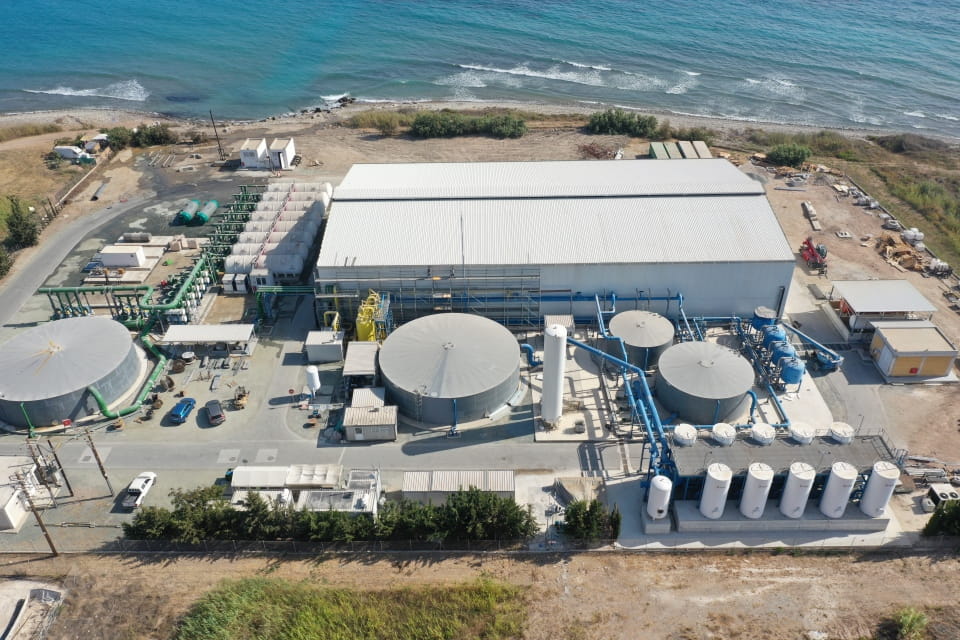
Christos Papapetrou, president of the Pancyprian Farmers Union, told Politis that "the water situation is better than expected, so we will be asking for additional quantities." He noted that water could feasibly be allocated to certain tree crops, and that the commissioning of new desalination units worked in farmers' favour, since less dam water would need to be drawn for filtration and drinking water supply, freeing up capacity for irrigation.
A call for restraint
In response to calls for higher water supply allocations, Tofa-Christidou called on citizens and local authorities alike to understand the reality of continuously growing demand. She noted that water needs have been rising by 5 to 6% annually in recent years. "When current needs stand at 115 million cubic metres, next year approximately 5 million cubic metres will need to be added to that," she said. She attributed the increase to three factors: rising consumer demand, water losses and non-revenue water, and overconsumption and waste, noting that the department is actively working on the latter two. On bridging the 10% reduction to local water authorities, she said efforts were under way to work with the EOAs on more rational water use, and that free flow-restricting tap aerators would be distributed to citizens for home installation in the coming period.