
When I was at university, I developed a quiet resistance to a particular kind of novel. I found myself increasingly irritated by reading lists populated by women who unravelled. Women in attics. Women in unhappy marriages. Women drifting towards breakdown. Women whose inner worlds became more and more fractured until they could no longer function within the worlds around them.
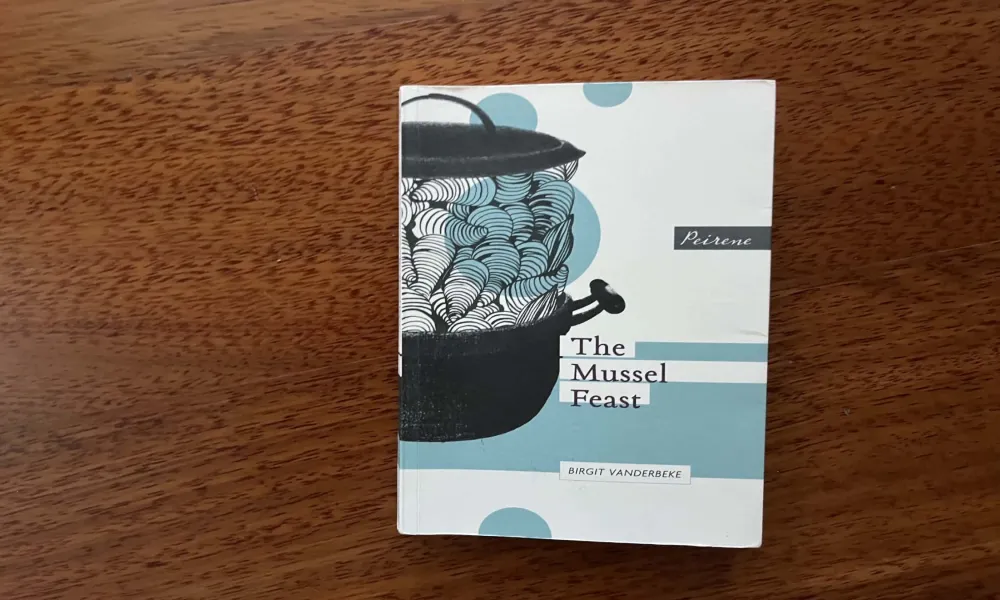
Somewhere among them was Birgit Vanderbeke's The Mussel Feast.
I remember resisting the book before I had even read it. Part of this was undoubtedly youthful stubbornness. But part of it was something else. I was tired of encountering female characters whose suffering seemed to function as a literary device. The message, as I understood it then, was that women became interesting once they began to break.
Years later, returning to these texts, I find myself asking a different question. Not why so many women in literature go mad but why so many are driven there.
The Mussel Feast unfolds over a single evening. A family waits for the father to come home. The meal has been prepared. The titular mussels sit on the table. He is late. That is, on paper, almost all that happens.
Yet the novella creates a mounting sense of unease. The father is absent but everywhere. His preferences, habits, moods and judgments have seeped into the architecture of family life. Long before he enters the room, everyone is already responding to him.
Reading it now, I was struck by something I couldn't have articulated when I was nineteen. The novella is less interested in a tyrannical man than in the atmosphere created around him. The shrinking. The self-monitoring. The anticipation. The way people begin to organise themselves around another person's reactions until they lose sight of their own.
It reminded me of something that often troubles me when discussions of mental health become too individualistic. We are very good at locating distress within people. Less good at asking what environments produce it.
Who is anxious?
Who is depressed?
Who is struggling?
These are important questions. But there is another one lurking underneath them.
What is happening around them?
Many of the books I resisted at university have stayed with me nonetheless. The Yellow Wallpaper. The Bell Jar. Wide Sargasso Sea. Different books, different women, different circumstances. Yet all return in one way or another to the relationship between power and distress.
Perhaps what frustrated me then was the apparent inevitability of the narrative. Another woman breaks down. Another woman cannot cope.
But now I see that these texts were never asking us to scrutinise the woman. Perhaps they were asking us to scrutinise the conditions.
The family. The marriage. The institution. The culture.
What I appreciate about The Mussel Feast now is its refusal to make this explicit. Vanderbeke does not offer diagnosis or moral instruction. Instead, she allows the reader to sit in the tension of that evening and notice what begins to surface once fear loosens its grip.
It is a slim novel, but an unsettling one.
And perhaps that younger version of myself was not entirely wrong to resist it. There is something exhausting about a literary tradition crowded with women suffering under the weight of other people's expectations.
What I failed to recognise, however, was that some of these books are not really about madness at all. They are about the systems that require it.