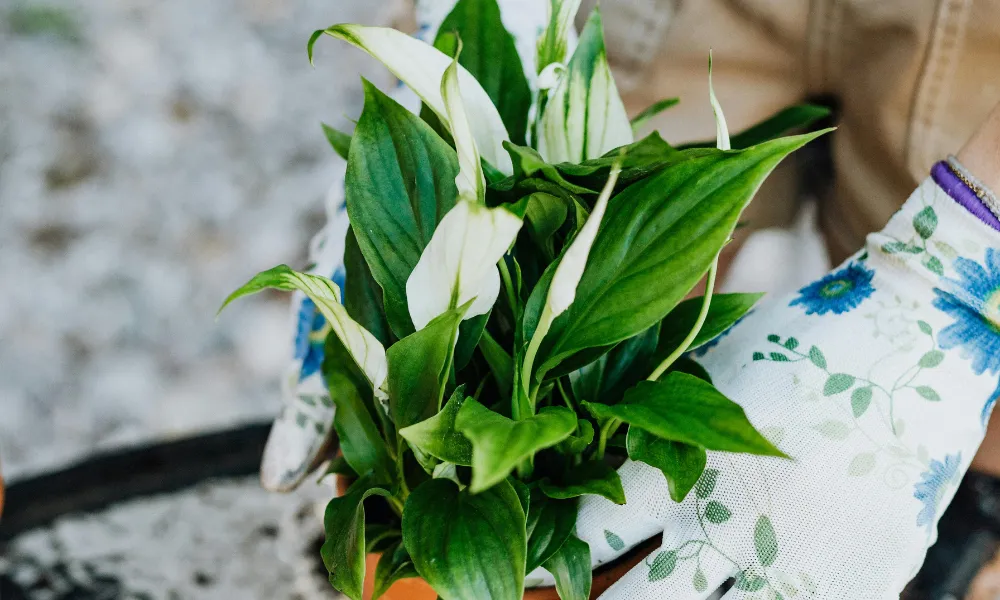

A study by researchers at the University of Seville has found that certain indoor plants can significantly reduce air pollutants, with the peace lily (Spathiphyllum wallisii) showing the strongest performance.
The research, published in the journal Atmospheric Environment, tested several popular indoor plants in controlled conditions and found that the peace lily was the most effective in reducing key airborne pollutants in less than 24 hours.
Study examines five common indoor plants
The researchers analysed five widely used houseplants: peace lily (Spathiphyllum wallisii), Tradescantia zebrina, Philodendron scandens, Ficus pumila and Chlorophytum comosum.
Each plant was tested separately in a sealed glass chamber, where different air pollutants were introduced to measure how quickly and effectively their concentration declined.
The pollutants examined included volatile organic compounds (VOCs), formaldehyde, nitrogen dioxide and sulphur dioxide, substances commonly found in indoor environments due to building materials, furniture, cleaning products and combustion processes.
Peace lily records highest pollutant reduction
While all five plants showed positive results, the peace lily recorded the strongest performance, particularly in reducing nitrogen dioxide.
According to the researchers, the plant required less than 30 minutes to remove half of the initial concentration of the tested pollutants, making it the most effective species in the experiment.
In some cases, overall pollutant levels fell by 96% to 98% within 24 hours when the plants were used in the experimental system.
Air quality improvements appear quickly
The study also highlighted how quickly improvements in air quality appeared.
Within 15 minutes of exposure to volatile organic compounds, pollutant levels had already declined by 24% to 40%, depending on the plant species tested.
Formaldehyde concentrations dropped even faster, while nitrogen dioxide showed significant reductions within only a few hours.
Performance remained stable over time
To examine whether the plants’ filtration capacity would decline, researchers repeated the pollutant exposure over three consecutive days.
The results showed that the plants’ performance did not deteriorate, and in some cases appeared to improve slightly, suggesting that plant-based filtration systems could provide consistent benefits for indoor air quality.
Potential role in indoor air purification
The study focused on an “active living wall” system, a vertical arrangement of plants through which indoor air was circulated.
According to the researchers, such systems demonstrate how indoor plants can function not only as decorative elements but also as natural filters capable of reducing common indoor pollutants when integrated into properly designed ventilation setups.
Among the plants tested, the peace lily stood out as the most effective, offering a practical and widely available option for improving indoor air quality.
Source: Atmospheric Environment