
To whom does a public museum belong, and who decides its future? Its directors and curators, the state bodies that fund it, or the citizens it exists to serve?
London's National Gallery has sought a different answer to that question. It invited people from across the United Kingdom to help shape its future direction.
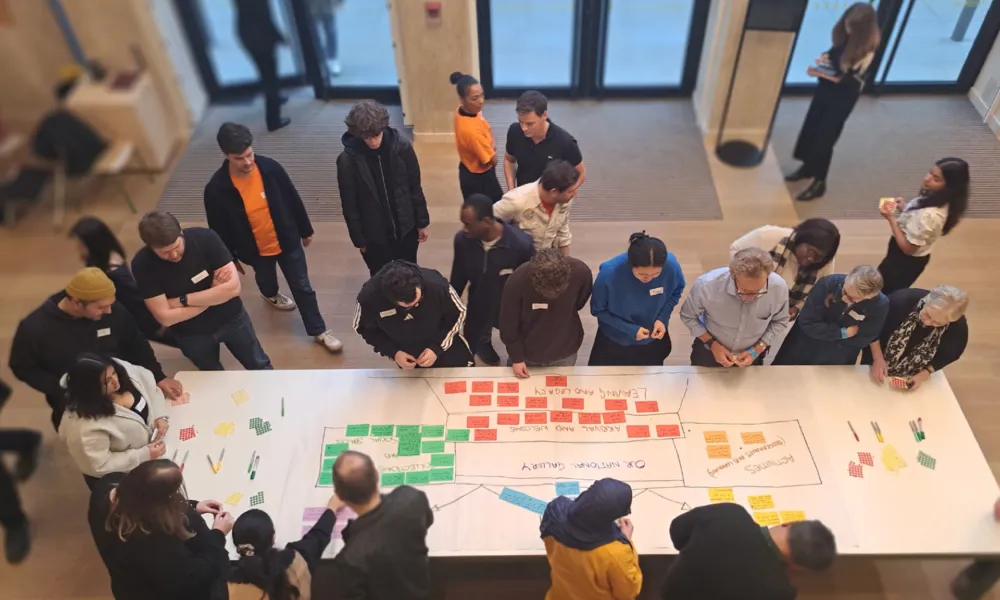
The initiative, entitled NG Citizens, began in November 2025. That month, the gallery convened an assembly of 50 citizens aged 16 and over, selected by lot after invitations were sent to 15,000 households.
The aim was to form a group that reflected the country's social and geographical diversity, including people with no previous connection to the National Gallery.
Between November 2025 and March 2026, five sessions took place. Participants learnt how the museum operates, spoke with experts and staff, and weighed different approaches to its future.
The process was designed with the organisation Involve and the Sortition Foundation, which specialises in selecting citizens by lot. The intention was for recommendations to emerge from informed collective deliberation, rather than from simply recording individual preferences.
The question put to participants was how the National Gallery, as a national cultural institution, could bring more people into meaningful contact with painting.
They were asked to consider how the museum can respond to the needs of a changing society, who feels represented within its walls, and who still remains outside. The discussions that followed, however, raised issues that go well beyond visitor numbers or the way its collections are displayed.
A museum that reflects society
Among the main themes of the recommendations is the need for the National Gallery to strengthen its relationship with different social groups and to become more representative of the public it serves.
The issue is of particular interest for an institution that holds one of the world's most important collections of European painting. Its historical and geographical identity does not necessarily reflect the diversity of contemporary British society.
This also concerns the way works are presented and interpreted, so that more points of connection can be created between the collections and visitors' own experiences.
In this context, participants proposed, among other things, using technology to create more personalised visits, with particular emphasis on groups under-represented among the gallery's current audience.
Particular weight was also given to the stories behind the works of art. This recommendation received the most votes in the final process, 33 in total.
Participants asked for the gallery to highlight not only the circumstances in which works were created, but also their history, including how they entered the gallery's collection.
They linked this to a fuller account of the institution's own history, considering it important to bring lesser-known aspects of the collection to light.
The proposals did not stop at how works are presented. Citizens called for bolder decisions on exhibition programming and the selection of works, so that the National Gallery better reflects the social diversity of the United Kingdom.
They also raised the question of geographical access. They proposed closer partnerships with cultural organisations and communities in England, Scotland, Wales and Northern Ireland through the sharing of works and resources.
The aim, as set out in the report, is for the collection to function as a public good for the whole country, not only for those able to visit London.
The need to balance financial sustainability with preserving public character, it must be said, increasingly preoccupies cultural institutions. Rising operating costs are creating pressure to find new sources of income.
In the case of the National Gallery, where access to the permanent collection remains free, the issue also concerns how financial choices may affect the public's ability to enjoy art without financial barriers.
From recommendations to practice
The National Gallery has already begun considering how to implement some of the assembly's proposals. These include:
- extending opening hours in the summer months, to make it easier for people to visit after work
- using lighting and sound to create new sensory experiences in the galleries
- making the audio guide available free of charge
The initiative does not end with the publication of the recommendations. According to the report, NG Citizens is entering a second phase that will run until 2030.
This will involve three successive groups, each made up of 15 former assembly members, with three meetings per group.
Interest in continuing was particularly high. More than 80% of the original members said they were willing to stay involved.
The new groups will work with the gallery to develop specific projects and initiatives. In 2027, they are expected to help shape a Visitor Charter. They will also help consider how future exhibitions should be presented in Room 1, where historic and contemporary painting will be shown side by side.
A central question of this second phase will be how the National Gallery can tell the human stories connected with the works, alongside the story of painting itself.
Who decides in the end?
For all the widening of participation, the process has clear limits. Citizens were asked to make recommendations on the National Gallery's strategy and operations, but they were not given decision-making powers.
Matters such as the purchase or sale of works of art, major changes to existing buildings and decisions that could affect the gallery's institutional independence were excluded from the consultation from the outset.
Notably, the proposal for greater public involvement in decisions on programmes and collections received just seven votes in the final process. It was not among the eight leading principles.
The result does not necessarily mean participatory governance was rejected. It does show, however, that the citizens themselves gave greater priority to content, access and the museum's relationship with society.
Final responsibility for implementing the recommendations therefore remains with the National Gallery's management.
Whether citizen participation has real substance will depend on the decisions that follow, and on whether their implementation can be monitored.
With the programme continuing until 2030, the focus now shifts from the proposals that were made to the changes that will actually take place.