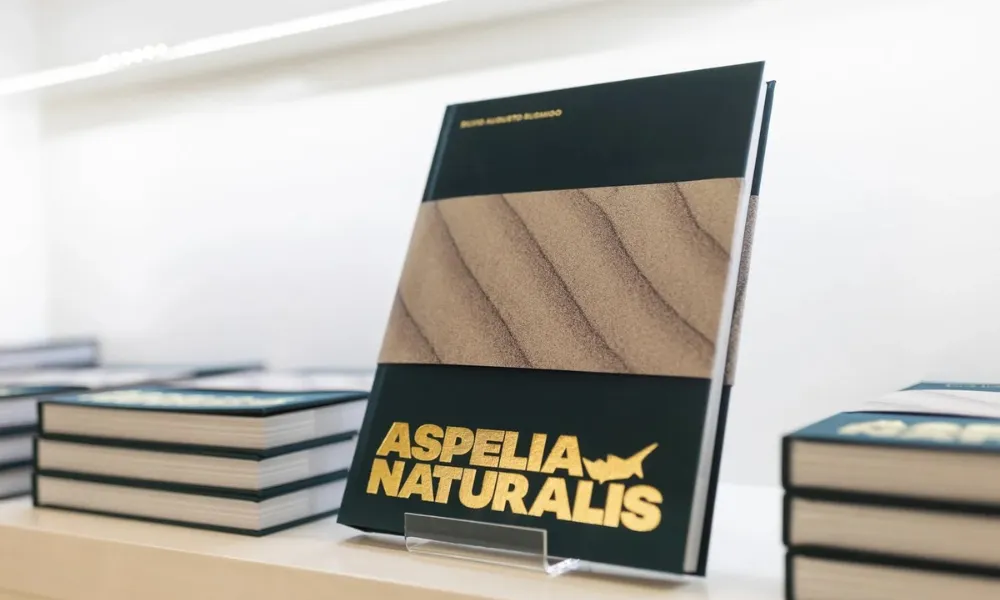
Aspelia Naturalis is a photography publication shaped by more than fifteen years of fieldwork across Cyprus, bringing together landscapes, personal notes and environmental reflections. Covering the period from 2009 to 2024, the book draws from an extensive archive built through repeated visits and long-term observation of the island’s terrain.
Rather than focusing on widely circulated images of Cyprus, the work seeks to document less familiar aspects of its geography, including coastlines, salt lakes, mountain ranges, ruins and remote valleys. The photographs are the result of sustained engagement with place, capturing gradual changes across seasons rather than single moments.
A personal and environmental record
The book combines visual material with written elements that reflect both personal experience and historical context. Alongside Rusmigo’s notes, the publication incorporates environmental perspectives developed in collaboration with BirdLife Cyprus and the Cyprus Environment Foundation.
The final text was written by conservationist Martin Hellicar, whose contribution frames the project within broader concerns about environmental balance and long-term sustainability.
Title and historical reference
The title Aspelia Naturalis references “Aspelia”, an early name for Cyprus cited by Pliny the Elder in Naturalis Historia. The use of this term connects the island’s historical identity with its contemporary landscape, positioning nature as a continuous element across time.

The publication also includes the black-and-white series This is Your Cyprus, originally developed as a separate project. Its inclusion introduces a contrasting visual approach, focusing on texture and form while complementing the broader landscape narrative.
Beyond the book
Since its release, Aspelia Naturalis has expanded into a wider project that includes exhibitions, talks and public presentations. These activities have centred on landscape, heritage and environmental awareness, extending the book’s reach beyond its printed format.
The publication functions both as a visual archive and as a record of long-term engagement with Cyprus, emphasising observation, continuity and the relationship between people and place.