An agreement has been finalised for the redevelopment of the historic Faneromeni building in Nicosia, bringing to an end years of discussions and revisions since 2022.
The deal involves the Nicosia Municipality, the University of Cyprus, the Archbishopric of Cyprus and the Ministry of Finance of Cyprus, and sets out a revised framework covering both the project’s cost and scope.
A key element of the agreement is the reduction of the budget to €10 million, down from the €15 million initially requested by the university. Plans for the construction of an additional hall have also been scrapped, with authorities concluding that existing spaces can meet the project’s needs. The adjustment helped bridge differences, as the finance ministry had raised concerns from the outset over the original cost.
Change in use of the building
A significant shift concerns the intended use of the building. While the initial plan envisaged relocating the Department of Architecture, which requires specialised laboratories and studio space, it has now been decided to house the Department of Archaeology along with the Archaeological Research Unit.
This option is considered more compatible with the building’s existing structure, as it avoids the need for extensive construction works. Earlier plans had included studies and approvals for a new building within the surrounding area to accommodate the Architecture Department, but rising costs led to the abandonment of that approach in favour of a more viable solution.
Public space to replace basketball court
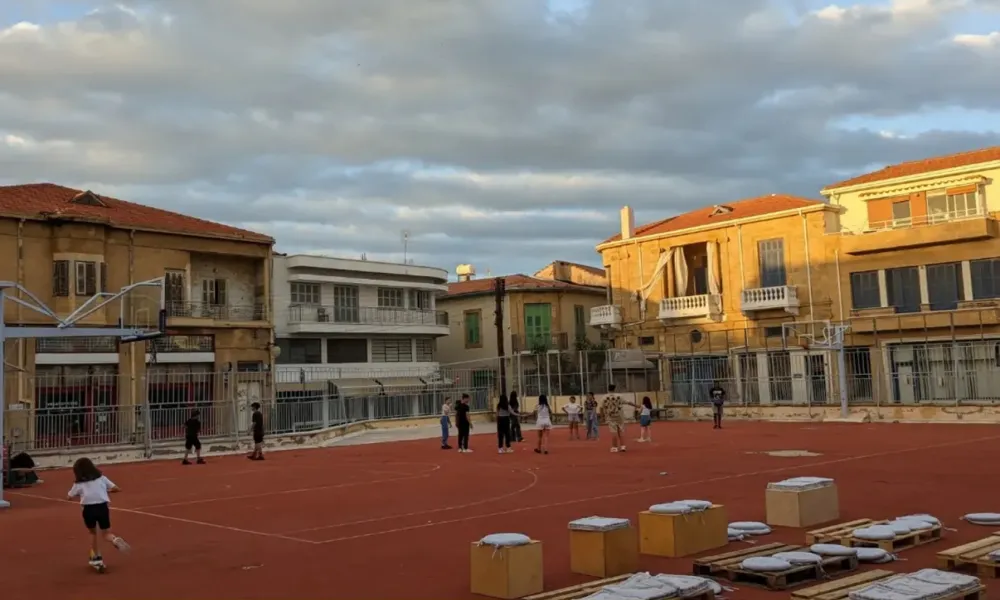
Another key aspect of the agreement is the redevelopment of the outdoor area. The existing basketball court will be converted into a public gathering space, aimed at creating an open hub for residents, students and visitors.
The intervention aligns with broader efforts to improve accessibility and strengthen social activity within the walled city.
Reviving the historic centre
The presence of university departments in the city centre is seen as central to revitalisation efforts. The relocation of the Department of Archaeology is expected to bring hundreds of students and researchers to the area on a daily basis, boosting commercial activity and supporting long-term sustainability in a district that has faced years of decline.
Experience from the operation of the Architecture Department in other parts of the walled city has already demonstrated the impact of student presence, with small businesses, dining venues and cultural initiatives developing around academic clusters.
At the same time, ongoing and completed projects, including the redevelopment of the new town hall square and upgrades along Trikoupi Street, as well as façade improvements on Ledra and Onasagorou streets, are expected to reinforce the transformation of the area into a more functional and attractive urban environment.
Mayor sets 2028 target
Speaking to Politis, Nicosia Mayor Charalambos Prountzos described the agreement as a major step forward.
He said it resolves a long-standing issue and paves the way for meaningful reactivation of the walled city, stressing the importance of formalising the agreement where required. He added that cooperation among all parties led to a financially reasonable and operationally feasible solution that supports the core objective of revitalising the historic centre.
Prountzos expressed hope that the redevelopment could be completed before the start of the academic year in September 2028, allowing the increased student presence to deliver immediate benefits for the city, the economy and daily life, while helping to activate the wider area around the former girls’ school site.
He also thanked the University of Cyprus, the Archbishopric and the Ministry of Finance for their constructive approach.