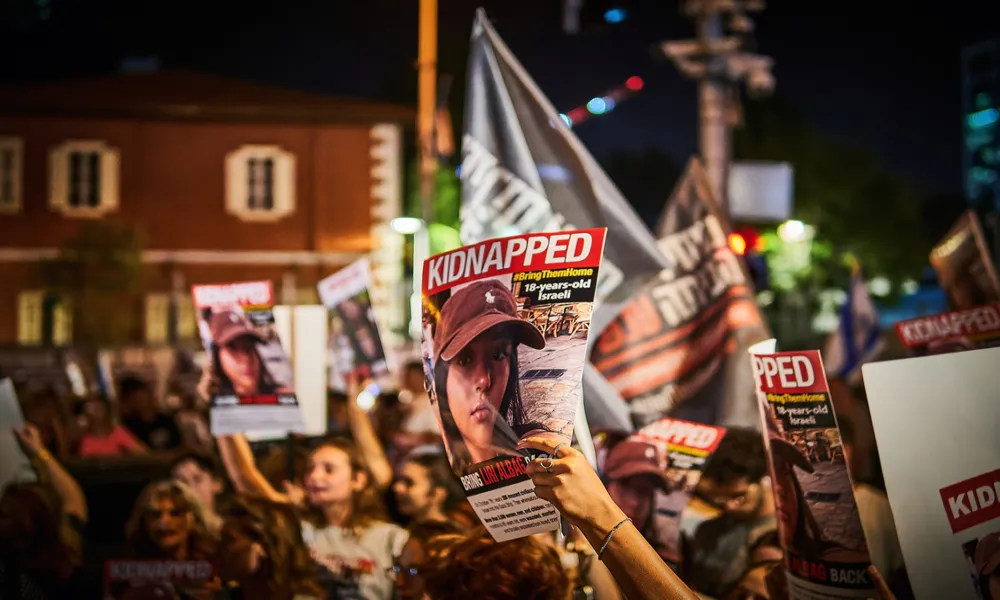
From the first moment of the cowardly and brutal massacre by Hamas terrorists at the music festival near Kibbutz Re’im, where innocent Israelis and foreign citizens were slaughtered and some 250 others were dragged into Gaza as hostages, Israel’s leadership insisted its war had two goals alone: to wipe out Hamas and to free the hostages, whatever the cost.
Two years on, neither goal has been achieved. Despite relentless air and ground bombardment, a suffocating blockade that has created famine conditions, and the mass displacement of Palestinian civilians from their homes and devastated land, Hamas still shows signs of life. Its fighters remain entrenched in the ruins and the underground tunnels of Gaza.
The fate of the hostages tells its own grim story. Some have been freed, some killed or left to die in captivity, and an unknown number remain in the hands of Hamas or other armed groups.
In recent days, Prime Minister Benjamin Netanyahu, who has consistently rejected or undermined international diplomatic efforts for a ceasefire and the hostages’ release, has launched the largest ground operation yet, with the declared aim of taking Gaza in its entirety. Operation Chariots of Gideon II is proceeding with apparent ease: tanks and troops have penetrated deep into the city, demolishing buildings and flattening entire neighborhoods, while forcing the remaining residents to flee once more into exile.
And yet, beneath this show of strength lies a profound danger. As Hamas abandons its strongholds, its fighters may decide, whether for revenge or tactical reasons, to execute the remaining hostages. Is Netanyahu prepared to sacrifice them on the altar of his military ambition?
If he is, the question is no longer his alone. Will the families, the relatives, and the Israeli public at large forgive such a crime?