
By Neophytos Loizides*
Attention is focused on EU institutions, policy coordination, and diplomatic noise. Yet something important is being overlooked. Brussels is treated as an abstract European space, while the political system that made Brussels workable in the first place remains largely invisible.
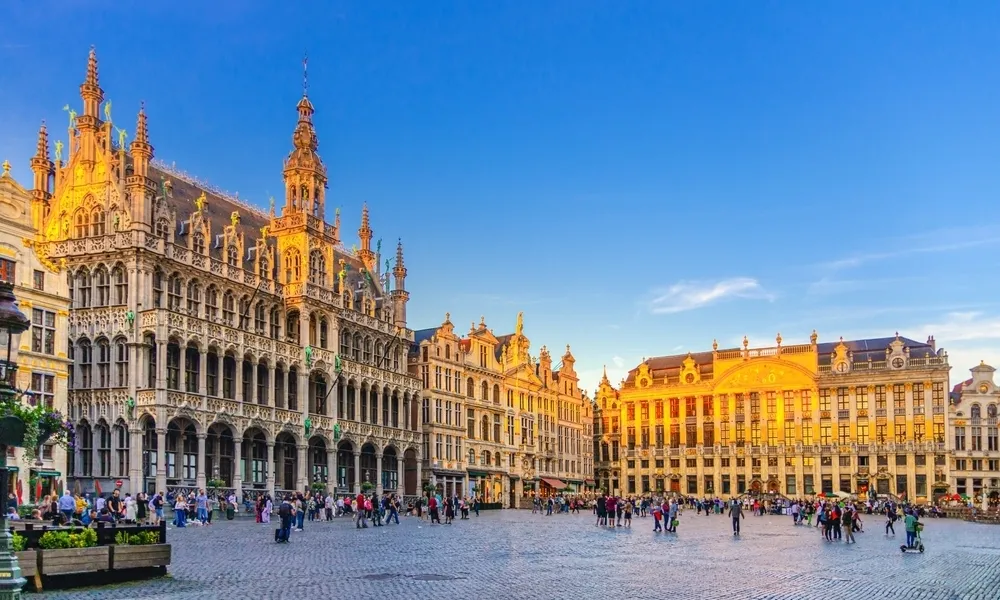
Brussels: EU Capital, Belgian City
Much of what visitors encounter in Brussels belongs to the EU: the Commission, the Council, the Parliament. But Brussels itself is a Belgian city, governed through carefully negotiated power-sharing arrangements that have evolved alongside -not because of - the EU’s presence.
Bilingualism, proportionality, shared authority, and negotiated autonomy are Belgian responses to Belgian divisions. These arrangements made Brussels governable and therefore capable of hosting Europe’s institutions. In joint work with Thibaud Bodson, we show how Brussels functions as a politically managed space rather than a neutral backdrop — a city whose internal compromises quietly sustain its international role; more recent work has equally shown that a third zone for reunited Cyprus will be welcome from a public opinion perspective on both communities.
The EU Layer: Representation and Consensus
At the EU level, proportionality operates primarily as a representative mechanism, most visibly through rules such as the D’Hondt method, used to allocate committee chairs in the European Parliament. These rules distribute influence and allow for consensus to emerge across policy areas. Their importance lies in what they enabled elsewhere.
Northern Ireland: When European Logic Entered Domestic Power
In Northern Ireland, proportionality moved beyond representation into executive power-sharing. Irish Nationalist leaders such as John Hume, drawing on experience at the European Parliament, recognised early on that predictable inclusion could stabilise politics by removing the fear of permanent exclusion.
Northern Ireland thus became a bridge between European proportionality and domestic governance. In my work with John McGarry — including comparative work on Cyprus and Ukraine — we show that this institutional choice mattered not because it generated trust in abstract, but because it reduced risk in practice. Political outcomes became less existential once participation was guaranteed by rules rather than goodwill.
Belgium: Federalism as an Ongoing Political Practice
Belgian federalism rests on a different logic from the one usually debated in Cyprus. It is not a fixed constitutional design, but an ongoing political practice. Authority is shared across regions and communities, competences overlap, and ambiguity is managed rather than eliminated. Conflict is not resolved once and for all; it is institutionalised in ways that keep it political rather than destabilising.
Ostbelgien: Public Deliberation and Recognition
Recent developments in Ostbelgien, Belgium’s German-speaking community, add a further dimension. Beyond debates about autonomy, Ostbelgien has emerged as an important laboratory for deliberative democracy, particularly through citizens’ assemblies embedded within the regional political system.
Working under the auspices of the Cyprus Peace and Dialogue Center (CPDC), we suggested the Ostbelgien experience as a consultative model capable of updating the design of the Cyprus peace process — placing inclusivity, credibility, and results at its core. Citizen participation (in Ostbelgien via lottery) is not performative. It feeds into decision-making, shapes political agendas, and enhances legitimacy in a small but diverse community.
Why This Matters Now
During its EU Presidency, Cyprus naturally engages with European institutions. But Europe’s most relevant lessons are not found only in treaties or Council conclusions. They are also embedded in the domestic governance and grassroots practices of the state hosting them.
*Professor in International Conflict Analysis, Politics and International Studies | University of Warwick| Coventry | CV4 7AL