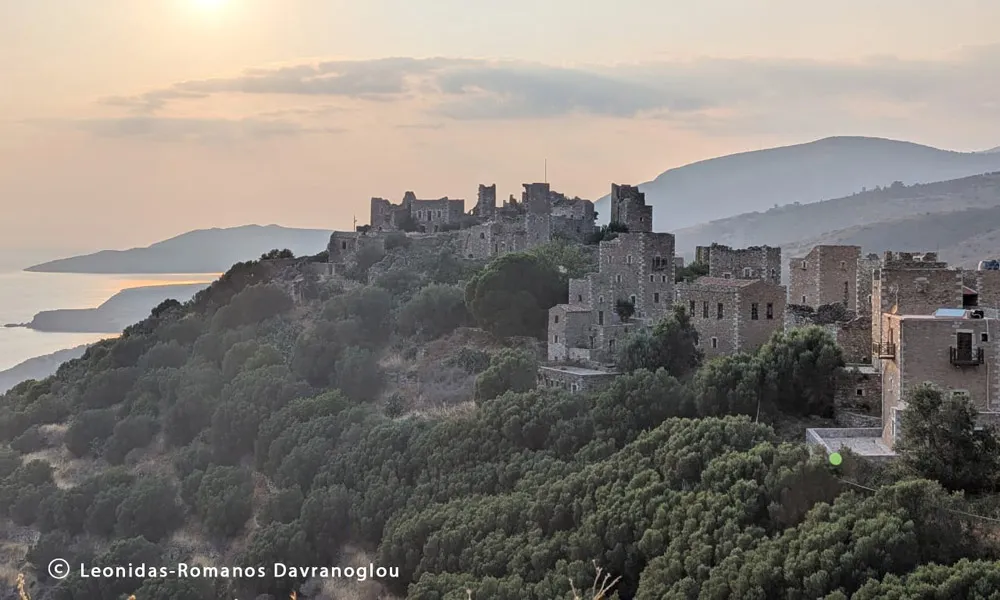

Set among rugged mountains, dramatic coastlines, and distinct stone tower houses, the Mani Peninsula of the Peloponnese, Greece, has long captivated travellers, historians A new genetic study revealed that the people of Deep Mani, who inhabit one of the remotest regions of mainland Greece, represent one of the most genetically distinctive populations in Europe, shaped by more than a millennium of isolation. The findings, published today (4 February) in Communications Biology, reveal that many lineages can be traced back to the ancient inhabitants of Greece during the Bronze Age, Iron Age and Roman era. Such genetic continuity over the millennia is exceptionally rare, particularly in Europe.
The research team, comprising scientists from European University Cyprus, the University of Oxford, Tel Aviv University, the National and Kapodistrian University of Athens, the Areopolis Health Centre, and FamilyTreeDNA, found that Deep Maniots largely descend from local Greek-speaking groups living in the region before the Medieval era. In contrast to many other mainland Greek populations, Deep maniots – particularly as regards their paternal lines show no evidence of absorbing later incoming groups, such as the Slavs, Vlachs, or Arvanites, whose arrival transformed the genetic and linguistic landscape of Greece.
European University of Cyprus had a central role in the present study, led by Dr Leonidas-Romanos Davranoglou (University of Oxford, Tel Aviv University, and National and Kapodistrian University of Athens), as the study contributes to the East Mediterranean Population Isolates Study (EMPIS) project, led by Dr Alexandros Heraclides, Associate Professor of Epidemiology and Public Health, at the School of Life and Health Sciences, who had a senior researcher role in this study.
“Our results show that historical isolation left a clear genetic signature,” said lead author, Dr Davranoglou. “Deep Maniots preserve a snapshot of the genetic landscape of southern Greece before the demographic upheavals of the early Middle Ages. Our study demonstrates how geography, social organisation, and historical circumstances can preserve ancient genetic patterns in certain regions long after they have become altered elsewhere.”
Maternal lineages, however, were found to be more diverse, reflecting sporadic contacts with populations from the eastern Mediterranean, the Caucasus, western Europe, and even North Africa. Dr Alexandros Heraclides (European University Cyprus) said: “These patterns are consistent with a strongly patriarchal society, in which male lineages remained locally rooted, while a small number of women from outside communities were integrated. Our study is the first to recover the untold histories of Deep Maniot women, whose origins were largely obscured by male-centred oral traditions.”
“Many oral traditions of shared descent, some dating back hundreds of years, are now verified through genetics,” said Athanasios Kofinakos, co-author and research advisor on genealogical and historical matters. “Deep Mani’s geographical isolation and limited economic resources galvanised the warlike character of the locals.”

Study co-author, Dr Anargyros Mariolis, MD, Director of the Areopolis Health Centre, who played a decisive role in mobilizing the local community to take part in the study, emphasizes: "The community was engaged in every stage of the research – from planning our sampling strategy and helping their fellow Deep Maniots interpret the results of our research. This study gives a voice to the stories of our ancestors."
Looking ahead, co-author Prof. Theodoros Mariolis-Sapsakos, MD, (National and Kapodistrian University of Athens), said that “the team aims to investigate further genetic and clinical markers relevant to public health research, ensuring that scientific insights continue to benefit the people who made the study possible.”. The same is also stressed by Dr. Heraclides (European University of Cyprus) who states: "It is our great pleasure and highest responsibility to contribute to the investigation of genetic predisposition to various diseases, as well as gene-environment interactions, in this genetically unique population, within the framework of the EMPIS project. We are ready, together with our collaborators in Israel, England, and Greece, to move forward in these new and innovative research paths."
* Constantine Porphyrogenitus, De administrando imperio, ed. G. Moravcsik, trans. English by R. j. H. Jenkins, Washington 1967.