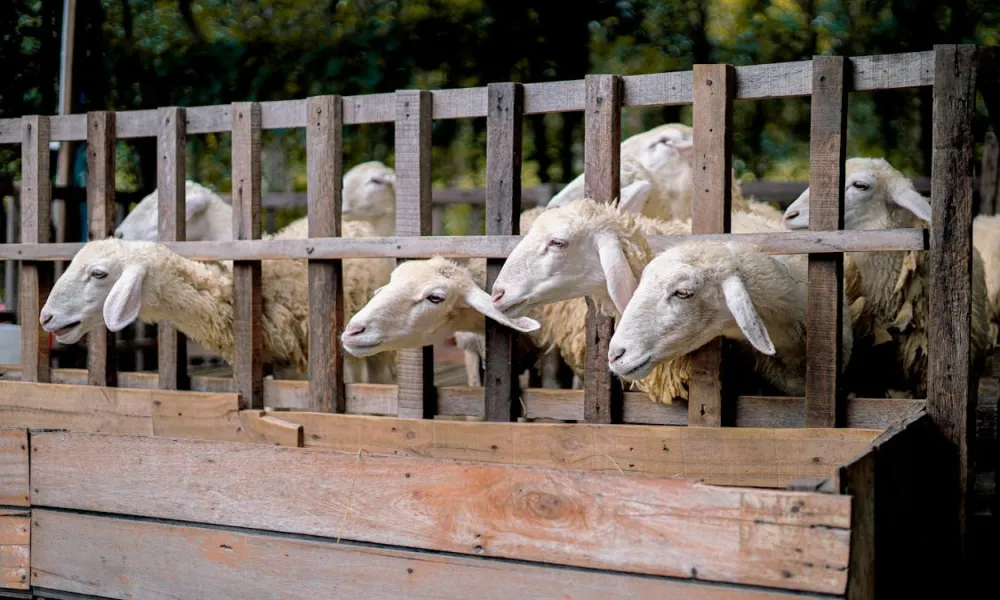

At a time when foot-and-mouth disease continues to spread unabated, leading so far to the slaughter of 52,000 animals across 101 farms, the epidemiological advisory team guiding the Veterinary Services is urgently trying to determine what has gone wrong. The focus is on identifying the weak links in the chain of managing the health crisis, which has allowed the disease to spread further, now also affecting pigs, while the latest data indicate positive cases at a cattle farm as well.
Spread through human movement
Information obtained by Politis indicates that the team of epidemiologists, now fearing the possible decimation of the entire livestock population of Cypriot farming, at least in Nicosia, Larnaca and Famagusta, has been working for days on drastic measures and restrictions aimed at curbing human-driven transmission of the virus.
According to sources, it is now considered certain that the virus is not moving through the air but “on two legs”. This is reflected in the most recent cases involving pig farms in Paliometocho, as these farms are located far from the previous protection and surveillance zones.
The committee’s proposals are reportedly at an advanced stage, and decisions are expected by the end of this week.
Subject to ministry approval
The decision on whether the scientists’ recommendations will be implemented lies with the Veterinary Services and the leadership of the Ministry of Agriculture. Members of the scientific committee have maintained silence regarding the strict measures and restrictions they are preparing to submit, both to avoid reactions in case of leaks and out of courtesy so as not to appear to pre-empt decisions by the ministry and the government, which ultimately have the final say.
The virus likely appeared earlier
Scientists are now convinced that the virus struck and began spreading much earlier, well before the first cases were detected in mid-February.
It should be recalled that positive cases had already been announced in the occupied areas in late December, yet at that time the Veterinary Services did not implement strict measures or carry out checks beyond issuing biosecurity recommendations.
Most animals, although asymptomatic, transmitted the disease even without clinical symptoms, unless affected farmers failed to notice the signs or concealed them. As a result, through the chain of animal and feed transport, animals on other farms also became infected.
The belief that the virus arrived earlier in the government-controlled areas is supported by laboratory analyses showing that animals appearing completely healthy have antibodies indicating previous infection. Sheep and goats, in particular, release more virus than pigs and cattle but usually do not show symptoms and are highly resilient. They may have been infected, survived, and although carrying the virus, continue to spread it.
One positive aspect of the situation is that no positive cases have been identified in the districts of Limassol and Paphos. This is attributed to the fact that animal movement occurs more frequently in Nicosia and Larnaca, where slaughterhouses are located, while proximity to the Green Line and trading or smuggling points increases the risk of transmission.
Another positive factor is that newly identified farms testing positive through sampling and laboratory examinations do not have animals showing illness but animals that have been infected, carry antibodies and can transmit the virus without displaying symptoms. Nevertheless, all such animals must be culled.
Reduction in halloumi quota
In another significant development, the Minister of Agriculture is expected within the next 15 days to announce a reduction in the sheep and goat milk quota in PDO halloumi due to the shrinking population of sheep and goats and the reduced availability of milk.
Cheesemakers have been pressing in this direction since the first days of the outbreak of foot-and-mouth disease in order to avoid losing halloumi exports, at a time when the country’s largest industry, tourism, is facing significant challenges due to declining bookings linked to the war in Iran.
As a result, the quota is expected to fall from the current 25% stipulated in the decree to 20%. It should be recalled that the quota had once reached 30%, but Minister Maria Panayiotou reduced it last year, citing the need to protect exports.
The value of halloumi exports reached €357 million in 2025, compared with €323.9 million in 2024, marking an increase of 10%. At the same time, pharmaceutical exports increased by less than 4% compared with 2024, reaching €356.2 million. Both industries account for 9.6% of total exports. In recent years, production has steadily increased, exceeding 45,000 tonnes of halloumi in 2025, whereas about 15 years ago production stood at just 4,000 tonnes.
Pressure for changes to PDO quota
However, pressure from cattle farmers to reduce the proportion of sheep and goat milk is not limited to the current decrees of the PDO halloumi transitional period.
As Politis has previously reported, they are seeking amendments to the PDO dossier submitted to the EU, which provides for 51% sheep and goat milk. The percentage they propose is just 20%, arguing that this reflects the actual availability of sheep and goat milk.
Alternatively, they propose the creation of a “PDO premium” product made with 100% sheep and goat milk, while supporting exports of mixed-milk halloumi protected by commercial trademarks.