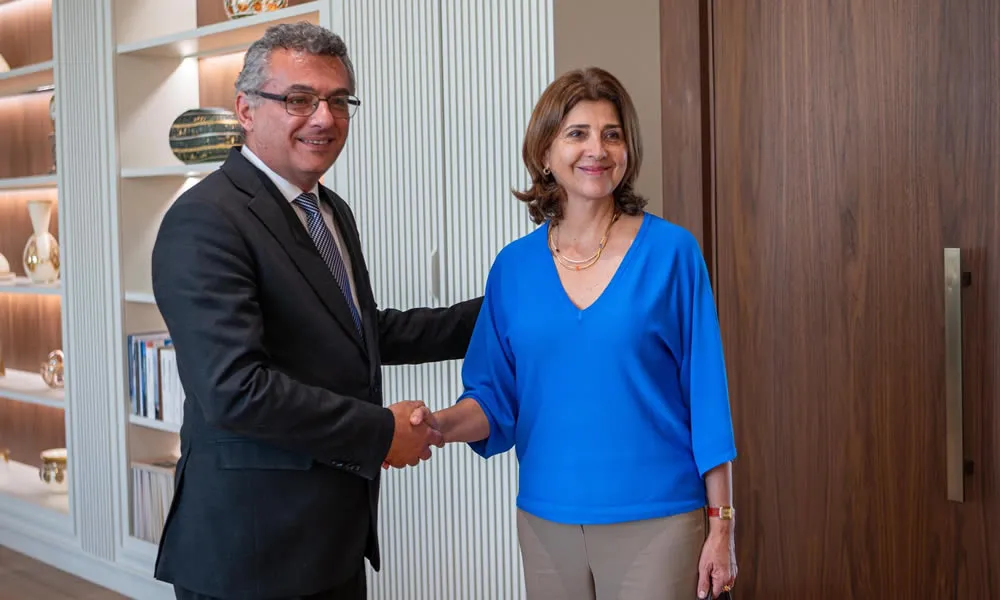
Former Limassol mayor Andreas Christou and officials from the municipal administration at the time recount to Politis the steps they took and how they used the law to remove the danger posed by the apartment building.
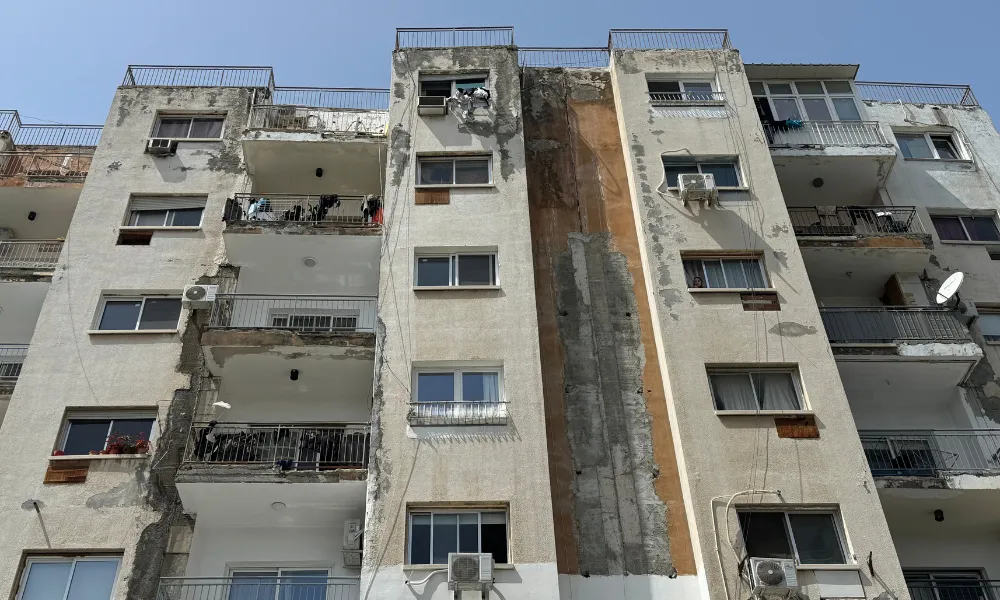
During the period 2010–2011, Limassol faced for the first time a serious problem concerning the structural stability of apartment buildings. For the first time, the municipal authority had to deal with the dangerous condition of a building involving many different owners. Until then, most problems concerned mainly abandoned houses or other structures, sometimes listed buildings, which were generally uninhabited. At that time, however, the authorities had to address the issue while people were still living in these dangerous buildings.
The Limassol Municipality was the first in Cyprus to face this problem and had to find solutions. The first major test for the municipality was the eight-storey Seagull apartment building in the Neapoli area of Limassol.
How the authorities handled the case
“In the municipal budget we ensured that every year there was an allocation for such buildings. The entire municipal council had understood the importance of the issue,” former Limassol mayor Andreas Christou told Politis. It was extremely difficult, he continued, to persuade owners that they had to leave their homes and also contribute financially to the process. There was also scepticism about whether the building was indeed dangerous. “So the municipality had to take action. There was a serious safety issue and this is not something to be taken lightly.”
Yiourgoula Leonidou was then the municipal secretary of the Limassol Municipality. A lawyer by profession, she had strong knowledge of the legislation on which the municipality relied.
“The legislation gives us all the tools needed to do what had to be done. The issue was to act immediately and methodically in order to resolve the problem before us. To persuade the court to issue an evacuation order for the apartment building, everything had to be done properly,” she said.
In addition to the work carried out by the municipality’s well-staffed technical services, a specialist consultant was appointed to conduct an in-depth analysis of the building. The report prepared was devastating and convinced the court to give the green light. “I remember it stated that the building could collapse ‘at any moment’. We initiated the procedures quickly and did not wait until the last minute,” Ms Leonidou said.
“Anyone familiar with Limassol and the area knows that in such densely populated neighbourhoods you must act immediately. It was a building full of residents,” explained Limassol Municipality engineer Antonis Charalambous.
“The legislation provided everything required and from there we had to find the way to apply it. The first measure we took, as I recall, was to mark the area and post notices stating that it was a dangerous building, as well as to fence it off to protect passers-by who might unknowingly walk through the area,” he added.
The municipality carried out the repairs
The municipality eventually managed to persuade most owners and tenants that cooperation was necessary. In fact, distrust was so strong that the building’s management committee asked the municipality itself to undertake the works to avoid disputes among owners.
The repairs cost more than €320,000. To date, the municipality is estimated to have recovered about one third of that amount, while for those who did not pay their share a memo has been placed on their property.
“From our experience, because we repaired other buildings as well, we realised that the issue is not purely financial. There are also wealthy individuals who had the money but simply did not care,” Mr Christou explained. At the same time, he acknowledged that the scale of the problem was limited.
“We repaired three or four apartment buildings, with considerable effort and with the municipal service working exemplary hours. We managed it. I do not know whether today we could cope with the numbers we are hearing.”
Asked whether the municipality had requested financial support from the state at the time, Mr Christou said: “It was our responsibility. Everything we did was done without asking for assistance, although naturally the money in the budget had to be saved from elsewhere.”
“We had to deal with many difficulties, including bureaucratic ones. Some owners were abroad, others were elderly. We could not wait for everyone,” Ms Leonidou noted.
“Our task was to remove the danger. When there is a public safety issue, you must intervene. Even if the owner’s responsibility becomes a criminal matter, that alone is not enough. It does not mean someone will respond and it does not eliminate the danger.”
Regarding tenants, Ms Leonidou explained that letters had been posted on all apartment doors to notify them. “We did not rely only on the owners, who formally bear the responsibility.”
Some even complained afterwards
One of the more absurd aspects of the story was that some owners later complained.
“This did not concern only the Seagull building, since we proceeded to remove dangers elsewhere as well,” Mr Charalambous said. “It was important for owners to understand that we were not renovating their apartment building, let alone their flats. We carried out only the works necessary to ensure the building was no longer dangerous. We also undertook smaller-scale interventions in other buildings, either partially or at very specific points.”
“I remember one case where, after we had finished the works, an owner came to my office to complain,” Mr Christou recalled. “His problem was that the reinforcement works on the columns and beams had affected the aesthetics of his apartment. Some tiles had broken and the kitchen was slightly damaged. He wanted the municipality to pay for a full renovation, even though he had been among those who opposed the works. He even threatened to sue us. I told him to leave my office and that was the end of it.”
The municipality’s role
Over the past decade, Limassol Municipality has spent around €1.6 million on interventions in buildings. This amount includes cleaning works, the removal of dangerous materials and the implementation of immediate protective measures, rather than extensive restoration works. Major interventions have been carried out in five apartment buildings.
The estimated cost of fully removing the danger from problematic buildings in Limassol is about €8 million, indicating that the interventions carried out so far cover only a small part of the actual needs.
As for repairs, there is no clear record of the number of buildings that have been fully restored. In total, about 130 buildings had been declared dangerous by March 2025, while dozens of others were classified as requiring immediate repair.
Mr Christou concluded by expressing strong criticism of the reform of local government. According to him, this particular responsibility should not have been removed from municipalities, nor should licensing powers.
“The municipality is the citizen’s first point of contact. It is on the streets every day in countless ways. It sees, hears and intervenes where necessary. Today this responsibility has been given to people who, no matter how willing they may be, cannot be there constantly to observe the situation,” Mr Christou said.
“Where we have reached today, a holistic plan from the central government is needed.”