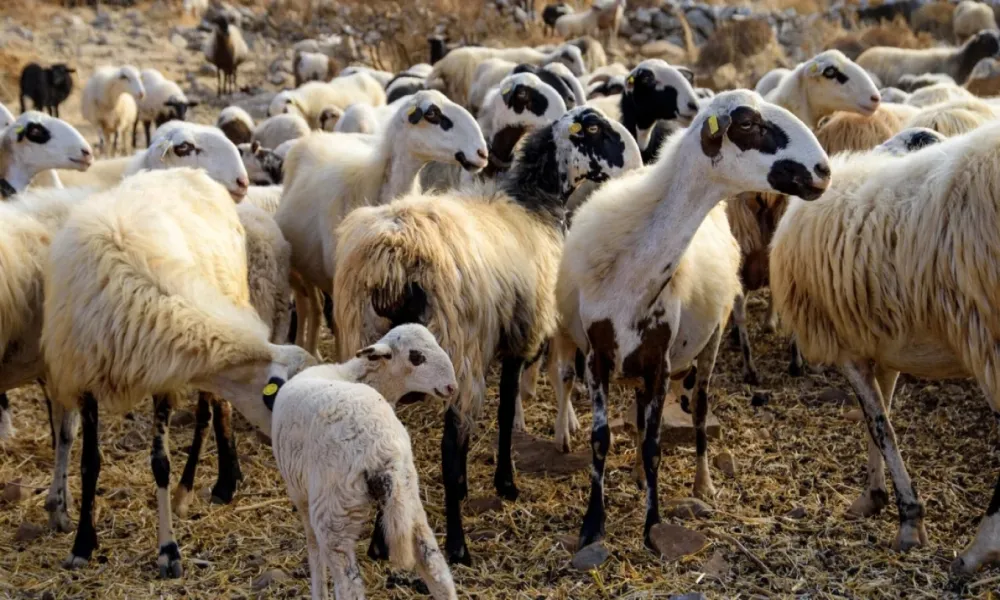
The FMD crisis in Cyprus is at a "turning point" where its management and evolution are concerned, stakeholders told the Cyprus News Agency on Monday as the crisis has affected more than 40 units on the island.
Authorities announced that the culling of infected animals is completed and vaccination is nearing the end. The second phase already began in the district of Larnaca where the disease was detected first.
Animal feed 'major problem'
Authorities are also urging the livestock farmers to be extra vigilant when they move their aminals to the slaughterhouse in view of Easter. Increased measures will be in place, authorities said.
Livestock farmers said that animal feed is a major problem they are now also faced with because of the reduction of feed stocks, as the ban on movement and grazing has led to an increase in feed consumption.
In statements to CNA, Head of the Veterinary Association, Demetris Epaminondas, said that where managing the disease is concerned, authorities are now at the second phase of vaccination in Larnaca which includes a second vaccine for sheep and goats.
Vaccinations for pigs are expected in the coming days and will begin within a 3-10 kilometer zone from the outbreaks and then vaccination will be expanded island-wide, he said.
Nonetheless, it will take a long time to be able to say "we have brought the crisis under full control," Epaminondas specified.
He described as positive the fact that units in Limassol and Paphos districts have not been affected so far while results from testing is expected for the Famagusta region.
He stressed once again that livestock farmers must implement biosecurity measures and be very strict in implementing these measures, especially in relation to the movements of people, milk, and animal feed.
Widespread fears
He added that the company that receives the dead animals from the farms also implements its own biosecurity measures as it is under the supervision of the Veterinary Services.
Epaminondas said that strict measures will be introduced during Easter period at slaughterhouses.
On behalf of the Sheep and Goat Farmers' Coordinating Committee, Nikos Chronis said that the farmers are worried about their future and are awaiting instructions from the Veterinary Services on several issues.
In response to a question, he said that things are very difficult for everyone and that they are waiting to see what help the state will provide, not only to those who have had their animals killed but also for other livestock farmers in general, who are currently unable to move their animals outside the units.
Industry-wide implications
He noted that this has resulted in much larger quantities of animal feed being consumed within the veterinary units.
Chronis noted that the ban on taking sheep and goats outside the units has implications for the entire livestock industry, not just for those who have had their animals killed.
He went on to say that March-April are months that cover part of the animals' dietary needs through grazing and due to the prohibitions, animal feed is used exclusively, leading to an additional financial burden on livestock farmers.
Chronis said that there is great solidarity among livestock farmers and they support those who have lost their animals, but due to the travel ban at the moment they cannot do much more.
CNA