Significant inflows into Cyprus’ reservoirs are expected from ongoing rainfall, but authorities are urging caution, with final figures likely to become clear only by the end of April.
Speaking to the Cyprus News Agency, Iliana Tofa-Christodoulidou, Director of the Water Development Department, said that while recent rains are beneficial, expectations remain measured.
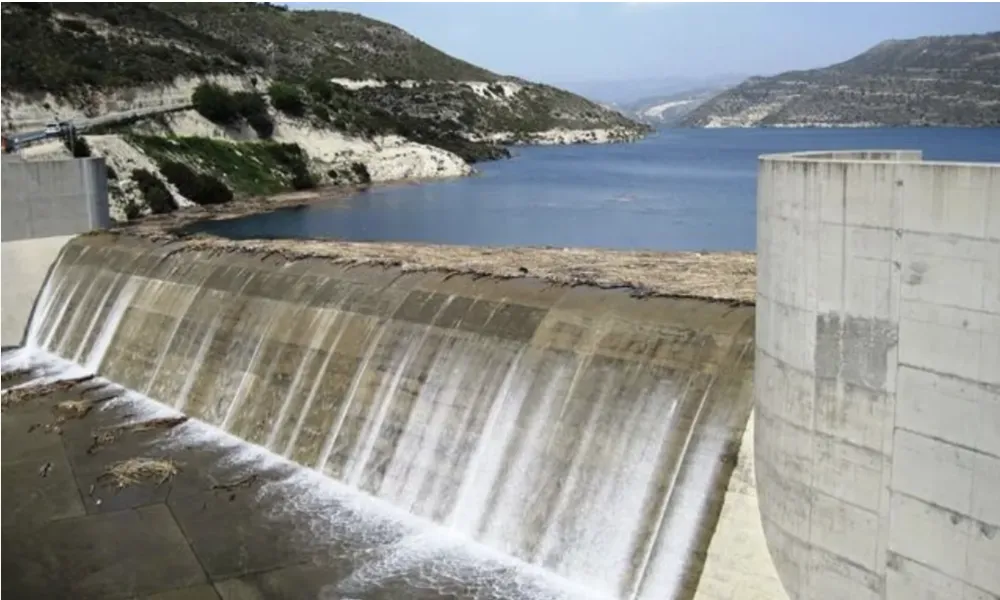
She was commenting on data showing that the island’s largest reservoir, the Kouris Dam, recorded a slightly higher capacity level of 21.2% compared with 20.3% at the same time last year, alongside increased inflows from recent heavy rainfall.
“The rains and inflows are beneficial, and according to our indications, additional inflows are expected until 25 March,” she said, adding, however, that the situation “does not justify any sense of complacency at any level”.
Careful water management
Tofa-Christodoulidou stressed that authorities remain cautious, noting the need to safeguard water reserves for the coming years, including 2027 and 2028.
“We need these inflows, but we must manage the final reserves wisely,” she said.
She added that 8 million cubic metres of water had been transferred from the Arminou Dam via the Southern Conveyor Project, meaning not all inflows originated from the Kouris basin.
“It is a strict and continuous daily management process to preserve every flow that can support us,” she said, describing the Southern Conveyor as the “backbone” of the country’s water system.
Asked about the possibility of water cuts during the summer, she said this would depend on final inflow levels recorded at the end of the hydrological year in late April.
She called for collective effort, urging consumers to conserve water and local authorities to repair networks and reduce losses in order to maximise available supplies.
Reservoir levels vary
Elsewhere in the Limassol district, reservoir levels showed mixed trends. The Germasogeia Dam stood at 14.1% capacity compared with 26.7% a year earlier, while the Polemidia Dam reached 40%, slightly above last year’s 39.6%.
In contrast, inflows in the districts of Larnaca and Famagusta remain significantly lower than last year, according to the latest measurements by the Water Development Department.
The Kalavasos Dam, with a capacity of 17.1 million cubic metres, recorded minimal inflows over the past 24 hours, with total inflows since October reaching just 0.882 million cubic metres. Stored water currently stands at 1.366 million cubic metres, or 8% capacity, compared with 27.6% a year ago.
Similarly, the Lefkara Dam is at 10.8% capacity, well below last year’s 29.5%, while the Dipotamos Dam stands at 25%, down from 35.7% last year.
The situation is most acute at the Achna Dam in the free Famagusta district, where no inflows have been recorded since October. The reservoir currently holds just 0.142 million cubic metres of water - 2.1% capacity - compared with 20.8% during the same period last year.
Despite recent rainfall, the overall picture remains fragile, with authorities emphasising the need for continued vigilance and prudent water management.