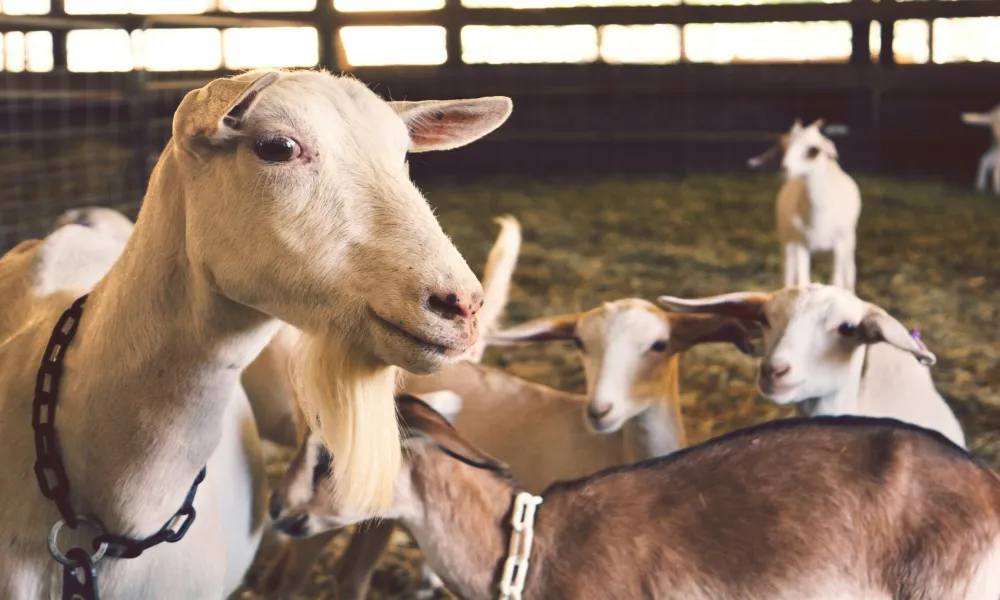
Veterinary Services have confirmed cases of foot-and-mouth disease in two large sheep and goat farms in Oroklini today, prompting the expansion of the quarantine and monitoring zone in the area.
Yesterday, Veterinary Services were informed by private veterinarians of a foot-and-mouth case at a cattle farm in Livadia. The farm, which houses 260 cows, will have all animals culled and buried locally to prevent further transmission, the director of Veterinary Services, Christodoulos Pippis, told politis.com.cy.
He noted that there are 23 sheep and goat farms surrounding the cattle farm, which are considered part of the same epidemiological unit.
Foot-and-mouth detected in Oroklini
Pippis confirmed that the virus was found in two large sheep and goat farms in Oroklini, which lies adjacent to Livadia. The emergency action plan has been activated in these farms as well, including a 21-day quarantine period.
The director explained that the virus is airborne and that all possible causes of transmission are being investigated. He added that farmers will be compensated for culled animals only if they had implemented preventive biosecurity measures.
Authorities are currently blocking roads around the Oroklini farms and preparing burial sites for the affected animals.
What is foot-and-mouth disease?
Foot-and-mouth disease affects only cloven-hoofed animals, such as cattle, pigs, sheep, and goats. It is primarily airborne but can also spread via clothing, footwear, or equipment used by farmers and traders.
The disease attacks the mucous membranes, nose, and limbs of animals. Infected animals eventually become unable to walk or feed, often resulting in death. Importantly, foot-and-mouth disease does not affect humans and is not transmitted through meat consumption.
Disinfection is key to containment
Farmers are urged to use protective clothing and boots, wash hands regularly, disinfect vehicles and equipment, and maintain strict biosecurity rules. This includes preventing the introduction of feed or tools from unknown sources, removing waste and stagnant water, and monitoring animals daily for signs of disease or reduced milk production, with immediate reporting to Veterinary Services if concerns arise.
This article was originally published on the Greek-language Politis website.