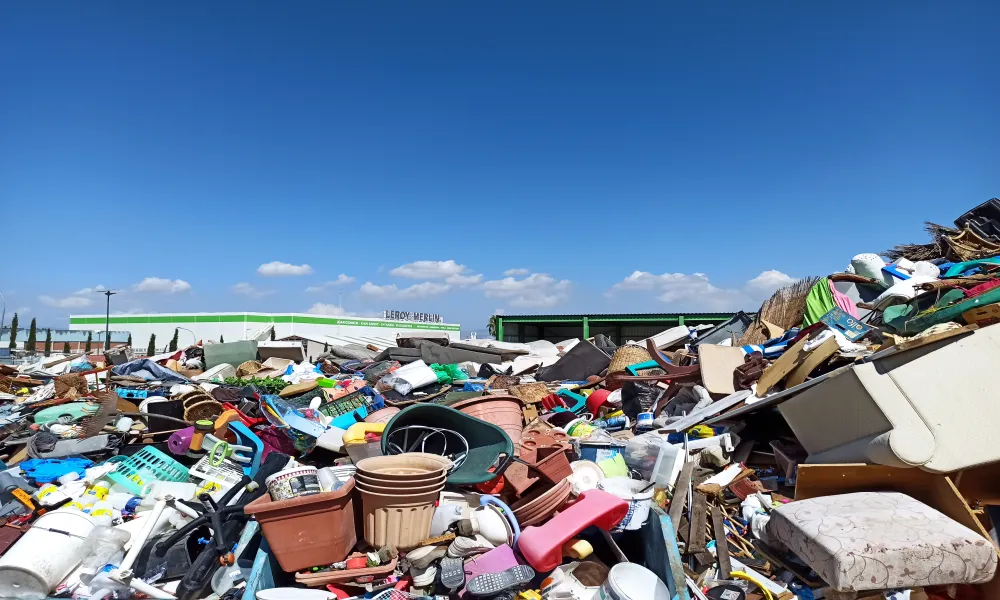
Cyprus has adopted tougher penalties for illegal waste disposal after the House of Representatives approved amendments aimed at addressing the growing number of unlawful dumpsites. The new law significantly increases extrajudicial fines but sparked broad debate over whether higher penalties alone can curb environmental damage, public health risks and fire hazards.
Parliamentary approval of amended waste law
The House of Representatives approved the Waste (Amendment) Law of 2025 on Thursday, with 29 votes in favour and four against. The legislation strengthens the penalty framework for illegal waste dumping and poor waste management practices.
Increased fines and enforcement powers
Under the amended law, inspectors are now authorised to issue extrajudicial fines of up to €8,000, doubling the previous ceiling of €4,000. Fines imposed by a chief inspector have also doubled, rising from €20,000 to a maximum of €40,000, depending on the severity of the violation.
The amendments aim to deter illegal dumping and reduce environmental and public safety risks associated with unauthorised landfills.
Concerns over illegal dumpsites and inspections
During the parliamentary debate, several MPs expressed concern that higher fines alone would not resolve the issue. AKEL MP Nikos Kettiros stated that Cyprus has approximately 800 illegal dumpsites, warning that without effective inspections and enforcement, the new penalties would have limited impact.
Kettiros said the management of demolition waste has effectively fallen into the hands of criminal groups, adding that inspectors have faced intimidation and threats while carrying out their duties.
Fire risk and public safety implications
Illegal dumping was repeatedly linked to the growing risk of wildfires. Alexandra Attalidou, MP for Nicosia, warned that unregulated dumps pose a direct public safety threat and alleged that criminal networks control parts of the sector. She called on the government to clear all illegal dumpsites by the summer period and to confront those responsible for intimidation.
Warnings about organised crime influence
AKEL MP Christos Christofides cautioned that if illegal practices are not addressed decisively, additional sectors could come under the influence of organised crime, gaining not only economic power but political leverage as well.
Stavros Papadoutris, President of the Ecologists, said Parliament cannot act as a policing authority and recalled cases in which inspectors investigating illegal dumping were threatened.
Education and community support highlighted
DISY MP Prodromos Alampritis stressed that waste management is not solely a matter of penalties but also of culture and education. Several MPs referred to last summer’s fires, some of which reportedly originated in garbage dumps, as evidence of the urgency of the issue.
DISY MP Savvia Orphanidou acknowledged the importance of stricter penalties but urged increased funding to support communities in cleaning up industrial zones and dumping areas.
Call for broader environmental strategy
Closing the debate, Annita Demetriou, Speaker of the House of Representatives, underlined that stricter fines must be combined with education and the development of a broader environmental culture if Cyprus is to achieve meaningful and lasting progress in tackling illegal waste dumping.