
Limassol - Tensions have flared in recent days in Limassol among parents and teachers following a call by the Cyprus Teachers’ Organisation (POED) for the relocation of the Franco-Cypriot School of Limassol. The union has cited serious operational problems and what it describes as unequal treatment to the detriment of the public school with which it shares premises.
The move was followed by a statement from the Federation of Parents’ Associations of Limassol Primary Schools, while the issue has also sparked debate on social media. The renewed discussion appears to have been triggered by a meeting scheduled for today, Wednesday, at the Ministry of Education, where matters relating to the operation of the Franco-Cypriot School and its future development are to be discussed.
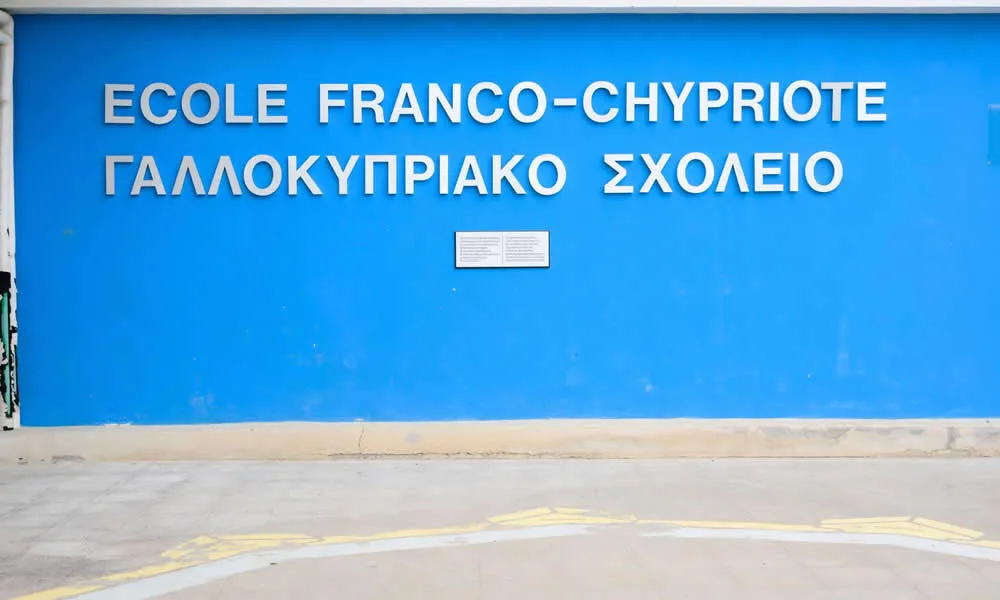
The Franco-Cypriot School of Limassol began operating in 2022 following an intergovernmental agreement between Cyprus and France. At the time, a decision by the Council of Ministers, with the consent of the Limassol School Board, allocated space within Limassol First Primary School so that the public school and the Franco-Cypriot School could be housed together.
Under a ten-year contract running until 2032, the first floor is used by the Franco-Cypriot School, which currently has 70 pupils, while the second floor is occupied by the public primary school, which has around 100 pupils. A public kindergarten with 50 children also operates on the ground floor.
The Franco-Cypriot School operates as a private school in Cyprus, charging tuition fees and following the French education system, while also teaching the Greek language. Similar schools are run by the French state in other countries. A corresponding school in Nicosia caters for around 450 pupils across all levels. In both Limassol and Nicosia, roughly half of the pupils are Cypriot.
The first problems arising from the coexistence of the two schools appear to have emerged from the outset in 2022. Outstanding issues included the use of shared spaces, laboratories, equipment such as desks and chairs, pupil entrances and even parking spaces for teachers. Despite efforts to reach compromise solutions, the fact that both schools have increased their pupil numbers has exacerbated the situation. The Franco-Cypriot School, for example, started with just nine pupils and now has 70, operating four primary classes and expected to grow further.
Plans for a lower secondary school spark reaction
According to reporting, the main factor behind the reaction from POED and parents is the intention of the Franco-Cypriot School to proceed with the establishment of a lower secondary school. At the same time, rumours circulated that Wednesday's meeting would include a request for the entire building to be handed over to the Franco-Cypriot School, effectively displacing Limassol First Primary School.
A source familiar with the situation and close to the Franco-Cypriot School told Politis that there is no such request under any circumstances. However, the source confirmed that plans to open a lower secondary school are firm, making it necessary to find a solution.
Sources from the Limassol School Board have categorically rejected the scenario of the building being handed over in full to the Franco-Cypriot School. They are awaiting the meeting before making an official statement. The board points clearly to the existing contract, which it believes must be respected, particularly in relation to the allocation of space. At the same time, it appears to favour what it sees as the best option, namely finding a comprehensive and permanent housing solution for the Franco-Cypriot School.