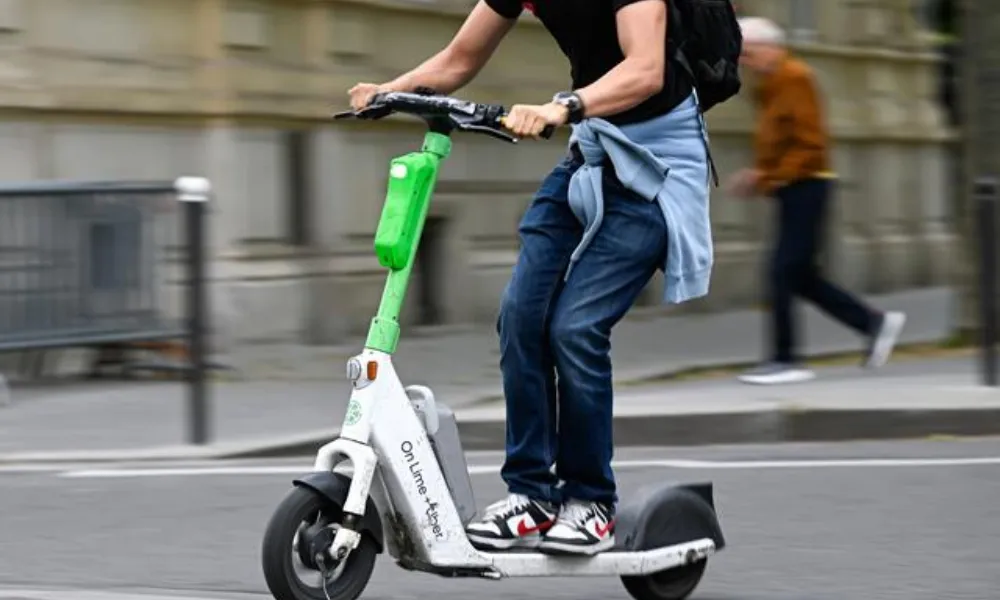
The Cyprus Police say they are doing everything possible, within their remit, to control the circulation of electric scooters, whose use has expanded rapidly across the island in recent years. However, they stress that policing alone cannot restore order.
Responding to criticism from the Ministry of Transport, Communications and Works, which in a recent report argued that enforcement is inadequate, a police spokesperson said stronger oversight is needed through the more active involvement of municipal traffic wardens.
Thousands of fines, but limits to enforcement
Police say they conduct daily patrols, checks and reports, with enforcement largely reflected in the issuing of on-the-spot fines. During 2023 and 2024 alone, nearly 4,000 fixed-penalty notices were issued, a figure that underlines the frequency of violations. Controls, they add, are continuing.
At the same time, police have formally contacted both the Union of Municipalities of Cyprus and the Union of Communities of Cyprus, pointing out that personal mobility devices are used mainly within urban centres. This, they argue, makes the activation of municipal enforcement mechanisms essential.
Under existing law, traffic enforcement relating to bicycles and electric scooters can be carried out not only by police officers but also by authorised municipal traffic wardens or other persons appointed by municipalities or communities.
Push for stricter legislation
Police have also proposed institutional changes aimed at improving road safety. In a letter to the ministry’s director general, they argued that the legal framework should be tightened. One proposal is that scooters be confiscated when used in prohibited areas.
They further suggest that municipalities and communities clearly define where electric scooters are permitted, following a road-safety impact assessment and consultation with all relevant authorities.
Growing safety concerns
Police warn that users of personal mobility devices are particularly vulnerable road users, facing heightened risks when travelling on roads where speed limits exceed 30 km/h, something that is already prohibited.
Under the legal framework introduced in September 2022, e-scooters are allowed on:
-
roads with speed limits of up to 30 km/h
-
cycle lanes and cycle tracks
-
shared cyclist–pedestrian areas that extend existing cycle routes
-
squares and pedestrian streets, only with local authority approval, appropriate signage and a prior risk assessment
Fatalities and injuries
According to Cyprus Police statistics, between January 1, 2019 and June 30, 2025, a total of 25 casualties were recorded in road collisions involving e-scooters. These include two fatalities, 14 serious injuries and nine minor injuries.
The two deaths occurred in 2019 and 2022, before the current regulatory framework came into force. Serious injuries, however, have been recorded throughout the period, with a notable spike in 2022.
In the first half of 2025 alone, seven people were injured, two seriously and five slightly, a higher total than in several previous full years. Police link this trend to the widening use of electric scooters, particularly in urban areas.
Police conclude that stronger enforcement, meaningful involvement by local authorities and tougher legislation are all critical to reducing risks and protecting both scooter users and pedestrians.