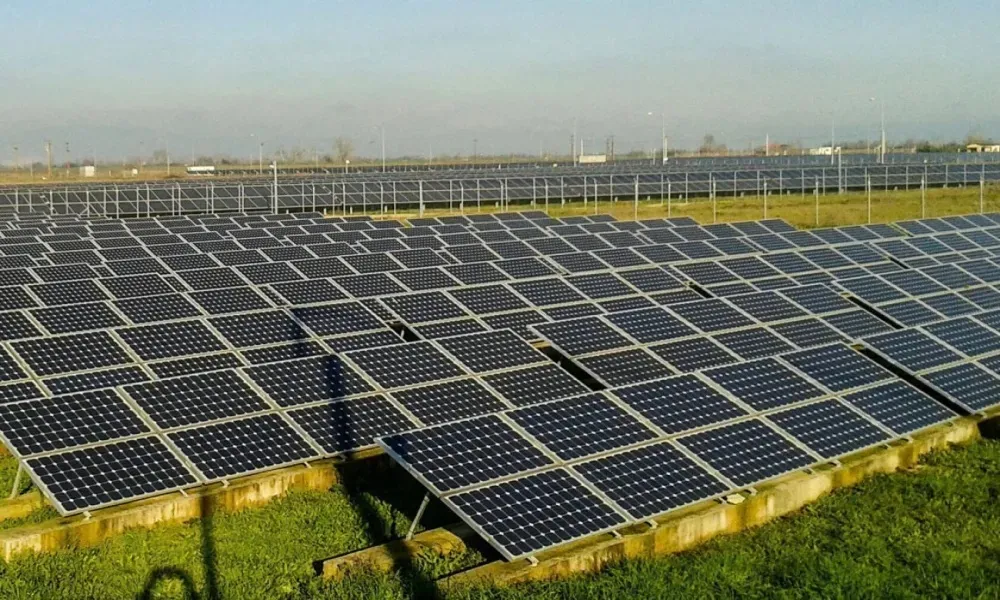
A crucial decision is expected on Thursday over the course of an amended law passed by parliament banning the installation of renewable energy projects for commercial use on agricultural land, after the executive referred it back on April 15.
The House Agriculture Committee will meet in an extraordinary session to examine the referral, in the presence of the attorney general and the ministers of agriculture, energy and interior. A few hours later, the plenary’s decision is expected to determine one of three possible outcomes.
‘No compromise in sight’
Parliament may accept the referral, which is based largely on concerns over compatibility with the Constitution and EU law, insist on its original position – potentially triggering a clash between the legislative and executive branches – or seek a compromise that addresses both farmers’ concerns over the loss of fertile land and the government’s reservations over separation of powers and Cyprus’s binding 2030 EU targets.
“There is no sign of a ‘middle ground’, based on how the executive views the issue,” Giannakis Gavriel, chair of the Parliamentary Agriculture Committee and an AKEL MP who co-sponsored the bill, told local media.
Referring to the upcoming plenary vote, he said: “We will see how we proceed, and everyone must assume their responsibilities.”
Presidency outlines objections
According to the presidency’s explanatory letter accompanying the referral, the main point of contention concerns a new provision explicitly banning renewable energy installations for commercial use in specific areas.
The ban covers: fertile or permanently irrigated land as classified by the Department of Agriculture; land in land consolidation areas or irrigated by government projects; town planning protection zones; and areas within the Natura 2000 network.
The executive’s concerns focus primarily on the fact that shaping policy to meet obligations to encourage and promote renewable energy falls within its remit.
The Legal Service also raised reservations about compatibility with Article 23 of the Constitution and Cyprus’s obligations to the European Union, while stressing the need for clear terminology to ensure legal certainty.
Concerns over EU obligations
The presidency warned that the proposed provisions could undermine efforts to promote renewable energy, potentially affecting Cyprus’s ability to meet energy targets set out in its National Energy and Climate Plan, in line with EU Directive 2023/2413.
It added that the provisions could call into question compliance with EU law, raising issues under Article 179.2 of the Constitution.
The letter also highlighted that the proposed measures effectively restrict property rights, without clearly explaining how such restrictions are balanced in line with the principle of proportionality.
It further raised broader concerns about legislative practice, noting that introducing town planning-type regulations within a law governing renewable energy represents a departure from established lawmaking principles and could set a negative institutional precedent.
‘Legal ambiguity’ over definition of fertile land
The presidency also pointed to the absence of a clear legal definition of “fertile land” in existing legislation, despite the proposed law relying on the term to impose restrictions.
It said provisions allowing the Department of Agriculture to assess land on a case-by-case basis create legal uncertainty, as no clear criteria are set in advance. As a result, citizens and affected parties, including investors, cannot know beforehand which areas are prohibited.
This ambiguity, it added, appears to conflict with the principle of legal certainty, as well as with the stated aim of protecting genuinely productive agricultural land.
This article was originally published on the Greek-language Politis website.