
The head of the Nicosia District Local Government Organisation (EOA), Constantinos Yiorkadjis has pointed to distortions in the state’s water policy, particularly in support measures for water losses, while flagging serious delays that threaten water adequacy in Nicosia district and shortcomings in the use of irrigation water.
Yiorkadjis said he will raise the issue of revising the government’s decision to impose a horizontal 10 per cent cut in water supply to all EOAs at a meeting of EOA heads on 15 April. At the same time, he identified a series of additional problems affecting water sufficiency in Nicosia, including the need to increase water supply from the Water Development Department (WDD) to Lakatamia, upgrade water transfer pipelines in western Nicosia, fully utilise thousands of cubic metres of treated water for agricultural purposes in Anthoupoli instead of letting them go to waste, and secure immediate funding to repair wastewater treatment plants handed over in 2024.
Losses and unequal support
On the major issue of water losses, Yiorkadjis welcomed the Agriculture Ministry’s intention to subsidise each EOA with €300,000 to cover overtime costs or purchase services to tackle leaks. However, he said the size of each network must be taken into account.
“All districts must be subsidised equally per kilometre of network, without reducing the grant for other districts,” he told Politis, noting that Nicosia, with a network stretching 2,650 kilometres, will receive the same amount as districts with far smaller networks.
“Based on network length per district, Nicosia effectively receives about €124 per kilometre, compared with €280 in Paphos and €533 in Famagusta,” he added.
Request for differentiated water cuts by district
At the 15 April meeting of EOA presidents, which will shape joint recommendations to the Water Management Advisory Committee ahead of its 24 April session, Yiorkadjis said he will push for discussion of the government’s decision to reduce drinking water supply to all EOAs by 10 per cent.
He described the move as “a unilateral and unfair decision by the competent ministry to impose a flat 10 per cent cut across all districts, without any differentiation, lacking proper technocratic justification or historical documentation”.
He argued it would be more logical and fair for the ministry to consider reductions by district. “The lower the share of non-revenue water compared with total consumption, the smaller the cut that should apply,” he said, pointing out that Nicosia’s non-revenue water stands at 20 percent.
He also stressed that Nicosia has no alternative water sources. “A 10 per cent reduction in the government network translates into an actual cut of about 10 per cent,” he said, whereas other districts can supplement supplies through boreholes or dams.
Need to boost supply to Lakatamia
Beyond water losses and the 10 per cent cut, Yiorkadjis highlighted other pressures on water adequacy in Nicosia district.
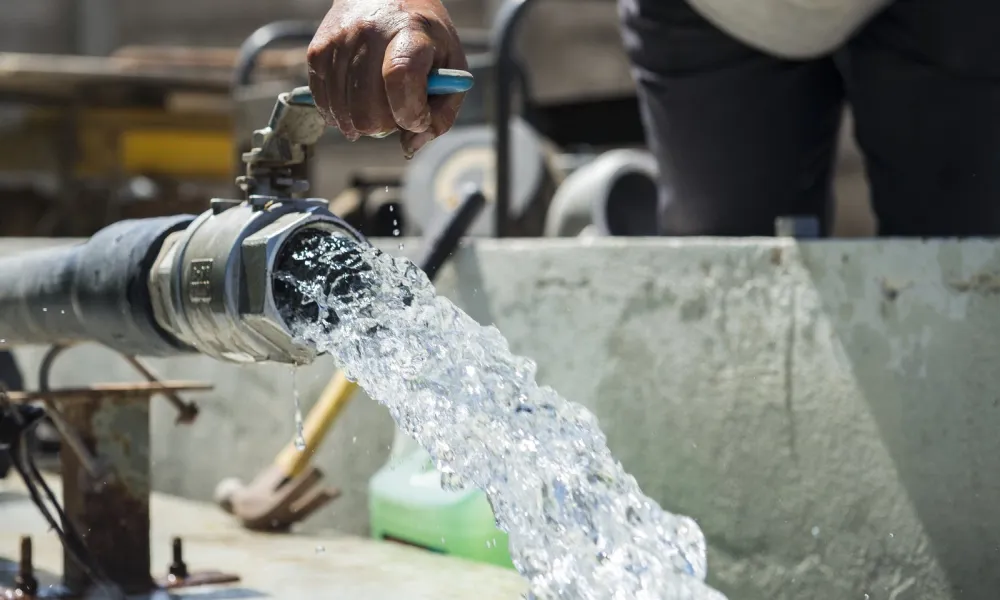
He said supplies to the Lakatamia reservoirs barely meet demand. Pumping stations and pipelines feeding the wider area – including Anthoupoli, Pano and Kato Deftera, Anayia and Ergates – can deliver up to 12,000 cubic metres per day, while summer demand approaches the same level.
“The need to increase supply is becoming more pressing because of the rapid pace of residential development,” he said. Connections served directly by the Glyfou reservoirs rose by 1,004 over the past two years, from 16,565 in December 2023 to 17,569 in December 2025, an annual growth rate of 5-7 per cent that is expected to continue.
The EOA has already built and brought into operation a new 10,000-cubic-metre Ground Level Storage (GLS) reservoir in Lakatamia, significantly boosting autonomy and security for the western Nicosia network. However, Yiorkadjis stressed that supplying the reservoirs remains the responsibility of central government and requires immediate intervention.
Temporary fixes in western Nicosia
Water supply in western Nicosia – including Kokkinotrimithia, Paliometocho, Mammari and Meniko – relies on temporary measures such as surface pipelines and old transfer lines carrying water in reverse direction towards Nicosia.
According to the EOA, more western communities such as Denia, Akaki, Peristerona, Astromeritis, Koutrafas, Vyzakia and Potami lack any pipeline connection to government waterworks and depend solely on boreholes. These boreholes are gradually running dry due to prolonged drought, Yiorkadjis warned.
“It is imperative that these upgrades are completed within the next two years, along with construction of a pipeline that fully meets the needs of western Nicosia’s communities,” he said.
Treated water going to waste
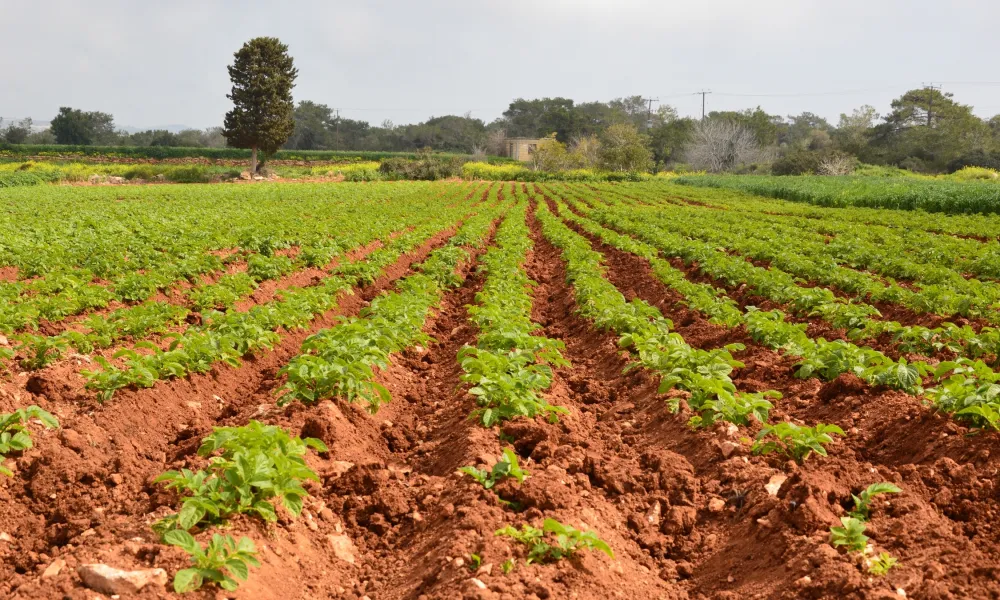
Yiorkadjis also criticised delays in using treated water for irrigation and agricultural purposes. Although around 50,000 cubic metres of irrigation water are produced daily by three wastewater treatment plants in Vatheia Gonia, Anthoupoli and Mia Milia, he said the ministry has failed to build the infrastructure needed to utilise all of it.
Treated water from Vatheia Gonia is fully used by the WDD in agricultural areas of Dali, Potamia, Geri and Agios Sozomenos. In contrast, water from Anthoupoli remains underused because transfer works have not been completed. As for Mia Milia, an agreement secured through an EOA initiative will allow work on a return pipeline for 20,000 cubic metres per day of reclaimed water by the end of 2026, pending WDD action to distribute it for irrigation.
Further delays persist in funding repairs to wastewater treatment plants taken over in 2024, such as those in Lythrodontas and Astromeritis, and in launching a tender for the Solia plant. “If functioning properly, all of these could contribute additional water resources for irrigation,” Yiorkadjis said.
Call to amend legislation
Finally, Yiorkadjis said EOAs welcome amendments to the Integrated Water Management Law that would allow all EOAs to participate in the Water Management Advisory Committee. However, they are also seeking changes to Article 20 so that EOAs receive water from the Water Development Department at the entry point of reservoirs, rather than at locations determined at the discretion of the WDD director.
“We remain committed to water conservation measures in light of the prolonged drought and water scarcity affecting the country,” Yiorkadjis concluded.