Highlights
"There is a serious risk of a greater price being paid, that of electricity shortage, as conventional power generation units await the arrival of natural gas."
“We have commercial RES parks, which produce low-cost electricity [..] but continue to be compensated based on what the costly and polluting conventional electricity generation (EAC) produces.”
“The profitability in the supply chain is high and remains with those involved in the production and supply of electricity from RES, since no part of it is passed on to the final consumer.”
“The country that is in energy isolation should in some way or ways be interconnected in terms of energy. We got stuck in the feasibility studies and we do not see the big picture.”
“Today, the states that will survive and have competitive industrial production are those that can access cheap and sufficient energy.”
“When a country is not energy interconnected and there is dependence only on local production, it will be constantly exposed to risks, high production costs, limited competition and insecurity of supply.”
“The Republic of Cyprus is very exposed to energy uncertainties. It relies only on its own system.”
“You have seen the local interests. They have already given their positions. Anything that comes from another source of electricity to the small market of Cyprus and that is not under the control of the local environment [..] is a threat.”
“Everything that is investigated is not investigated by chance. Especially from the European Public Prosecutor's Office [..] In order for European grants to be revoked, there must be evidence.”
“Why did the President reshuffle me? Firstly, because I believe that there was also the political aspect, which I may not have fulfilled or understood.”
“Profitability has remained with those who produce energy from RES, because they are compensated based on high-cost conventional electricity production and therefore want this to continue.”
“The correct and sustainable way is to pressure the supply chain, so that some of the benefits, which they have enjoyed for so many years, are passed on to the final consumer, instead of forcing the state to reduce VAT and provide subsidies.”
“We, due to the failures in the energy supply chain, ended up providing continuous subsidies.”
“No, I did not have such pressures, but I saw them. I understood that there were interventions. There were interventions in public, I believe that there were interventions behind the scenes.”
“I expected that things would evolve like in the private sector – I mean with speed and precision, without political interventions, without interventions by those who are not familiar with the subject. For Europe to come and withdraw money from a project is a very serious development.”
“I believe that every time an incident occurs, like what we saw recently (videogate), the country goes to zero.”
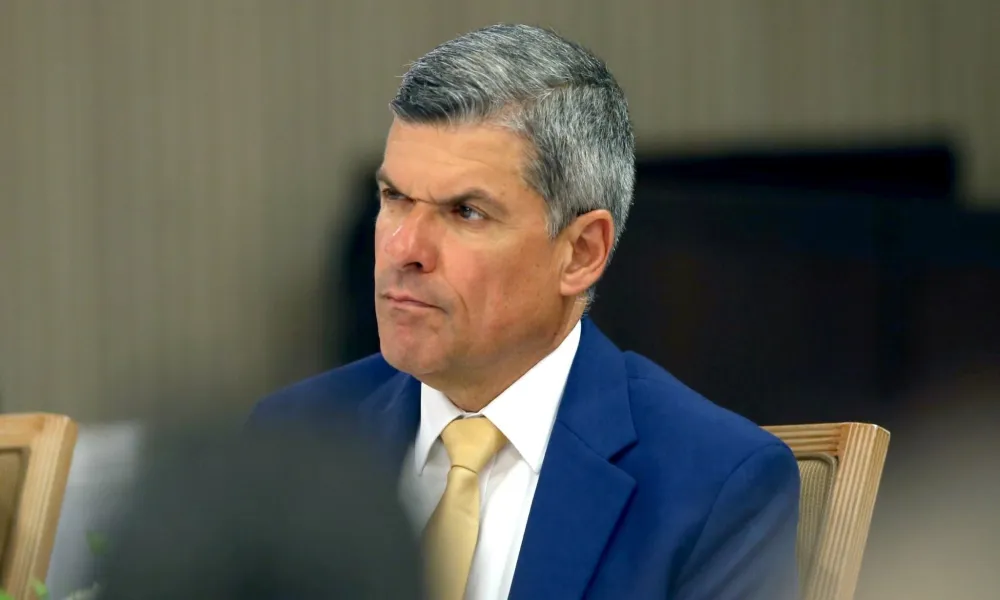
Interview with former Energy Minister Georgios Papanastasiou
Two months after his departure from the Ministry of Energy, Trade and Industry, Georgios Papanastasiou analyzes the energy situation in Cyprus, as well as what he received and what he left in the ministry. His priorities were the promotion of photovoltaics for own use, energy interconnection and natural gas issues, with the aim of more affordable and sustainable energy for consumers and businesses. Despite the efforts, the price of electricity did not decrease, due to delays, political parameters and structural problems in the energy supply chain. The former minister, among other things, emphasizes the need for long-term national planning regardless of governments.
In the swamp
What did you leave in place in Energy issues, on departing the ministry?
First of all, we must say what we found to reach to what we left in place. Because, when you start with a negative sign, you have to build a lot to reach a positive sign. We received a very important project for the energy of the country, which was in the swamp: the Vasilikos terminal. We received a prolonged transitional electricity market, from which the supply chain system benefited the most and the consumer was ignored - households and businesses are burdened with expensive electricity. We received a very confusing situation with regard to various institutions, such as CERA (Cyprus Energy Regulatory Authority), the Transmission and Distribution System Operator, etc., which worked in their own silos instead of in an organized manner, aiming at an affordable electricity price for the consumer, as stated in the government programme of the President of the Republic. So, we found a situation that was not in order: an unaffordable retail electricity price, electricity adequacy being at the limit, and with regard to electricity production in the electricity mix in the network coming mainly from polluting and costly conventional electricity generation. Plus the lack of electricity storage from Renewable Energy Sources (RES), so that the contribution of RES to the mix can be increased.
We gave priority to the autonomy of homes and businesses with the installation of photovoltaics for personal use, since for years permits were given uncontrolledly mainly for commercial use – that is, there was no balance between commercial and personal use of photovoltaic production.
On the issue of natural gas, we found the Republic of Cyprus to be unassertive, with no requirement for companies to honour their signature and schedules. There are deposits that should have already been developed and commercialized. We tried to put things into place on all issues. Of course, energy issues cannot be resolved within a five-year horizon, there must be national planning, which is independent of governments and Presidents. And there must be a central body to monitor this national planning. It is wrong to make changes based on the priorities and perceptions of each government.
Are we heading towards a shortage?
Why has it not been possible to reduce the price of electricity?
Historically, electricity production in Cyprus was a matter for the EAC – from conventional units. We have a network that was designed for this specific production. That is, three stations, Moni, Vasiliko, Dhekelia, to produce electricity and send it to a network destined for urban centers for consumption. A very simple network. However, with the development of other electricity production technologies, such as RES, production is now dispersed within the network. And so we have a network that is called upon to manage the transmission and distribution of electricity from conventional units and from new technologies (RES), something that can only be achieved with a planned upgrade of the network, which should also be made “smart” in order to direct the cheapest available production to consumption.
Therefore, the first pillar for reducing the cost of electricity in Cyprus is the reduction of the cost of conventional electricity generation by importing natural gas, which should have been in use in Cyprus a long time ago. Unfortunately, for many reasons, interests, political interventions, and possibly even entanglements, this has not yet been achieved and the Cypriot electricity consumer is paying the price. And at the moment, in addition to the price of the high cost of electricity due to the absence of natural gas, there is a serious risk of a greater price being paid, that of a shortage of electricity, since conventional electricity generation units are waiting for the arrival of natural gas in order to be able to operate.
Unexpected RES profits
The second pillar?
It is the increase in the electricity mix of production coming from RES but in a cost-oriented manner. If possible, we have a transitional period for the opening of the market from 2019 until we opened it, before I left, on October 1, 2025. The European model, the well-known “target model”, wants new technologies in electricity production to be compensated according to the most expensive technology in the member state. In Cyprus, today, the most expensive technology that produces electricity is conventional. Thus, we have commercial RES parks, which produce low-cost electricity, some of which started operating a few years ago and the investment has been fully amortized but continue to be compensated based on what the costly and polluting conventional electricity production produces, the one that currently comes from the EAC. So, in this way, the profitability in the supply chain is high and remains with those involved in the production and supply of electricity from RES, since part of it is not passed on to the final consumer. Therefore, such a market environment must be created, perhaps with regulations, so that the supply chain can be maintained, with a reasonable profitability, while part of the high profitability is passed on to the final consumer.
So, are there excess profits?
I would call it unexpected profits, which some in the supply chain enjoy since this low production cost is not passed on to the final consumer. And the third and very important thing, this country, which is in energy isolation, should in some way or ways be interconnected in terms of energy. We got stuck in the feasibility studies and we do not see the big picture. Today, with the international and geopolitical developments and crises that exist and will continue to exist, the states that will survive and have competitive industrial production are those that can have access to cheap and sufficient energy. When a country is not energy interconnected and there is dependence only on local production, it will be constantly exposed to risks, high costs and delays, limited competition and insecurity of supply. Consequently, the Republic of Cyprus is very exposed to energy uncertainties. It relies on its own system alone, and the supply chain relies on conventional units which are burdened, old and inflexible and may at any time be unable to meet the country's electricity needs. At the same time, we do not have electricity storage from RES, although the issue has been initiated, while, as we said, the contribution of RES to the electricity mix is not done in a cost-oriented manner. In conclusion, more work is needed until the consumer sees an affordable retail price for electricity.
Keravnos does not pay
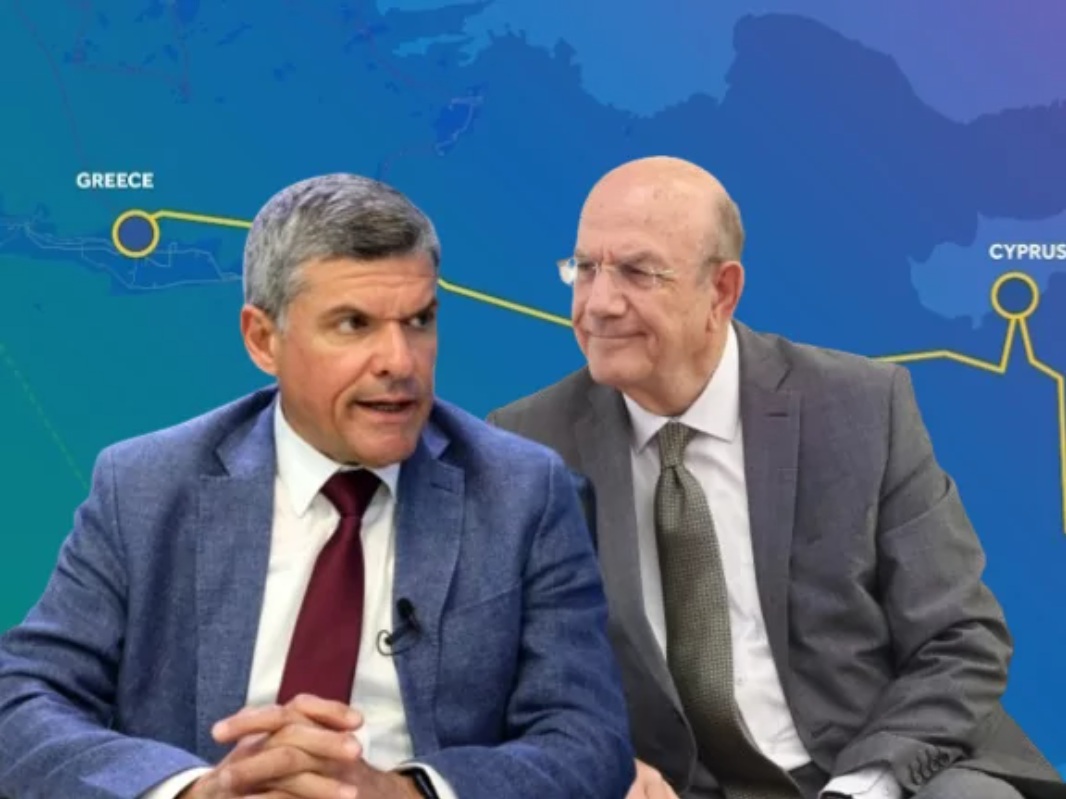
Why did the Great Sea Interconnector (GSI) not proceed? Because of your disagreements with the Minister of Finance?
There was no, absolutely no disagreement. Our only difference is in the management of the issue, not a disagreement. The Minister of Finance initially said “I am not paying” and then “I prefer not to pay until I see that the project is progressing”. The Minister of Energy, because he knows that the Republic of Cyprus will be exposed, was talking about managing the problem and not canceling the project, as is implied when the Ministry of Finance says “I am not paying”.
Do local interests want the electrical interconnection to proceed?
You have seen the local interests. They have already given their positions. Anything that comes from another source of electricity to the small market of Cyprus and that is not under the control of the local environment, you understand that it is a challenge. It is a threat. Because that source of electricity supply may be able to supply the consumer at other prices and even lower ones.
Vasiliko
Why did you fall short in your statements/forecasts about Vasiliko?
I didn't fall short, but I will admit that I was somewhat "romantic" when I took over the ministry. I believed that, with my knowledge and experience, we could solve problems that, when we were outside, we saw as simple. And I still believe that they are simple... Keep in mind that the person you refer to completed a terminal of a private company next to the Vasilikos terminal, which is much more difficult than this one. I believed, therefore, that the Vasilikos natural gas terminal would be of a similar nature and simply needed technocratic knowledge to be completed. However, upon entering the ministry, we found a project under investigation. And it was a mistake that due diligence was not done to know exactly what was happening with this very important project, on which the country's economy is based. We tried many ways to give impetus to the project, without success. I believe that the reasons why those efforts were unsuccessful were financial, the project was not economically viable according to the initial bid and various ways were invented to increase the cost - but I will not touch on that, because at the moment the matter is in arbitration. On the other hand, there was a big question mark. To what extent could this particular consortium complete the project and the terminal operate safely.
Could it?
My humble opinion is no. Not this particular consortium. Do you remember that after the bid was awarded, the construction company of the consortium gave up. I believe that we started then with serious weaknesses. All of this is being investigated.
Yes, but we are talking about the Chinese state-owned company.
I believe that this particular company did not have enough history to be able to prove that it could implement this particular project.
Scandal
Is there a smell of scandal in this project?
Everything that is investigated is not investigated randomly. And by the European Public Prosecutor's Office. As with GSI, an investigation was launched for actions that took place in the past. I don't know how to answer, but for an investigation to be conducted and European grants to be withdrawn, there must be evidence, while the indications of mismanagement of European funds are strong.
"I may not have understood the political aspect..."
When asked why the President reshuffled him, Georgios Papanastasiou referred to the Presidential Office for answers. "For this, you should ask the President himself. Let me tell you that I had decided that I would leave multinationals, I had reached my limits, I was constantly on a plane, I had to be everywhere, with tough goals, sometimes unattainable, you constantly neglect yourself, you neglect your family. I had made the decision to leave in January 2023 and had even informed the last multinational about it. And the proposal for the ministry came, which I accepted with the logic of helping my country," the former Minister of Energy, Trade and Industry stated characteristically.
Did you know the President?
Not personally, but he was one of the people I liked for the way they operated through politics. This was the image I had of the President at the time.
About the reshuffle
And you had the dilemma...
Yes, personal life vs contribution to the country. But after many discussions with the family, I came to the second. Keep in mind that a technocrat enters a ministry which is also a political space. That is, there are some alliances, some political support for the President. And other things that are in the political arena – not only the technocratic ones – will have to be served. We launched several things that were "frozen" for years: we opened the electricity market, we reached agreements with Egypt on natural gas, we concluded important agreements with the licensees in the Cypriot EEZ, electricity storage (batteries) is progressing, etc. Why did the President reshuffle me? First, because I believe that there was also the political aspect, which I may not have fulfilled or understood. But the most important thing is that I am a person who holds the issue of personal dignity, as well as the dignity of the place I work for, very, very high. And in this case, when the time comes, you have to leave with dignity. And at that time I believe that I left with dignity – you understand what I mean.
How long can one milk the cow…
Can you be a little more specific?
For example, on the issue of reducing the cost of electricity, in our effort to pass on the benefit to the consumer - I believe - we touched on some sensitive points.
Interests?
I call them interests. You had asked me when the price of electricity would become such that the average consumer could afford it. And I answered "not soon", because we failed in natural gas, we failed to regulate the cost orientation in RES and the profitability has been left to those who produce energy from RES, because they are compensated based on the high-cost conventional electricity production and, therefore, they want this to continue. The most correct supply chain would be to share this profitability with the final consumer, because how long will I milk the cow, one day it will not last. And will it live on subsidies, which is what we are doing right now? The correct and sustainable way is to pressure the supply chain so that some of the benefits, which they have enjoyed for so many years, are passed on to the final consumer, instead of forcing the state to reduce VAT and give subsidies, in order to reduce the cost of an important good, electricity, to the consumer. A society cannot be permanently subsidized. The subsidy should have been a temporary measure, at a time when there is an international crisis that could not be predicted, e.g. a sharp increase in oil prices. Then, for a short period of time, you help the consumer and the local economy and then you withdraw it. We, due to the failures in the energy supply chain, ended up giving continuous subsidies.
Visible pressures
Did you have pressure in the ministry to change some decisions?
No, I did not have such pressures but I saw them. I understood that there were interventions. There were interventions in public, I believe that there were interventions behind the scenes as well. However, I had not received anything like that from the President himself. However, I believe that the political leader always weighs many other things, which a technocratic minister may not see. There is also the other picture, which is the political picture, which the technocrat may not see in its entirety, although he may understand it.
Did he make complaints to you, observations, did you notice that something was wrong, or did he suddenly come ten minutes before the reshuffle and told you that you were leaving the ministry?
No, he did not tell me anything, there was consultation on the issues. In order for me to be able to pass on the technocratic issues, because it is not easy to convey them to a political person – it is a very difficult subject even for academics, if one does not have the experience of the market, etc. – I recorded everything, gave notes and at the same time made proposals to the Council of Ministers when they were difficult decisions and had to be made collectively. And that is how I was given direction by the Council of Ministers.
"I did not expect it"
When were you informed about the reshuffle?
I was informed about half an hour before the announcement was made.
From the President himself?
Yes.
What did he tell you?
That he decided to carry out a reshuffle and one of the ministers who would be reshuffled was the one for Energy, Trade and Industry.
Did you fall from the clouds or did you expect it?
The truth is that I did not expect it at that time, because the EU Presidency was coming up, for which I had prepared, and there were also important projects in progress. However, the minister must be ready to leave at any time. I was also ready from the day I was appointed. And this readiness of mine to leave was expressed many times, when I saw that things were not progressing in the way and at the pace I would have liked. I expected that things would develop like in the private sector – I mean with speed and precision, without political interventions, without interventions from those unfamiliar with the subject. For Europe to come and withdraw money from a project is a very serious development. I can say that I underestimated this "environment" that I found when I entered the ministry a little...
How is your relationship with the President today?
I have nothing to say to the President of the Republic. It is his choice, according to his own criteria, to reshuffle.
"Present"
Yes, but you have said that you entered the government with a very good image of the President. Did you leave with the same image?
You will allow me to keep this to myself. I entered as a technocrat and I remain one. In politics, at least from what I have seen, I do not intend to get involved in the front line. I will support people who intend to help the country. For me, now, the most important thing is the country. If at any time the country needs me, I will be "present". But only for the country, not for political groups that do not have the country as a priority.
Videogate
Did you know that what we saw in the infamous video with image and sound was happening?
This place disappoints me beyond imagination. People should be chosen correctly when it comes to filling a critical position and not with ideological criteria. And beyond knowledge and experience, one must also take into account how honest they are, if their agenda has Cyprus and its citizen as number one priority. And I say this strongly, in capital letters, because I watch the system being filled with people whose agendas are different – it is not the country and the Cypriot citizen (on their agenda). The country has fallen very low in the priorities of some people who are in key positions. And this should be given special attention by the President of the Republic. The choices made should be taken very carefully, so that this country can see the light of day. And you know, the reputation of a place is a very important part. The reputation of countries is built over time through correct, documented and rational decisions and not through political interventions and petty political agendas. Furthermore, I see that political forces put party interests above the national one. For oppositional reasons alone, blind criticism is exercised against the government. The correct opposition is the one that applauds the correct decisions of the government, for the good of the place and the citizens. We must get out of the partisan trap, we must see the place as a priority.
Know Your Client
Is it possible that what we saw in sound and image you did not notice taking place?
Look... Energy, yes, has money. And many times investors came to the ministry wanting to see the minister. However, we had a process, which was under the Business Facilitation Unit, through which we carried out checks – we excluded many of them, we did not meet them because they did not meet the minimum criteria and in particular to meet the political leader. These are processes that I had brought from the multinationals where I worked – it is Know Your Client, which is a key pillar of the European Union at the moment.
That is why they possibly found other ways.
I was responsible for that area, my area. I put the safeguards there. Now, if something was happening somewhere else, I was not aware of it.
The country at zero
How are we seen abroad?
My own experience starts from the private sector and is transferred to politics. I believe that every time an incident occurs, like the one we saw recently (videogate), the country goes to zero. We are building the country's prestige bit by bit, but every incident with the smell of corruption or collusion takes us to zero. The President has taken several steps to combat such phenomena, but controlling the centres of collusion is something different. Safety controls are introduced through legislation, through regulations. Therefore, if the legislation and regulations leave loopholes, then those who engage in collusion will exploit them.