
Konstantinos Yiorkatzis*
The issue of dangerous buildings is neither an isolated nor a local phenomenon. It is a growing challenge spreading across all districts of Cyprus. However, in Nicosia it takes on particular significance, not only because of the number of old buildings and large urban areas, but mainly due to the presence of the Green Line, which cuts through residential zones and the walled city. The result is a landscape of abandonment, legal uncertainty and long-term deterioration.
At the core of this reality lies the need for accountability. The District Self-Government Organisations (EOAs)assumed responsibility for the management of dangerous buildings on 1 April 2025, as provided by the relevant legislation. The Ministry of Interior, for its part, has prepared a bill aimed at improving the existing legal framework.
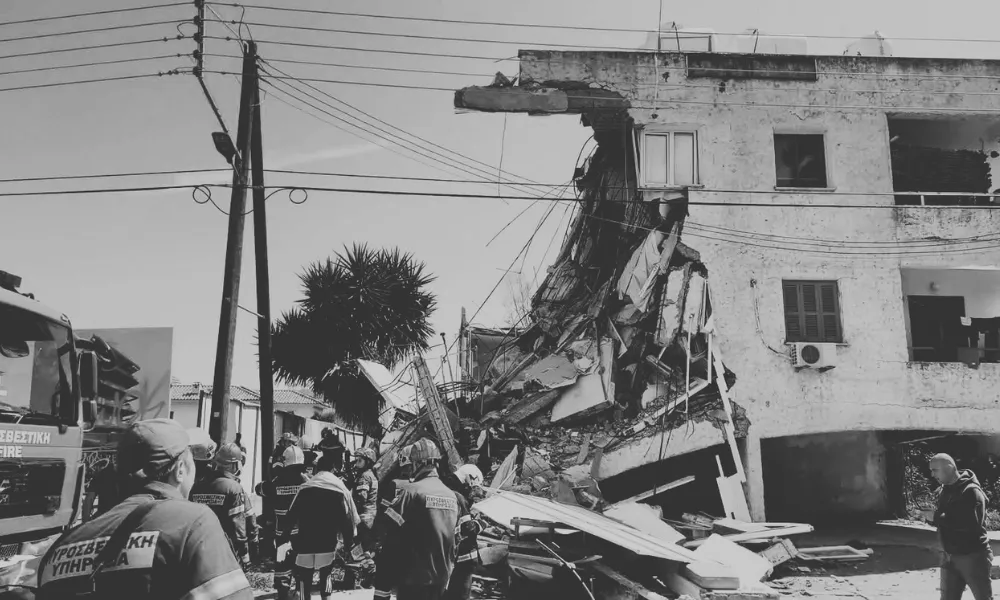
However, implementation is delayed, while the risk does not wait. On the contrary, it is increasing. And it does not concern only the potential collapse of a ruined building. It concerns the daily safety and health of citizens: detached plaster, deteriorating roofs and dangerous balconies, inadequate structural stability of buildings. These have become increasingly common in dozens of abandoned – and not only abandoned – buildings.
The question, however harsh it may sound, now arises in an uncompromising way: If, God forbid, an accident occurs due to a collapse, who will bear the responsibility?
Legally, responsibility lies first and foremost with the property owner. Subsequently, if the owner is notified and fails to respond, responsibility falls on the competent authorities, namely the EOAs. But when the state is informed about the practical difficulties faced by EOAs in implementing the legislation and nevertheless fails to act or to provide the necessary tools for effective action, the question inevitably arises: who then bears the responsibility?
The European Charter of Local Self-Government stipulates and expects that the state must provide local authorities with the resources that will enable them to fulfil their obligations as defined by law. On 1 April, responsibility for dangerous buildings was transferred to the EOAs. Yet it was only last July that the structure of the Dangerous Buildings Department was approved (meaning that, at best, staffing will be completed in early 2026), while the agreed funding for the service has still not been allocated.
The protection of human life is not ensured by good intentions, but by legal and administrative tools, by funding, by clear responsibilities, and by determination. The EOAs are asking for what is self-evident: when they are called upon to assume a critical responsibility, the means, tools, mechanisms and resources necessary for its implementation must be transferred alongside it.
*President of the Nicosia District Self-Government Organisation.