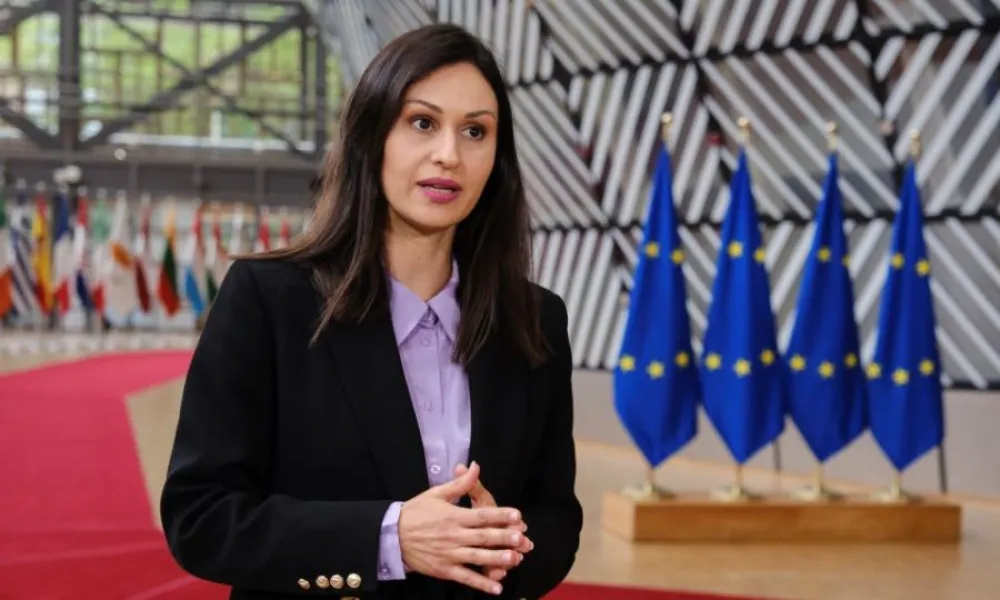

Cyprus Agriculture Minister Maria Panayiotou has stressed that the future Common Agricultural Policy (CAP) must continue to support farmers and safeguard food security across the European Union.
Speaking after the Agriculture and Fisheries Council (AGRIFISH) meeting in Luxembourg on Monday, Panayiotou said European farmers are facing growing pressure due to geopolitical instability, particularly developments in the Middle East, which are affecting fuel, transport and logistics costs and raising overall production expenses.
Pressures on the agricultural sector
The minister noted that market disruptions and higher energy prices are squeezing profit margins in the agricultural sector, with possible consequences for food security, consumers and the stability of the EU single market.
She said discussions at the Council focused on strengthening the resilience of rural communities and ensuring food security, particularly in the context of the design of the CAP after 2027, market pressures and the increasing risk of wildfires.
According to Panayiotou, a key objective for the future CAP is to maintain support for farmers’ incomes, protect food security and ensure the sustainability of rural areas.
She added that there was broad agreement among Member States on the need for targeted income support to achieve a balance between fairness, effectiveness and long-term sustainability.
Flexibility in support instruments
Panayiotou said many delegations highlighted the importance of flexibility in support instruments, including degressive payments and capping mechanisms, while also stressing the need to maintain a level playing field within the European Union.
The minister also referred to the issue of retired farmers as part of the ongoing discussions.
At the same time, she said there was broad agreement on the need for a strong and adequately funded CAP as a prerequisite for safeguarding food security in the Union.
Panayiotou noted that the Cypriot Presidency will continue negotiations on the relevant proposals, while discussions on the future of the CAP are expected to continue at the June meeting.
Wider challenges affecting agriculture
The minister also referred to broader pressures facing the agricultural sector, including the war in Ukraine, developments in the Middle East, weather conditions and animal health issues, all of which are affecting production and costs.
She said both immediate and medium-term measures to support farmers were discussed, adding that the European Commission is expected to present a fertiliser action plan on 19 May.
Member States, she added, are committed to working together to ensure that farmers have the necessary tools and resources.
Panayiotou also addressed the issue of wildfires, noting that more than one million hectares burned across Europe in 2025 — an area larger than Cyprus — causing significant economic and environmental damage.
She explained that Member States and the EU are placing increased emphasis on prevention, preparedness and recovery through mechanisms such as rescEU, while also adapting strategies to regional needs.
“Our common goal is clear,” she said. “To safeguard livelihoods, protect our environment and build a stronger, more resilient and more sustainable Europe for future generations.”
Emphasis on flexibility
Responding to a question about the maximum level of support for farmers, Panayiotou said discussions aim to establish a common direction based on Member States’ positions and in close cooperation with the European Commission.
She noted that different approaches were presented during the discussions, with a shared emphasis on greater flexibility in implementing the rules so that the specific circumstances of each Member State can be taken into account.
“There is no single solution that can address every case,” the minister said, adding that the priority remains making effective use of the available policy tools for the benefit of farmers.
She added that Member States’ interventions indicate a tendency towards a more flexible and, in some aspects, voluntary approach, while technical consultations are expected to continue in the coming period.
Panayiotou expressed hope that the continuation of these discussions will lead to a positive outcome aimed at strengthening the agricultural sector and supporting European producers.
Source: CNA