
By Theano Kalavana
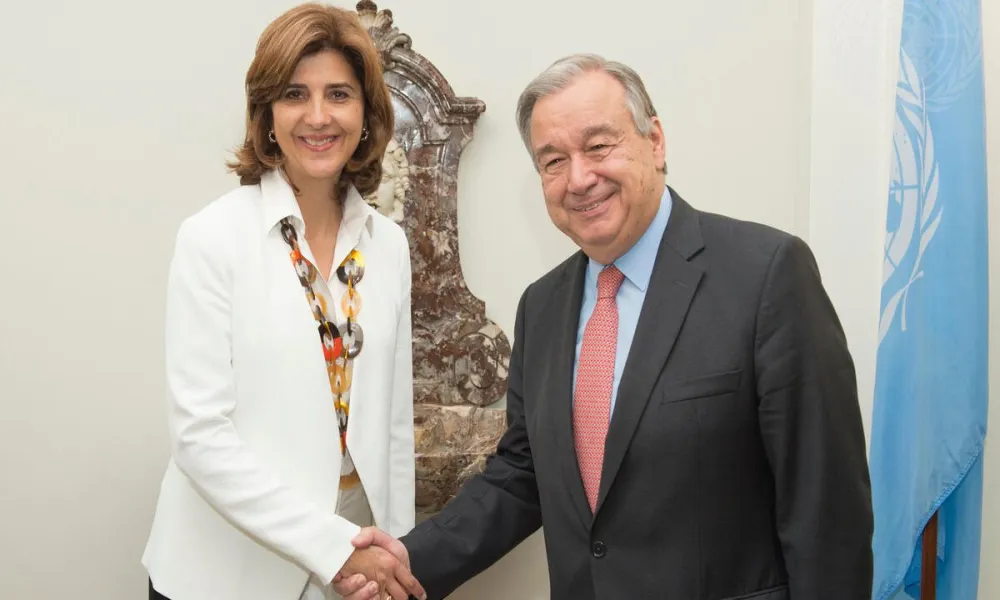
The European Union's decision to appoint a special envoy for the Cyprus problem, and the simultaneous insistence of UN Secretary-General Antonio Guterres and his personal envoy Maria Angela Holguin on keeping the process alive, are not random events. They are indications that the international players consider the Cyprus problem to be entering a critical geopolitical window of opportunity. The Cyprus problem is no longer treated merely as a bilateral dispute between Greek Cypriots and Turkish Cypriots. It is treated as part of a much larger equation that includes the Euro-Turkish relationship, the energy security of the Eastern Mediterranean, the war in Ukraine, the new security architecture in Europe and the upgraded role of Turkey in NATO.
What, though, is the fear of the international community, the fear connected to the present mobility? That if some political progress does not come soon, the reality on the ground will become irreversible. Every year that passes increases the political and economic distance between the two communities, strengthens the structures of the pseudo-state, entrenches the logic of two separate entities and reduces the chances of a future federal solution. That is why the UN and the EU are showing a persistence not observed in previous years under such conditions. Conditions in which we are not even at the negotiating table.
The great trap for us is the way the Christodoulides government interprets the increased international mobility and equates it with progress. It is not equivalent. What we are seeing today is not a solution process. It is a process to prevent the final collapse. Guterres, Holguin and the European Union are not moving because they believe a solution is at the gates. They are moving because they understand that if this window of opportunity is also lost, partition may be transformed from a temporary political deadlock into a permanent geopolitical reality. The geopolitical conditions demand it. Moreover, geopolitical conditions are constantly shifting, and so attention will move elsewhere. Right now, attention is on the balances in the Eastern Mediterranean and on the defence strengthening of the EU. The window opening today will not remain open indefinitely. That is perhaps the most important message behind all this mobility. Not that a solution is near. But that the international community understands we are closer than ever to something equally decisive.
Do we truly want, then, to prevent the end of the Cyprus problem? Do we truly want to prevent partition?
Because what strikes me in the current conjuncture is the obsession of certain political forces with rejecting it before it has even been assessed. The persistence of Guterres, of Holguin and now of the European Union, through the appointment of Raffaele Fitto, does not guarantee a solution, but it constitutes a rare opportunity for the Cyprus problem to remain high on the international agenda at a time full of competing crises. Those who fight every initiative in advance have an obligation to answer what their own alternative strategy is for preventing the definitive consolidation of partition. Because patriotism is not judged by how easily you reject an effort, but by whether you possess a realistic plan for what follows its rejection. And to this day, immobility has not overturned a single fait accompli. On the contrary, it has entrenched them.
Because the truth is that the moment the Cyprus problem ceases to be regarded as a problem to be solved and begins to be treated as a reality to be managed, that is where Cyprus will be pinned down forever, however wilfully blind those who have invested politically in the failure of every initiative may remain, because without a deadlock there is no narrative.