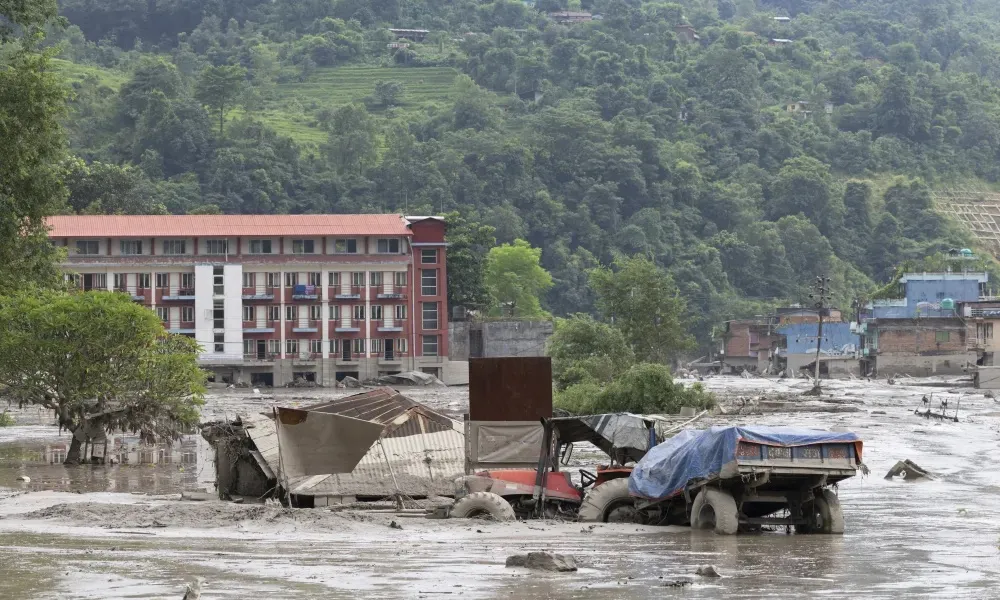

Only around 7% of the bodies recovered following the devastating floods in Nepal have so far been identified, highlighting the scale of the task facing authorities as thousands of families continue to await news of missing loved ones.
Weeks after deadly landslides and flooding struck communities along Nepal's border with China following the collapse of a glacier, relatives are still seeking answers from authorities as hopes of finding survivors fade.
Around 5,200 people remain missing, including 636 foreign nationals, according to Nepal's National Disaster Risk Reduction and Management Authority (NDRRMA).
At least 1,399 people have died in the disaster, which swept through mountain communities and hydropower facilities, the authority said in a statement sent to Reuters.
DNA samples collected from bodies and families
Authorities have collected DNA samples from 1,206 bodies and 1,889 samples from relatives of people reported missing, according to the NDRRMA.
Despite the extensive identification effort, only 105 bodies have so far been identified and handed over to their families.
The figures underline the scale of the challenge facing rescue and recovery teams as they continue searching mountainous areas and damaged infrastructure.
The authority said confined spaces, difficult mountainous terrain and the huge volume of debris accumulated in affected areas were among the biggest obstacles to locating missing people.
Drones and helicopters deployed in search
Authorities have deployed drones equipped with thermal cameras and helicopters aspart of the search operation.
Specialist teams have also been brought in to help rescue workers trapped inside tunnels.
Search operations have resulted in several notable rescues involving people who had become trapped inside tunnels at hydropower plants in Nepal.
However, families of foreign nationals reported that the regular flow of information aboutrescue efforts seen earlier in the operation had slowed.
Families continue to seek information
Relatives of those still missing are continuing to seek information about their loved ones, with the identification process expected to remain a significant part of the recovery operation.
The NDRRMA said it was providing regular updates to embassies and families through both direct and indirect channels.
It said the challenging geography, confined spaces and extensive debris were continuing to hamper efforts to locate missing people.
With thousands still unaccounted for and only a small proportion of recovered bodies formally identified, families face an uncertain wait for confirmation about the fate of their relatives.