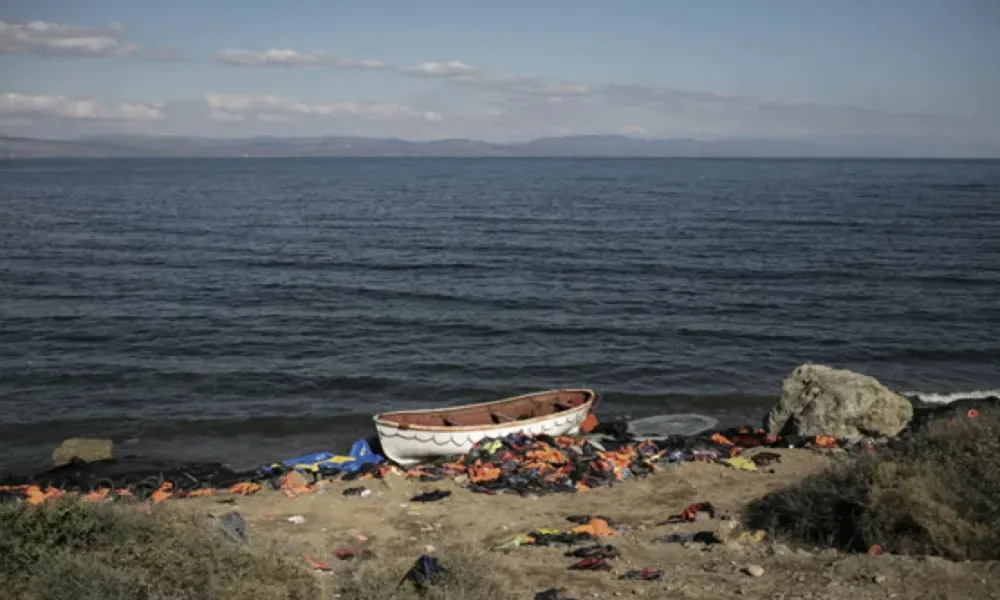

The Tunisian National Guard said it has recovered 12 bodies following the sinking of a boat carrying Tunisian migrants off the country's southeastern coast, with two people still missing.
The vessel, carrying 15 Tunisian migrants, sank overnight between Friday and Saturday off Zarzis, in southeastern Tunisia. Only one survivor was rescued after being spotted by a passing commercial ship several hours later.
Search operations continue
In a statement issued on Sunday, the National Guard said search teams recovered three bodies on Saturday and a further nine on Sunday, bringing the total death toll to 12.
Authorities said operations remain under way to locate the two missing passengers.
An earlier official toll had reported 11 recovered bodies.
Protests after the shipwreck
On Saturday evening, residents of Ben Guerdane, a marginalised town near the Libyan border, staged protests after news of the shipwreck emerged.
According to reports, 14 of the 15 migrants on board were from Ben Guerdane, while the remaining passenger was from Zarzis.
Demonstrators blocked roads and set tyres on fire during the protest.
Tunisia remains key departure point
Tunisia, whose coastline lies roughly 145 kilometres from the Italian island of Lampedusa, has become a major departure point for migrants attempting the Mediterranean crossing to Europe.
The route through the central Mediterranean is regarded by the International Organization for Migration (IOM) as the deadliest migration corridor in the world.
Migrant deaths continue to rise
Earlier this month, the IOM reported that migrant deaths in the central Mediterranean more than doubled during the first four months of 2026 compared with the same period a year earlier.
According to the UN agency, at least 914 migrants have died or gone missing in the central Mediterranean so far this year.
EU migration agreement
In 2023, Tunisia signed an agreement with the European Union worth €255 million, with nearly half the funding earmarked for efforts to combat irregular migration.
The agreement, strongly backed by Italy's government, was intended to strengthen Tunisia's ability to prevent migrant boats from departing its shores.