
By Oren Anolik, Ambassador of Israel to Cyprus
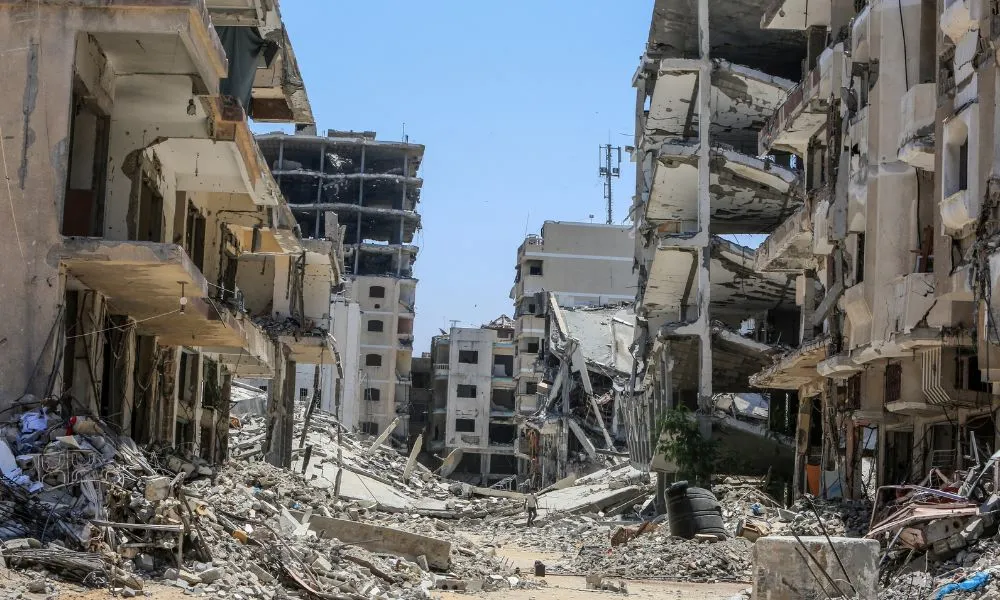
Following US President Donald Trump's 20-Point Plan and UN Security Council Resolution 2803, Israel recently approved the deployment of forces from the International Stabilization Force (ISF) in the Gaza Strip, alongside the operational framework for the Board of Peace (BOP). By accepting a comprehensive framework for the regulation and immunity of forces from countries with which Israel maintains diplomatic relations, we have taken a significant step towards creating the conditions for a peaceful transition to civilian administration and facilitating the delivery of large-scale humanitarian aid through the Civil-Military Coordination Center (CMCC).
This is not a symbolic gesture or merely a rhetorical statement, it is decisive action. It reflects Israel's continued cooperation with international partners, aimed at advancing a realistic roadmap for regional stabilisation and relief for the civilian population in Gaza.
However, progress cannot be achieved unilaterally. A diplomatic plan can succeed only when all parties honour their international obligations.
Hamas remains the obstacle, ambassador argues
While Israel is proceeding in good faith, the terrorist organisation Hamas remains the greatest obstacle to peace and to the rehabilitation of the Gaza Strip. Rather than choosing a future of reconstruction and political governance, Hamas persists in intransigence and the rejection of any compromise. It rejects all proposals from international mediators for disarmament, insists on rebuilding its military capabilities, and systematically seizes humanitarian aid intended for the very civilians it uses as human shields.
This reality was clearly confirmed by Nickolay Mladenov, the Board of Peace's high representative for Gaza, during his briefing to the UN Security Council in May. As he stated, the core obstacle to full implementation remains "Hamas's refusal to accept supervised disarmament, relinquish the oppressive control it exercises, and allow a genuine transition to civilian administration under political, non-military leadership."
Israel's position on this matter is absolute and unwavering, disarmament is not up for negotiation. The demilitarisation of the Gaza Strip is an absolute precondition for the safety of Israeli citizens and the real key to Gaza's future.
A call to the international community
For far too long, international public discourse has focused almost exclusively on criticism of Israel, often overlooking the operational realities on the ground. It is time for this approach to change. Responsible states, particularly those in our shared European and Mediterranean neighbourhood, must meet this moment with clear principles and a sense of responsibility.
We call on the international community, including our partners in Cyprus and across Europe, to publicly recognise the positive and constructive measures Israel has taken. Most importantly, responsibility must be placed where it truly belongs, with Hamas. International influence and diplomatic pressure must be directed towards Hamas, to ensure its full compliance with UN Security Council Resolution 2803, beginning with immediate and supervised disarmament.
Today, as the Middle East stands at a critical crossroads, Israel continues to demonstrate its commitment to a stable future for our region, through concrete and responsible action.
As neighbouring countries in the Eastern Mediterranean, Israel and Cyprus share a fundamental truth, lasting security and economic prosperity depend on stability, respect for international law, and a firm rejection of extremism.
A genuine partnership in the Eastern Mediterranean requires recognising constructive steps when they are taken, condemning terrorism for what it truly is, and standing collectively for security, accountability and meaningful progress.
July 30, 2026