
The confrontation between the United States and Iran has entered a new phase of escalation, with military operations continuing for a third consecutive night and attacks intensifying across the Gulf region.
Iran announced strikes against US targets in Bahrain, while US forces continued bombing Iranian facilities. Maritime security in the Strait of Hormuz has once again become a central concern.
Strikes on US facilities in Bahrain
Iran's Revolutionary Guards said they had launched attacks against several facilities in Bahrain, including a building that they claim houses US military personnel at the Juffair base.
In a statement broadcast by state television, the Revolutionary Guards' navy said weapons support warehouses and a satellite communications centre at the base were also targeted.
Meanwhile, a missile attack struck a facility belonging to an Iranian Kurdish opposition group in Iraq's autonomous Kurdistan region, east of Erbil. According to security sources cited by Reuters, there were no immediate reports of casualties.
Sirens sound for third consecutive night in Bahrain
Hours earlier, Bahrain's Interior Ministry announced that warning sirens had been activated for a third straight night as US bombardments of Iran continued.
Authorities urged citizens and residents to remain calm and move to the nearest safe locations.
The previous day, Iran's Revolutionary Guards said they had targeted a command-and-control centre for US drones in Bahrain.
Trump leaves door open for agreement
Despite the latest escalation, US President Donald Trump said yesterday that he still believed an agreement with Iran remained possible.
Asked in the Oval Office whether a deal with Tehran could still be reached, Trump replied: "Yes, I think a deal is possible. Certainly."
His remarks came as US military operations continued and Washington reinstated its blockade of Iranian ports.
Attacks in the Strait of Hormuz and fresh US strikes
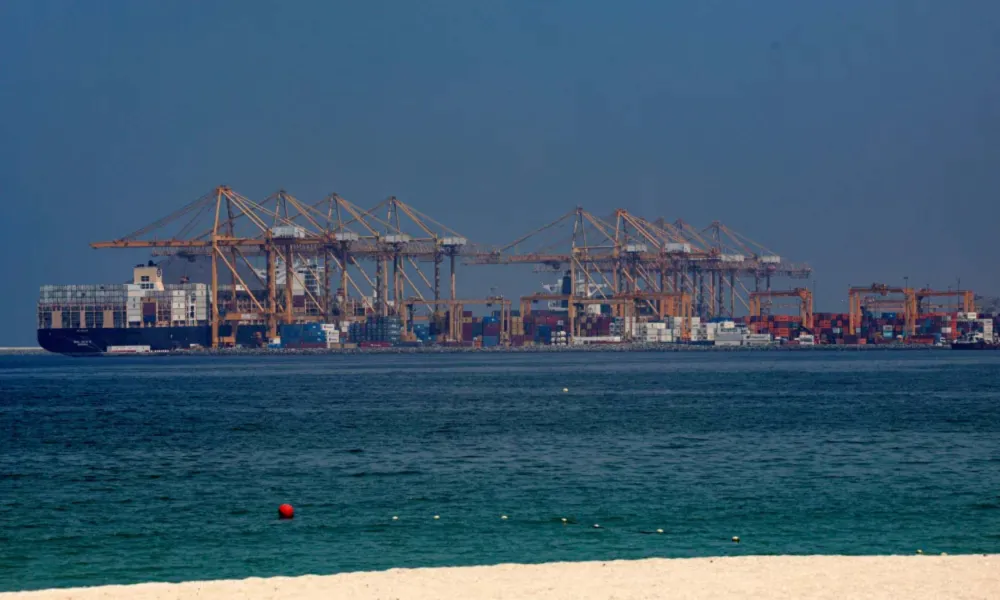
The latest escalation followed attacks on two United Arab Emirates oil tankers in the Strait of Hormuz, in which one crew member was killed.
Late last night, the US military announced a new wave of air strikes against Iran, marking the third consecutive night of attacks.
US Central Command (CENTCOM) said the strikes were intended to impose a "heavy cost" on Iranian forces and reduce their ability to attack civilians and commercial shipping in the Strait of Hormuz.
Oil markets shaken
The reimposition of a naval blockade on Iranian ports and US plans to impose transit fees on vessels passing through the Strait of Hormuz triggered sharp reactions in global energy markets.
Brent crude for September delivery rose 9.59% to close at $83.30 per barrel, while US West Texas Intermediate (WTI) crude for August delivery climbed 9.42% to $78.14 per barrel.
According to analysts at the Eurasia Group, markets had until now underestimated the impact of attacks on shipping in the Strait of Hormuz. However, the collapse of the fragile understanding between Washington and Tehran has significantly changed the outlook and increased uncertainty over global energy supplies.